HYKE and Eddie Bauer Japan sharpen outdoor classics for everyday wear
Eddie Bauer’s Japan relaunch finds its sharpest expression through HYKE, turning heritage parkas and the Skyliner into cleaner, more directional everyday utility.
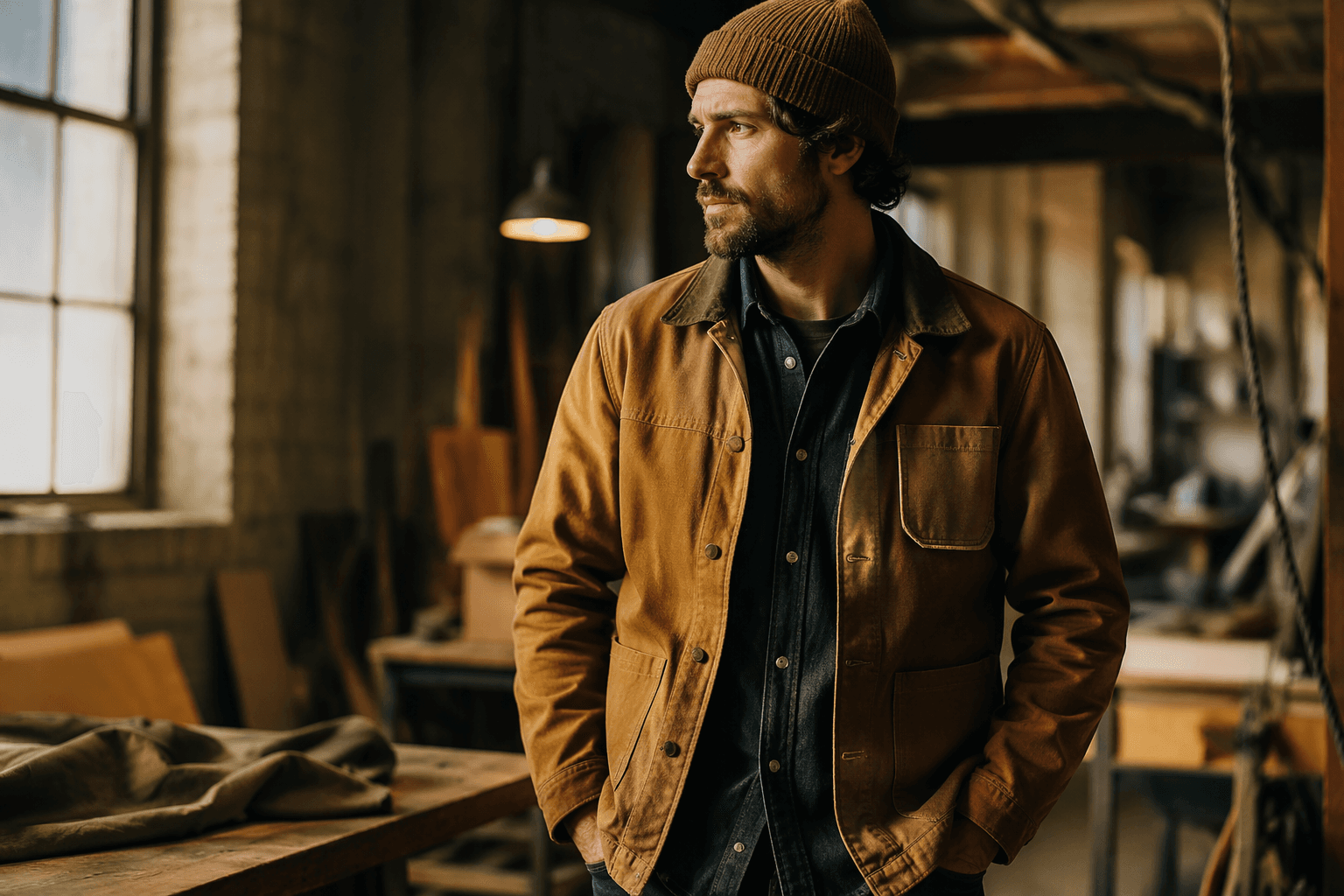
Eddie Bauer has spent more than a century as an American outdoor name, but in Japan it is being recut with a far sleeker hand. HYKE, the Tokyo label known for stripping utility clothing to its most exacting form, brings a fashion editor’s eye to a heritage archive that suddenly looks less like rugged nostalgia and more like a precise workwear wardrobe for city life.
The new language of American utility
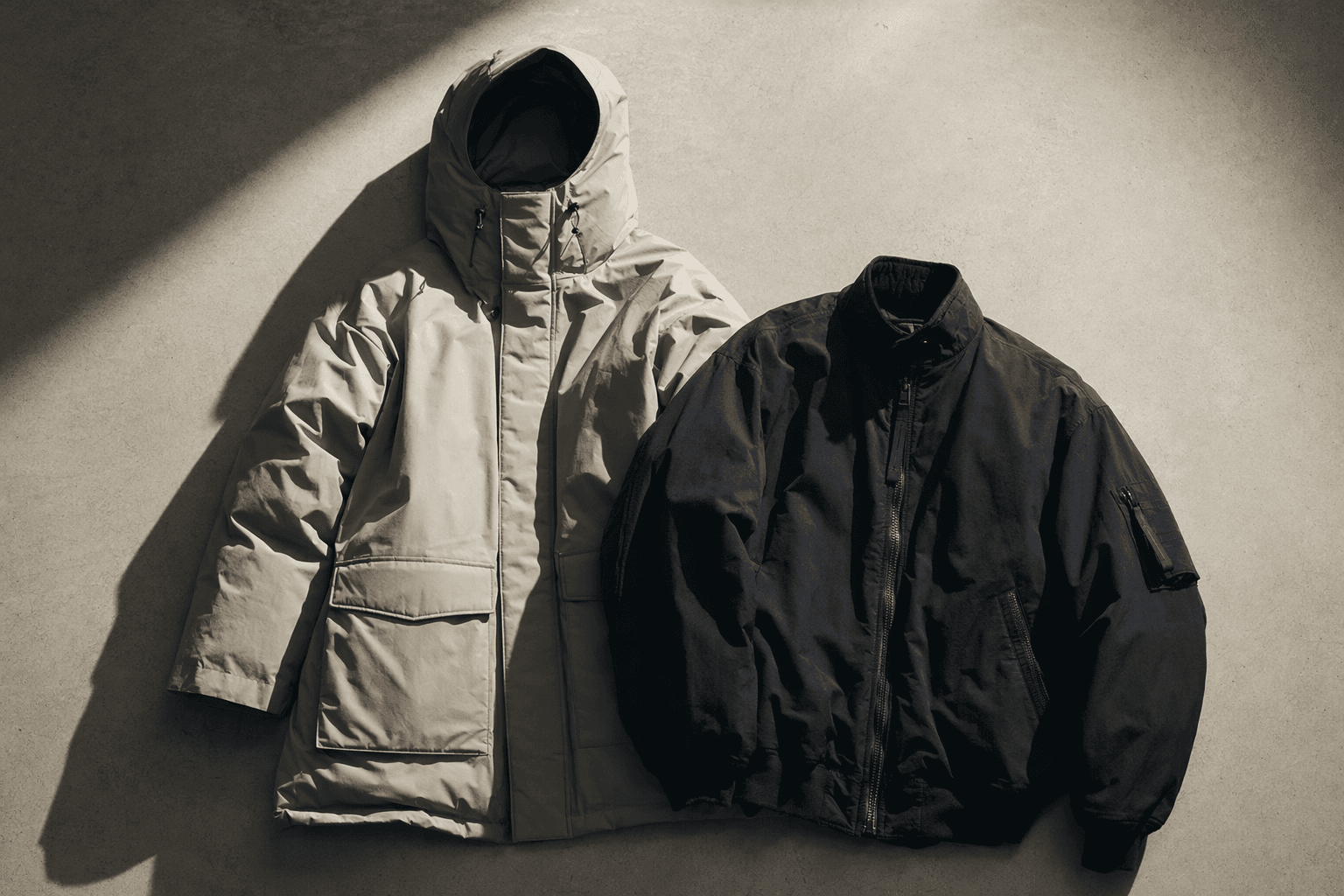
What makes this collaboration feel so pointed is not simply the nostalgia of a century-old label meeting Japanese design authority. It is the way HYKE sharpens Eddie Bauer’s most familiar shapes until they read as everyday armor: the Skyliner jacket, the Kara Koram Parka, the Canadian Vest, and a quilted MA-1-style vest all show up with more volume, more clean lines, and less outdoor-club sentimentality. The result is clothing that still belongs to the field, but now looks equally at home under fluorescent office light, on a train platform, or layered over tailored wool trousers.
The Skyliner is the clearest symbol of that shift. Eddie Bauer describes it as its signature model and the first down jacket it patented, first made in 1936. In the HYKE version, the jacket keeps its functional gravity but gains a looser, more modern proportion, with slouching shoulders and an oversized cut that makes insulation look deliberate rather than bulky. That matters for readers who already buy classic utility pieces: the collaboration is not trying to outdo workwear with fashion, but to show how heritage construction can be styled into something cleaner and more directional.
Why Japan is the point of the story
Eddie Bauer’s Japanese operation is not a side project. It is the center of a careful repositioning that began with a broader relaunch plan in 2022, when Authentic Brands Group said Eddie Bauer would open new freestanding stores, expand shop-in-shop locations and specialty accounts, and bring back its official Japanese e-commerce destination in spring 2023. Itochu and Mizujin were named as partners in that expansion, and a Japanese press release later marked the start of full-scale Japan market growth on October 6, 2023.
That timeline matters because it shows Eddie Bauer’s Japan business is being built as a distinct fashion system, not just a retail outpost. Highsnobiety has already framed Eddie Bauer Black Label as a Japan-only line that followed the same playbook as The North Face Purple Label, the quietly coveted Japanese offshoot that turned outdoor goods into cult wardrobe staples through refinement rather than loud branding. Eddie Bauer’s own Japanese site, meanwhile, treats the Skyliner as a signature that anchors this local identity. The message is clear: the Japanese arm is not translating the American brand, it is redesigning its cultural meaning.
HYKE’s touch is disciplined, not decorative
HYKE is the right collaborator for that task because the label has always operated like a tailoring-minded editor. Founded in 2013 by Hideaki Yoshihara and Yukiko Ode, HYKE says the pair resumed their work after a three-year break and renamed the brand with the FW 2013 collection. That restart gave the label its present identity: spare, rigorous, and able to make military and workwear references feel exact rather than costume-like.
Its past collaborations, including MACKINTOSH × HYKE and adidas Originals by HYKE, show how the brand handles partnership. It does not drown a source in graphics or gimmicks. It trims, edits, and rebalances. That approach is visible in the Eddie Bauer pieces shown in HYKE’s Fall/Winter 2026 collection at Rakuten Fashion Week Tokyo, where the outerwear sat among voluminous military coats and flowing tailoring. The styling gave the collection a strong silhouette story: cropped utility next to long, disciplined lines; padded function next to fluid drape. It is the kind of contrast that makes a classic jacket feel newly relevant rather than archived.
The pieces that matter most
The collaboration is broad enough to feel like a wardrobe system, not a single headline item. The Skyliner does the heavy lifting as the history piece, but the Kara Koram Parka and Canadian Vest push the conversation toward layering, weatherproofing and proportion. The quilted MA-1-style vest, meanwhile, bridges military references with the ease of modern city wear, especially when styled under a coat or over a fine-gauge knit.
Branded accessories round out the picture, and that detail is more important than it first appears. Accessories are where a repositioning becomes lifestyle language rather than just product development. They let the collaboration signal a complete point of view, one that can move from outerwear to small carry items without losing its utility-first discipline. For shoppers who already live in fatigues, chore coats and insulated vests, this is the subtle shift that counts: the clothes are still practical, but they are no longer trying to look purely rugged.
What this means for classic utility dressing
The deeper significance of HYKE and Eddie Bauer Japan is that it pushes workwear toward refinement without sanding away its purpose. In the United States, heritage outdoor clothing often lands as either strictly functional or heavily nostalgic. In Japan, Eddie Bauer is being recast as something sharper, more architectural, and more attuned to how people actually dress now. That is a meaningful change for anyone shopping for durable staples, because it suggests the next wave of utility clothing will be judged less by authenticity theater and more by silhouette, proportion and compatibility with everyday wardrobes.
If the Skyliner is the emblem, the lesson is simple: the most compelling heritage pieces are not the ones that stay frozen in the past. They are the ones that can survive a new design language and come out looking more exact. HYKE gives Eddie Bauer that clarity, and Japan gives it the cultural stage. The result is a workwear story with real staying power, built from down, nylon, and a very modern sense of restraint.
This article was produced by Prism’s automated news system from verified source data, official records, and press releases, then run through automated quality and moderation checks before publishing. The system is built and supervised by the people who set the standards it runs under. Read our full AI policy.
Did this article answer your question?