3D People Prints PA12 Venturi for Armada's Microbubble Air Lubrication
London service provider 3D People printed a PA12 Venturi for Armada Technologies' Passive Air Lubrication System, enabling compressor-free microbubble hull lubrication and real-world decarbonization testing.
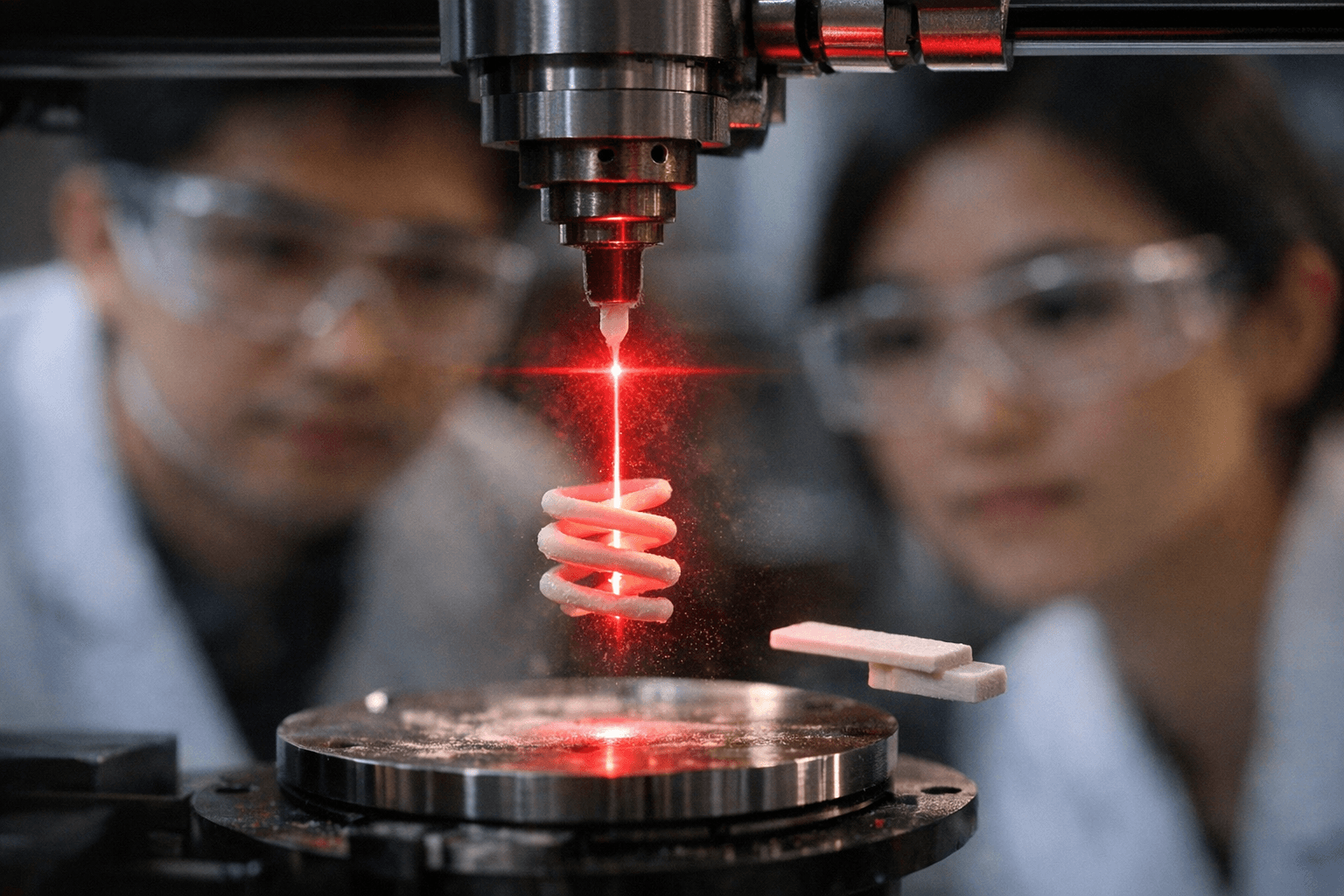
3D People, a London-based additive service provider, produced a precision Venturi ejector in PA12 nylon using selective laser sintering (SLS) for Armada Technologies' Passive Air Lubrication System (PALS). The Venturi uses a vessel's forward motion to draw air into a microbubble generation system, eliminating compressors and simplifying onboard equipment while reducing hull drag.
The production run was completed on January 15, 2026, with multiple batches delivered to Armada. Additive manufacturing was chosen because the ejector's complex internal geometry could not be manufactured economically or reliably by conventional methods. 3D People applied vapor smoothing as a post-process to refine internal surfaces and improve fluid interaction, addressing a common concern when using powder-based SLS parts in hydrodynamic applications.
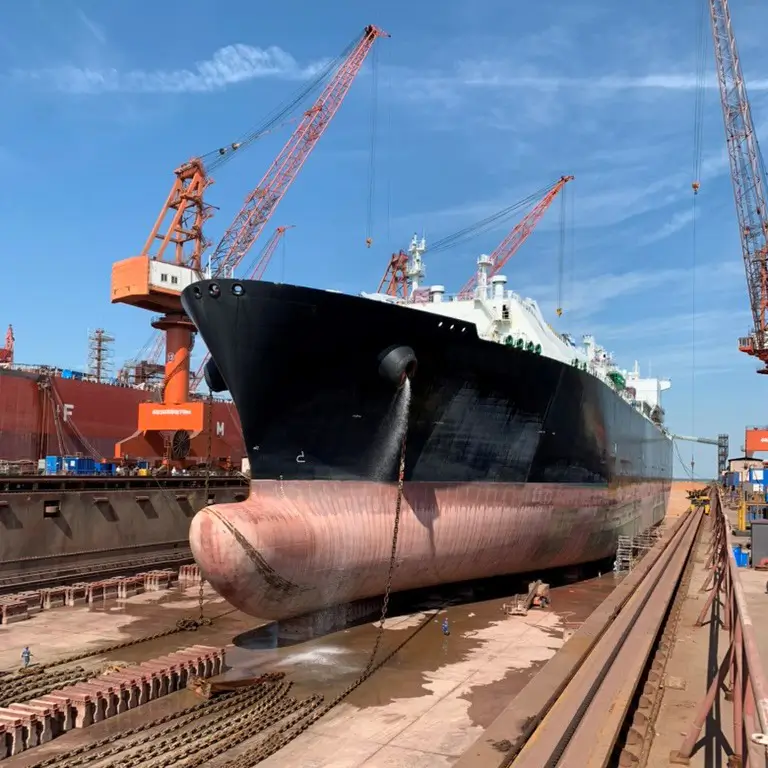
PALS installations are designed to introduce microbubbles beneath a ship's hull to reduce frictional resistance. This particular system was installed on an LNG carrier and was reported to be performing well eight months after installation, a useful early indicator for operators weighing retrofit options. Because the Venturi relies on the ship's forward motion rather than compressors, the component reduces mechanical complexity and lowers potential maintenance burdens for operators looking for incremental efficiency gains.
For the AM community and maritime supply chain, this case demonstrates production-grade use of PA12 via SLS for performance-critical components. It highlights several practical takeaways: designers can leverage AM to realize internal channels and intricate passages that would otherwise require assembly or compromise performance; post-processing such as vapor smoothing can materially impact fluid dynamics inside printed parts; and service bureaus can scale beyond prototyping into repeatable production batches for in-service hardware.
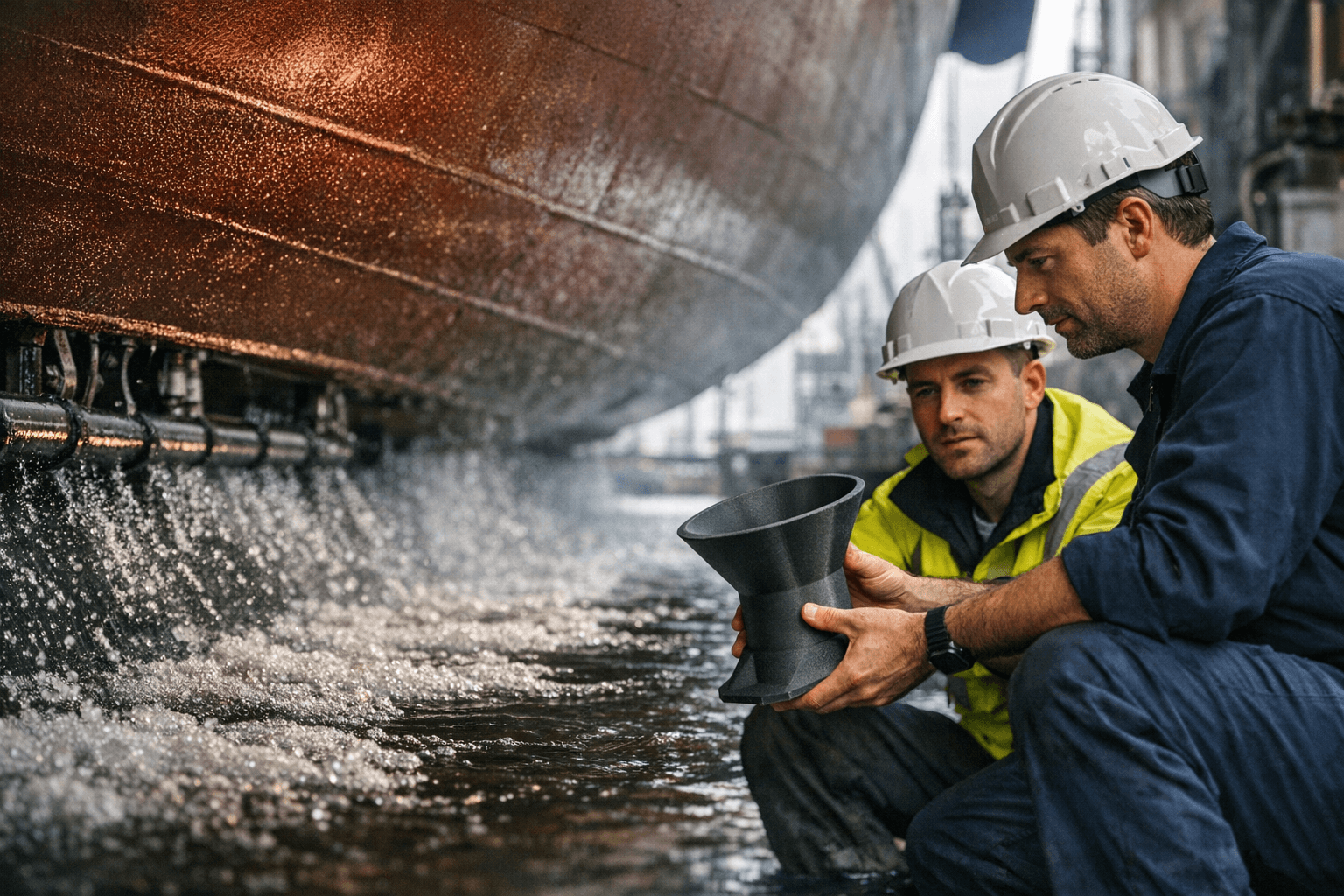
The project also fits into broader decarbonization efforts in shipping by delivering a targeted efficiency upgrade that integrates with existing vessels. Microbubble lubrication is not a single cure for emissions, but it represents an accessible, incremental intervention that can lower fuel consumption and emissions across fleets when paired with other measures.
For designers, makers, and fleet engineers, this story underscores two immediate actions: consider AM early in the design cycle when internal geometry is critical, and plan for surface finishing tailored to fluid applications. As ship operators continue to trial lightweight, low-maintenance solutions, expect more AM-driven retrofits making their way into service trials and production deployments.
Know something we missed? Have a correction or additional information?
Submit a Tip