3D-printed open-source stethoscope matches clinical gold-standard devices
A peer-reviewed 3D-printed stethoscope has matched the Littmann Cardiology III, giving open-source medical hardware a rare clinical validation milestone.
A 3D-printed stethoscope built from open design files has cleared a real performance comparison against the Littmann Cardiology III, the kind of result that gives functional printed tools more credibility than a simple prototype ever could. The Glia stethoscope, a low-cost open-access design, was validated in a peer-reviewed PLOS ONE paper published on March 14, 2018, by Alexander Pavlosky, Jennifer Glauche, Spencer Chambers, Mahmoud Al-Alawi, Kliment Yanev, and Dr. Tarek Loubani.
The paper described the device as comparable to the Littmann Cardiology III and made the access problem plain: high-end stethoscopes are still expensive, and that cost can block clinicians from getting reliable equipment, especially in low- and middle-income countries. The Glia project grew out of Loubani’s experience during a 2012 mass-casualty event in Gaza, where providers were reportedly forced to place their ears directly against patients’ chests because proper stethoscopes were unavailable.
The project’s path from idea to distributed hardware was methodical. The Glia site says initial prototypes were printed in Gaza by 2015, manufacturing began in London, Ontario, in 2016, and 200 devices were later distributed to Western University Hospital’s emergency and internal medicine departments. It also says Glia Gaza was formally established in 2017. The original paper says the work was self-funded by Loubani, with later support including a University of Western Ontario Summer Research Training Program grant and a Shuttleworth Foundation fellowship awarded in March 2017.
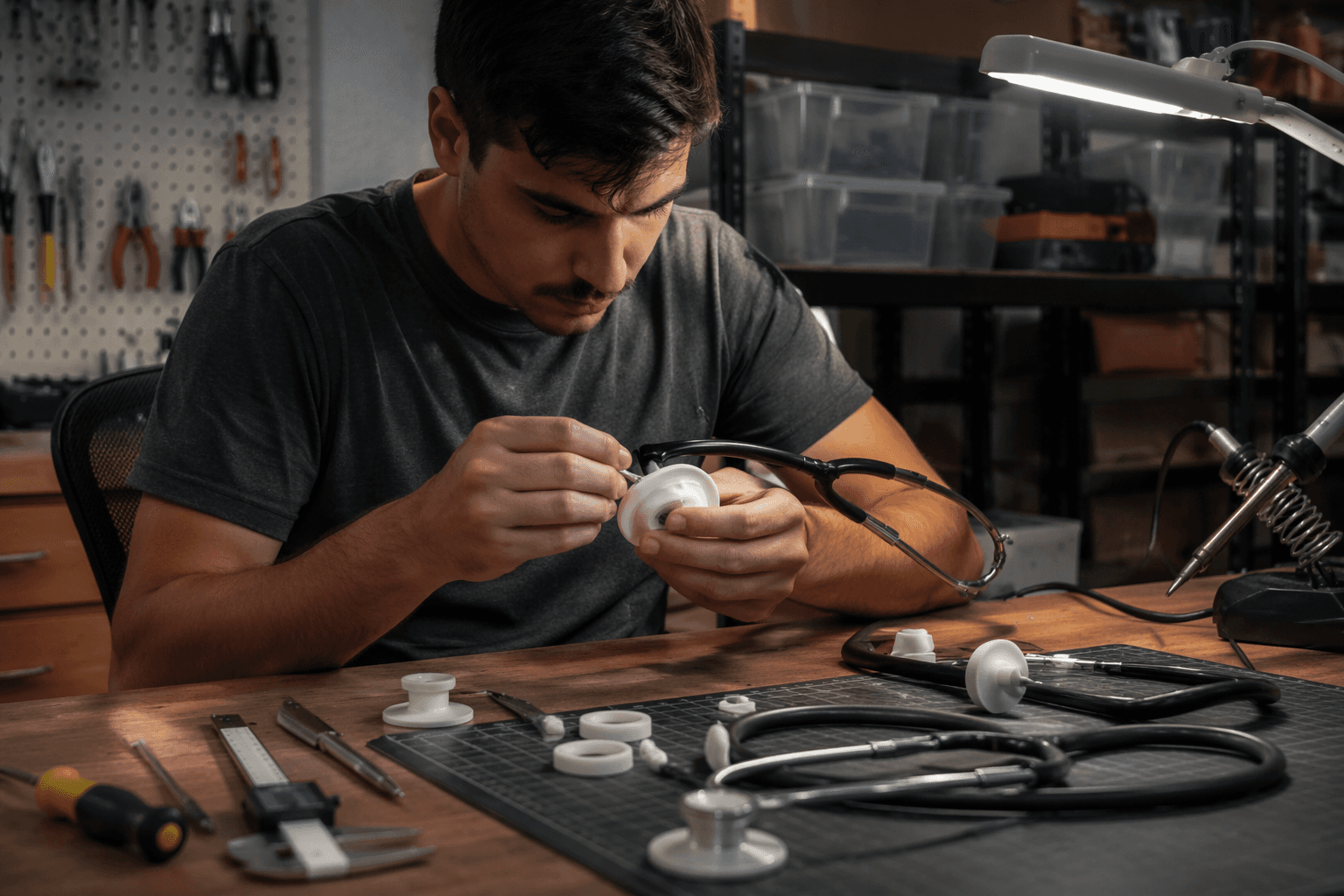
The open files are still the big draw for makers and medical hackers. The GitHub repository says the full stethoscope can cost about $2.50 to $5 to produce, with the main body printed in PETG or ABS at 100% infill, a diaphragm cut from a standard report cover, and silicone tubing pulled from common stock. The Glia project says the Littmann Cardiology III sold for over $100, while the Shuttleworth Foundation framed Loubani’s goal as universally accessible medical hardware, a $3 device matching the standards of a $300 one.
That validation has also given Glia a long tail. The project says the result helped spark interest at Schulich School of Medicine, the University of Ottawa, and the University of Toronto, and it helped inspire the Free & Open-Source Medical Club at Schulich. A 2023 Heliyon study later used the Glia model as a benchmark while validating 3D-printed MAYO tubes and a stethoscope in a simulated pre-hospital environment. For open-source medical manufacturing, the message is clear: a printed tool can be tested, compared, and taken seriously, but clinical use still belongs inside proper regulation and professional oversight, not a home bench free-for-all.
Know something we missed? Have a correction or additional information?
Submit a Tip