FLEETWERX tests real-time 3D printing supply chain at Camp Roberts
At Camp Roberts, FLEETWERX turned 3D printing into a full supply-chain drill, from part request to unmanned delivery across the range.
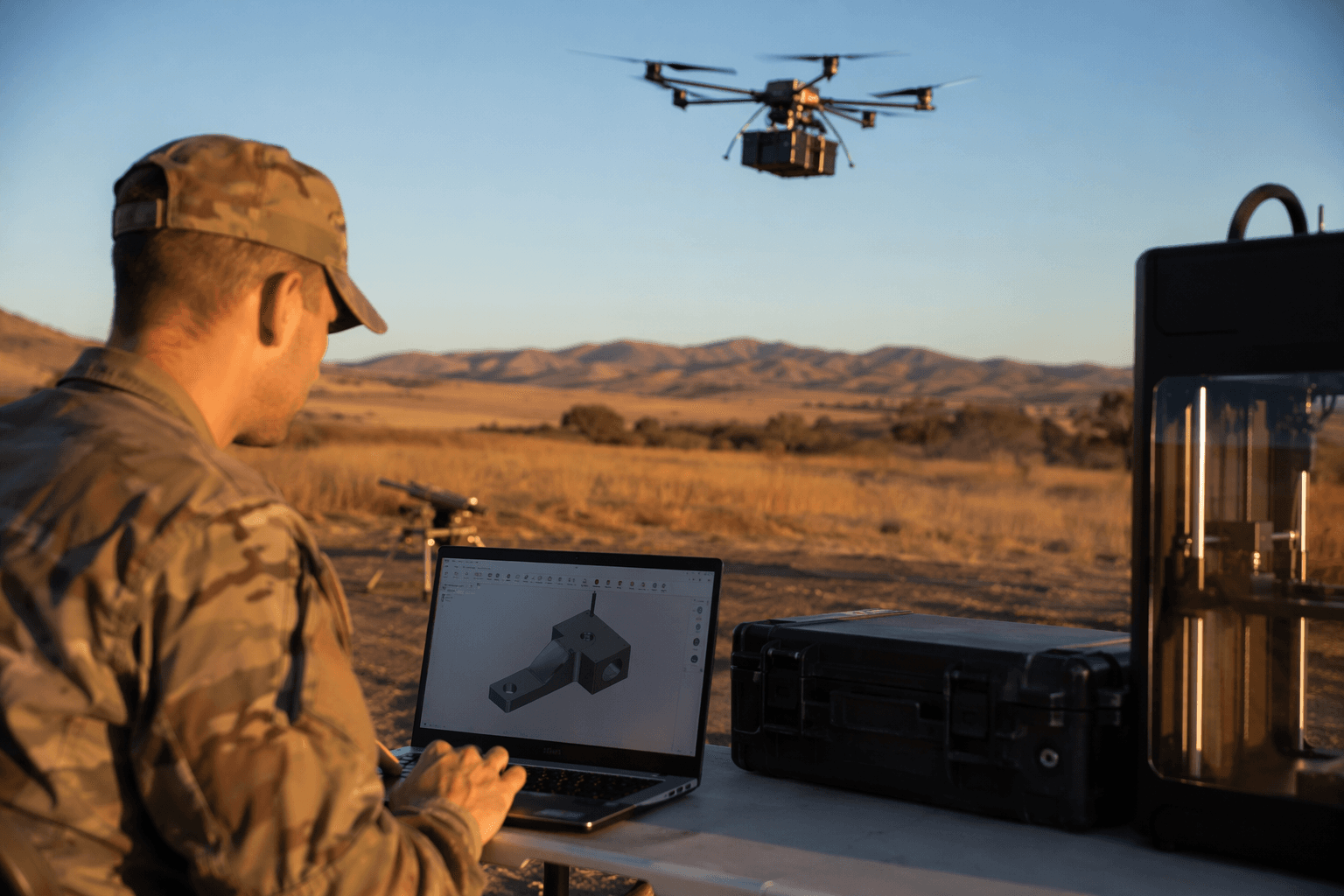
A broken part was only the beginning. At Camp Roberts, FLEETWERX ran FLEET-X as a live test of how a critical component could be identified, made, and delivered in real time, with the entire workflow stretched across the range instead of trapped inside one machine.
The exercise took place during Joint Interagency Field Experimentation 26-3, held May 11-15, 2026 at the Naval Postgraduate School Field Laboratory at Camp Roberts. That JIFX event was focused on Artificial Intelligence and Multi-Domain Command and Control, and FLEET-X fit neatly into that theme by treating additive manufacturing as a system of linked steps: a part requirement was identified, digital files and system information were prepared, software tools routed the request to the right manufacturing capability, a partner produced the component, and unmanned systems carried the finished part to where it was needed.
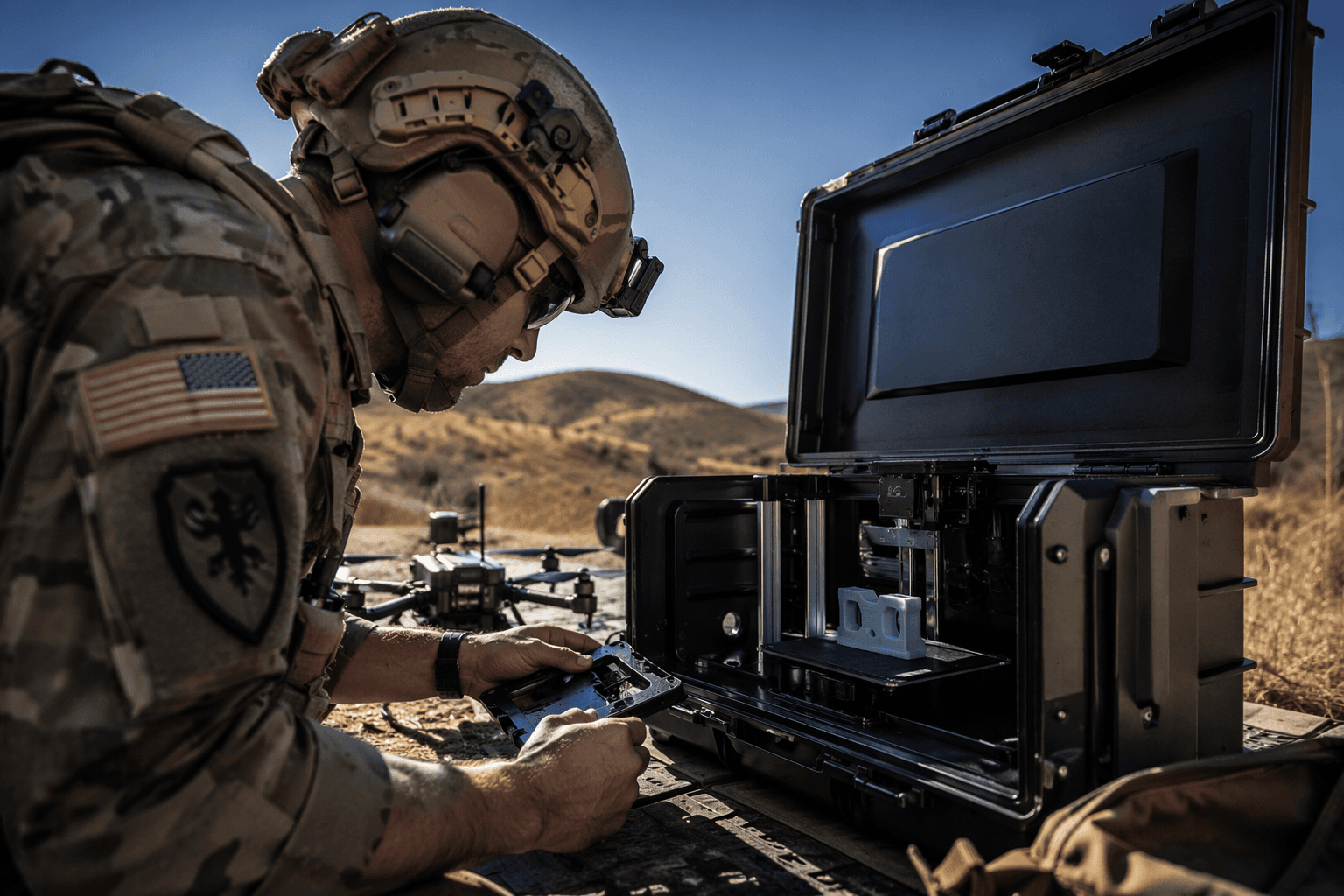
That end-to-end setup is what separated FLEET-X from a simple printer demo. The point was not just whether a machine could lay down material, but whether the whole chain around it could move fast enough to matter when equipment fails. In deployed settings, every hour lost waiting on traditional supply lines can mean more downtime, more risk, and more pressure on crews trying to keep systems running.
Ethan Brown, FLEETWERX’s program manager, framed the exercise around production flexibility, speed, and effective system management. Chris Curran of the NPS Consortium for Advanced Manufacturing Research and Education said the team wanted to see how manufacturing, AI-enabled workflow tools, and autonomous delivery systems performed together before those pieces were used at larger exercises and in real operations. That is the real lesson for the desktop world too: the value is not only in the printer on the bench, but in how quickly a problem becomes a usable part.
FLEETWERX itself was established in 2023 through a Partnership Intermediary Agreement between DEFENSEWERX and the Naval Postgraduate School, linking industry, academia, and government around applied manufacturing problems. NPS says CAMRE’s mission is to move research and education into warfighter capabilities and to accelerate expeditionary and domestic advanced manufacturing, and the school has already used JIFX and other field events to pressure-test that idea. In September 2025, CAMRE operationalized advanced manufacturing during Trident Warrior 25, including real-world repairs aboard ships and at the NPS AM lab, while the school’s Advanced Manufacturing Center, dedicated in April 2024, added multiple 3D printers and diagnostic machines.
That history made FLEET-X feel less like a standalone event and more like the next step in a system that is learning to keep the supply chain moving as fast as the print.
Know something we missed? Have a correction or additional information?
Submit a Tip