3D-Printed Orrery Uses One Motor to Simulate the Solar System
A one-motor 3D-printed orrery turns gears, code, and planetary motion into a desk model that looks good enough to display and smart enough to teach from.
Why this orrery lands
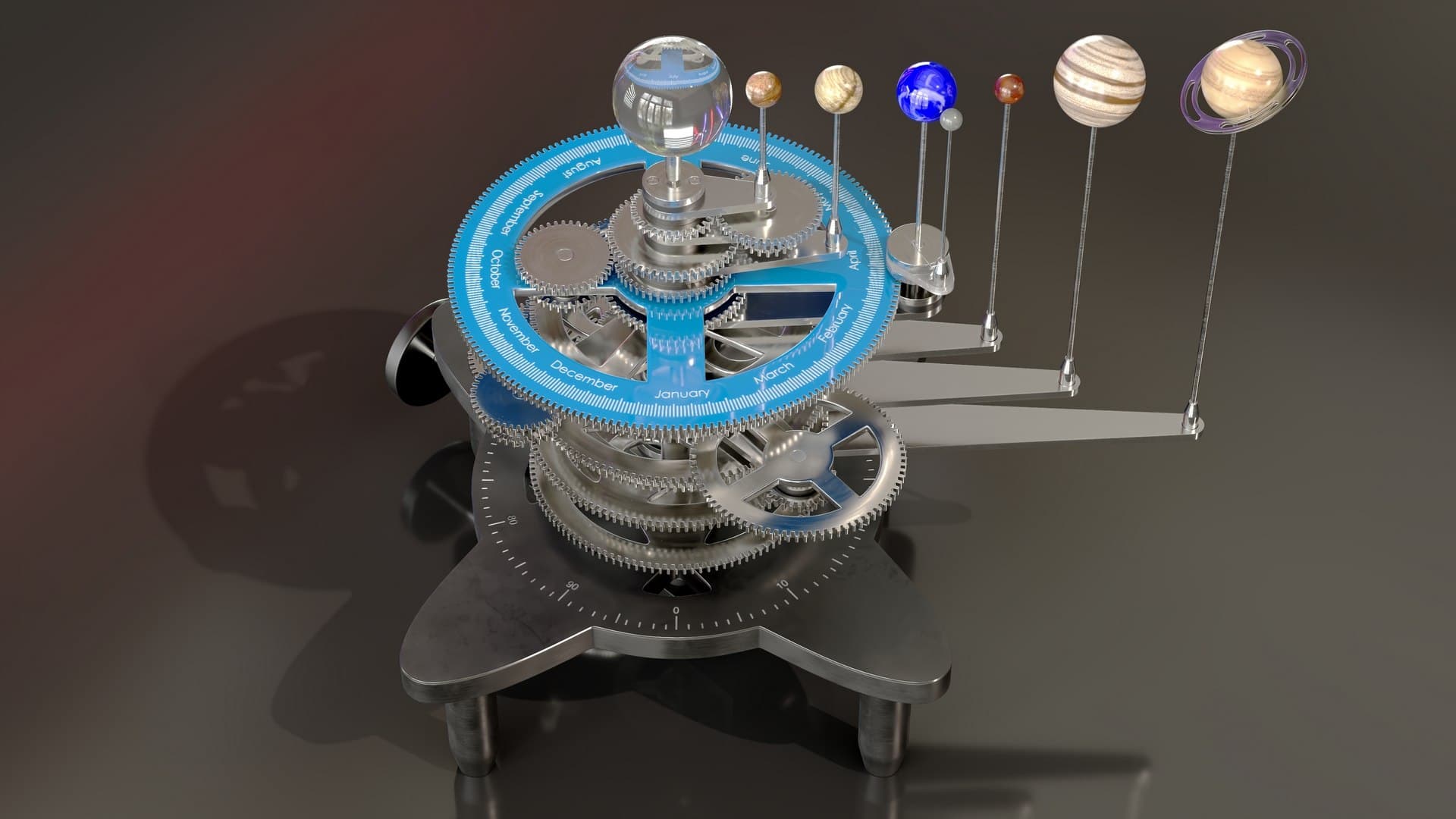
A good 3D print does more than sit there, and this one moves. The illusionmanager solar system model packs the Sun, the Moon, and the planets into a single-motor orrery, then uses an ESP32 to calculate where the bodies should be. That is the sweet spot for desktop fabrication: visible mechanics, real motion, and just enough electronics to make the whole thing feel alive.
What makes it worth paying attention to is not the astronomy theme alone. It is the engineering choice to make the motion come from one motor instead of a tangle of drives and a mess of wiring. That keeps the build clean, the display compact, and the whole project approachable for anyone who likes printed mechanisms that do something instead of just looking busy.
Why one motor is the right flex
A one-motor orrery is a much sharper design challenge than a multi-motor showpiece. You have to get the gear ratios right, place the shafts carefully, and plan the motion so the planets do not fight the mechanism. When it works, the payoff is immediate: one power source can drive an entire miniature solar system without the project turning into a maintenance headache.
That matters because 3D printing is at its best when it turns a complicated mechanical idea into something you can prototype at home. Gears, supports, housings, and custom linkages are exactly the kind of parts a desktop FDM printer handles well. You are not just printing a decorative shell here. You are printing the machine itself.
What the ESP32 adds
The electronics are not there to overwhelm the design. The ESP32 microcontroller runs an astronomical simulation and calculates the positions of the celestial bodies, which is a smarter approach than trying to brute-force the movement with more motors. In practice, that means the model can coordinate the display as a system, not as a pile of unrelated parts.
That combination of code and printed mechanism is what makes the project feel modern without losing the charm of a physical instrument. It also gives the build a clear educational edge. You can see how software, timing, and mechanical ratios work together, which is a lesson that a static model can never deliver.
Why orreries still matter
An orrery is a mechanical model of the solar system, and Britannica notes that the device was probably invented by George Graham under the patronage of Charles Boyle, the 4th Earl of Orrery. It has been in use for several centuries, which explains why the format still feels instantly legible today. People understand at a glance what they are looking at: a physical explanation of planetary motion.
Britannica also points out how the scaling works in one example, where the Earth completes a year’s rotation in about 10 minutes. That kind of compression is exactly why orreries remain so compelling. They take a scale that is almost impossible to grasp in real life and turn it into something you can watch in a few minutes on a desk.
The other reason the format survives is that it is a reminder that the solar system is bigger and messier than most models suggest. Modern astronomy recognizes eight planets and more than 400 known planetary satellites, so any tabletop orrery is necessarily a simplified version of reality. That limitation is not a flaw. It is the point. A good model makes the abstraction clear instead of pretending to be the whole sky.
What this build says about 3D printing
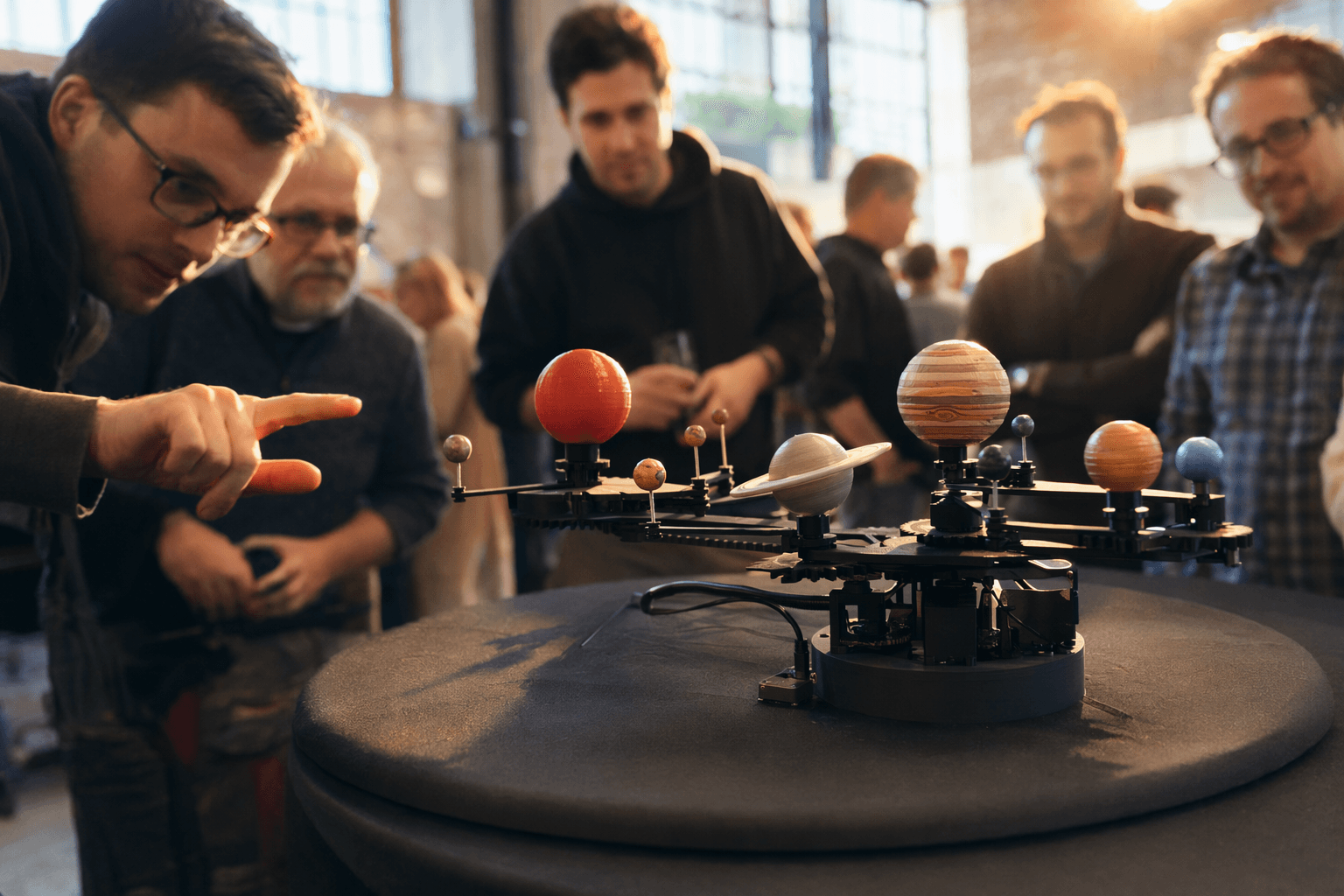
This project is a neat example of where 3D printing still beats almost everything else: visible mechanics. A printed orrery is not just a gadget with a theme. It is a display object that teaches motion, gearing, timing, and astronomical scale all at once. That is a much stronger argument for the hobby than another trinket that only exists to prove a printer can make a shape.
It also fits a broader maker trend. Animated desk objects, educational models, and motion systems are everywhere in the community because they show off the best parts of the medium. The printed pieces are not the final product in the usual sense. They are the mechanism, and that is where the interesting work lives.
The maker’s track record matters too
illusionmanager is not treating this as a one-off stunt. The creator’s YouTube channel includes other celestial and mechanical builds, including a Gentlemen’s Orrery, a tiny orrery, an astronomer’s watch, and an astronomical clock that tells you solar and lunar eclipses. That kind of catalog tells you the approach is deliberate, not accidental.
There is also a celestiscope described as a very accurate orrery by illusionmanager, along with instructions for making it yourself. Taken together, those projects show a maker who understands that the appeal of these builds is not just motion for motion’s sake. The point is to make mechanical astronomy understandable, repeatable, and good-looking enough that people want to keep it on display.
What to steal for your own build
If you are planning your own kinetic model, this orrery gives you a useful blueprint. Start with a motion concept that can be driven cleanly from one source, then let the gear train do the heavy lifting. Keep the display readable, because the best mechanical models are the ones people can understand without a manual.
A few practical lessons stand out:
- Use the printer for the parts that would be expensive or annoying to machine by hand, especially gears, mounts, and internal supports.
- Let software handle the timing and position math if the mechanism needs accurate coordination.
- Keep the motion visible. A model that teaches should let people see how it works.
- Design for scale, not just accuracy. A simplified solar system model is still valuable if the mechanism is elegant.
That is the real value of this build. It shows how a single motor, a small microcontroller, and a well-planned print can turn the solar system into something you can watch, study, and actually want to put on a shelf.
This article was produced by Prism’s automated news system from verified source data, official records, and press releases, then run through automated quality and moderation checks before publishing. The system is built and supervised by the people who set the standards it runs under. Read our full AI policy.
Did this article answer your question?