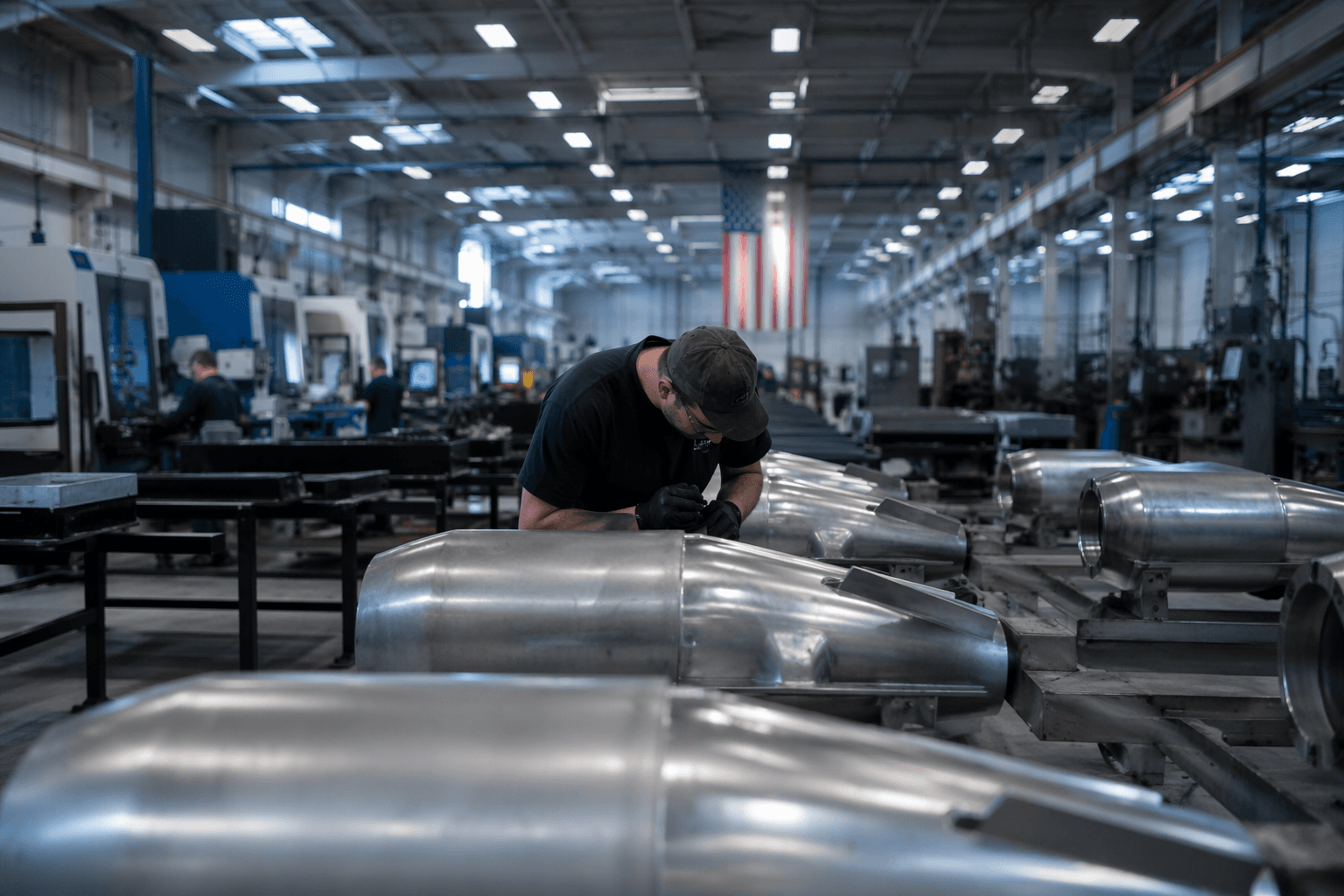
3D Printing Breakthroughs Span Giant Metal Printers, Soft Robots, Sustainable Filaments
A 3,050 mm metal printer, mold-free soft robots, and waste-based filaments show 3D printing getting bigger, smarter, and more practical.
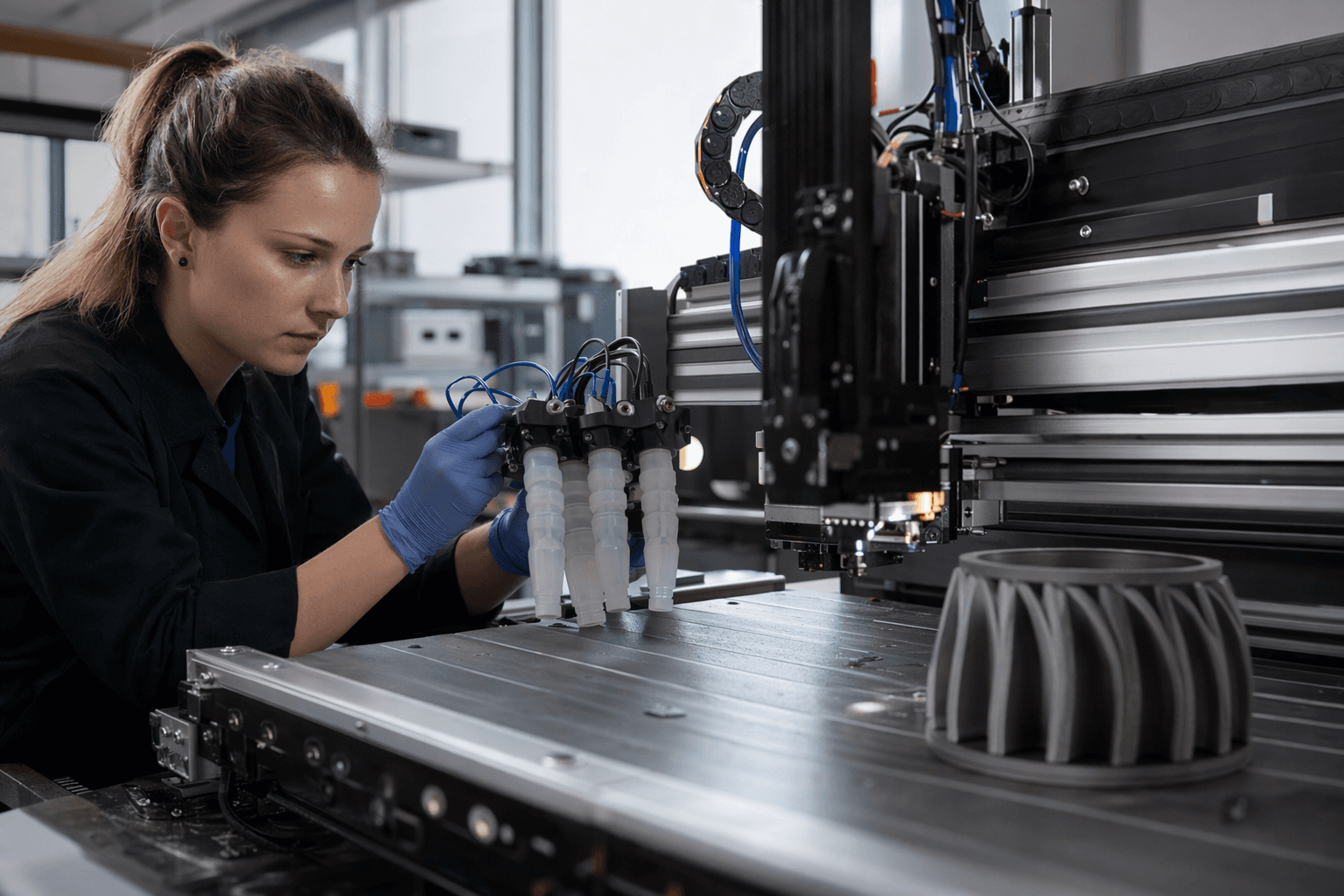
A metal powder bed fusion system with a 3,050 mm by 3,050 mm build area changes the question from whether a part can fit to how many assemblies can be deleted. That scale, paired with support for up to 256 lasers, is the clearest signal in the latest roundup that additive manufacturing is pushing harder into end-use production, not just showpiece parts.
Giant metal printing is now a production conversation
Eplus3D’s EP-M3050 is built around one blunt promise: go beyond the three-meter barrier and make large integrated parts instead of stitching them together later. The machine’s X-Y build area measures 3050 mm by 3050 mm, and its Z axis can be customized up to 5000 mm, which puts it in a different class from the desktop and mid-size systems most people think of first when they hear “3D printing.”
The practical payoff is clear. Large components for aviation, energy, industrial manufacturing, and oil and gas are often expensive not because they are impossible to make, but because they require joining, machining, inspection, and rework after fabrication. A platform built for one-piece or fewer-piece production can reduce those downstream headaches, especially when the part count in a system has been the real bottleneck.
The laser count matters too. Up to 256 lasers suggests a machine designed for throughput and control at serious scale, not just a bigger version of a familiar lab printer. For anyone watching the high-end metal segment, the signal is that large-format PBF is no longer just about volume. It is about whether additive can compete on assembly simplification and structural integration for industrial parts that used to live in the weld shop.
Soft robots get a mold-free path to complex shapes
The roundup then pivots from heavy metal to something almost the opposite in feel: soft robotics. Harvard engineers have developed a rotational multimaterial 3D printing method that uses a dual-material nozzle to print a flexible outer shell and a removable inner gel, creating structures that bend in programmed ways when inflated.
That detail matters because the old route usually involved molds, and molds are where a lot of soft robot ideas slow down or get trapped. As Jackson Wilt put it in the team’s explanation, “we don’t have a mold.” That is the real bench-level shift here: the geometry is not limited by a casting workflow, so the machine can build more intricate forms directly.
The study, published in Advanced Materials, was led by Jackson Wilt and former postdoctoral researcher Natalie Larson in Jennifer Lewis’s lab at the Harvard John A. Paulson School of Engineering and Applied Sciences. The technique can produce flower-like actuators and hand-shaped grippers, which is a useful clue about where the work could land next. These are not abstract shapes for a microscope slide. They are the kinds of forms that can translate into healthcare and surgical devices, where controlled motion and softness can matter as much as strength.
For printers and researchers, the takeaway is less about novelty and more about repeatability. A process that can rotate the direction of bend during printing gives designers another lever for programming motion, which is exactly the kind of control soft robotics has needed to move from clever demo to usable hardware.
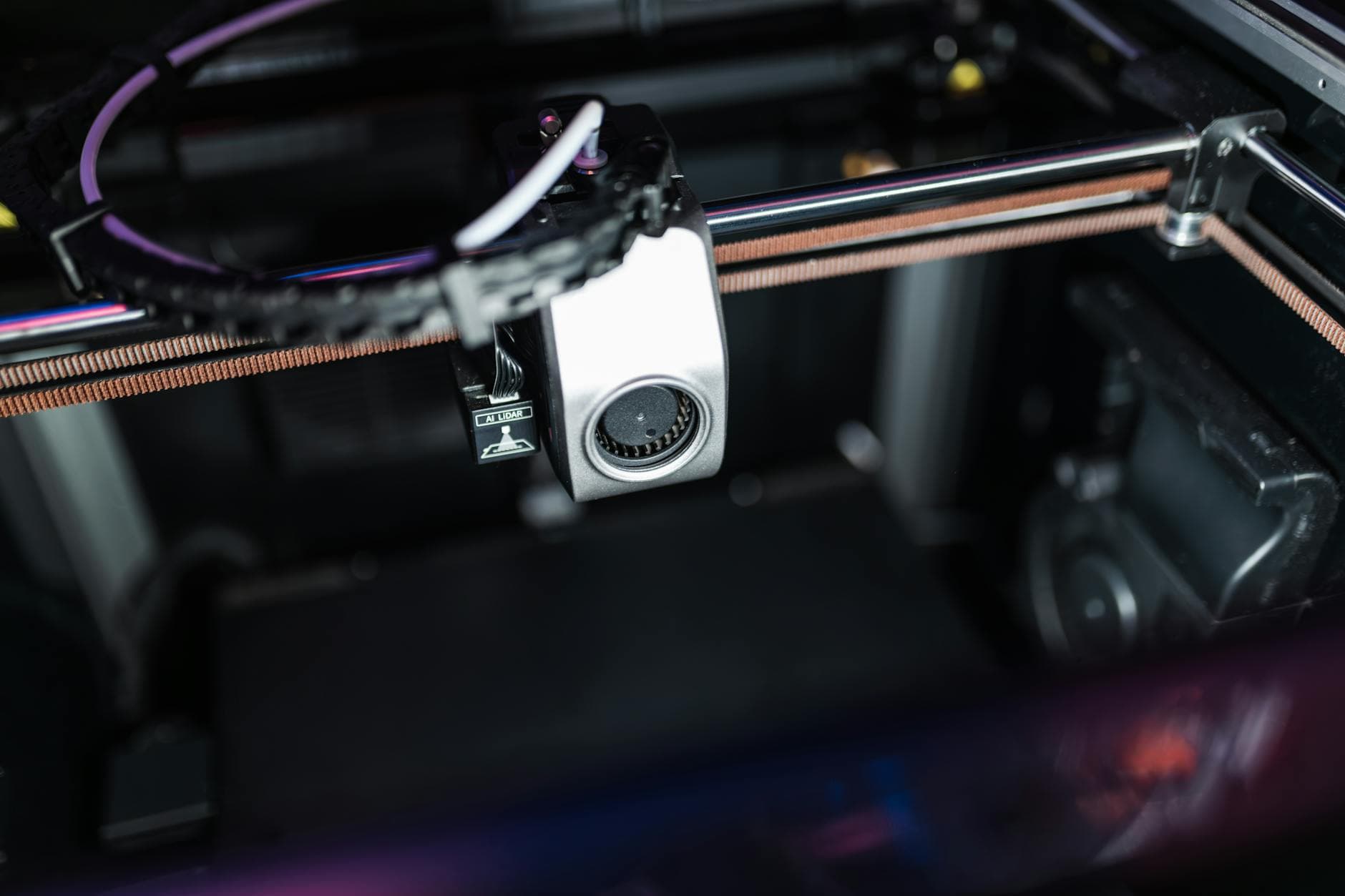
Agricultural waste is becoming a filament ingredient, not just a disposal problem
The sustainability story in this roundup is not a vague “green materials are coming” pitch. It is about actual feedstocks and fillers being tested for printability and performance. Researchers are looking at agricultural byproducts such as corn cobs, rice husks, wheat straw, coconut shells, and biochar as ways to reduce reliance on synthetic polymers and support circular-economy goals.
The most useful part for FDM users is that the material questions are starting to get specific. One 2026 study found that PLA combined with cellulose fibers extracted from corn cobs showed feasible FDM printability. That means the blend did not just exist on paper as an eco-friendly idea; it could actually be processed in a way that matters to someone loading filament and watching first-layer behavior.
A separate 2026 study adds another important piece: small amounts of biochar derived from agricultural waste can improve the quality and performance of 3D-printed plastics. That is a bigger deal than it may sound. Plenty of “sustainable” additives sound good until they wreck layer adhesion, clog a nozzle, or make a part brittle. Here, the reported direction is the opposite, with a waste-derived additive improving the finished result rather than merely lowering the guilt level.
For makers, this is where sustainable filament stops being a niche curiosity and starts becoming a material-selection problem. The question is no longer only whether a filament is made from recycled or renewable content. It is whether the blend prints cleanly, holds up under load, and improves the part enough to justify the swap.
What matters most if you print, spec, or buy parts
Taken together, these three threads point in the same direction. Big metal systems are chasing fewer joints and larger integrated structures. Soft robotics is getting a cleaner fabrication path by dropping molds. Agricultural waste is moving from disposal stream to printable ingredient, with early studies showing that PLA-corn-cob blends can run on FDM and biochar can improve plastic performance.
That combination is why the latest roundup feels more practical than flashy. It is not just that additive manufacturing is advancing. It is that the advances are landing where operators feel them: on the build platform, in the nozzle, and in the part that comes off the machine.
This article was produced by Prism’s automated news system from verified source data, official records, and press releases, then run through automated quality and moderation checks before publishing. The system is built and supervised by the people who set the standards it runs under. Read our full AI policy.
Did this article answer your question?