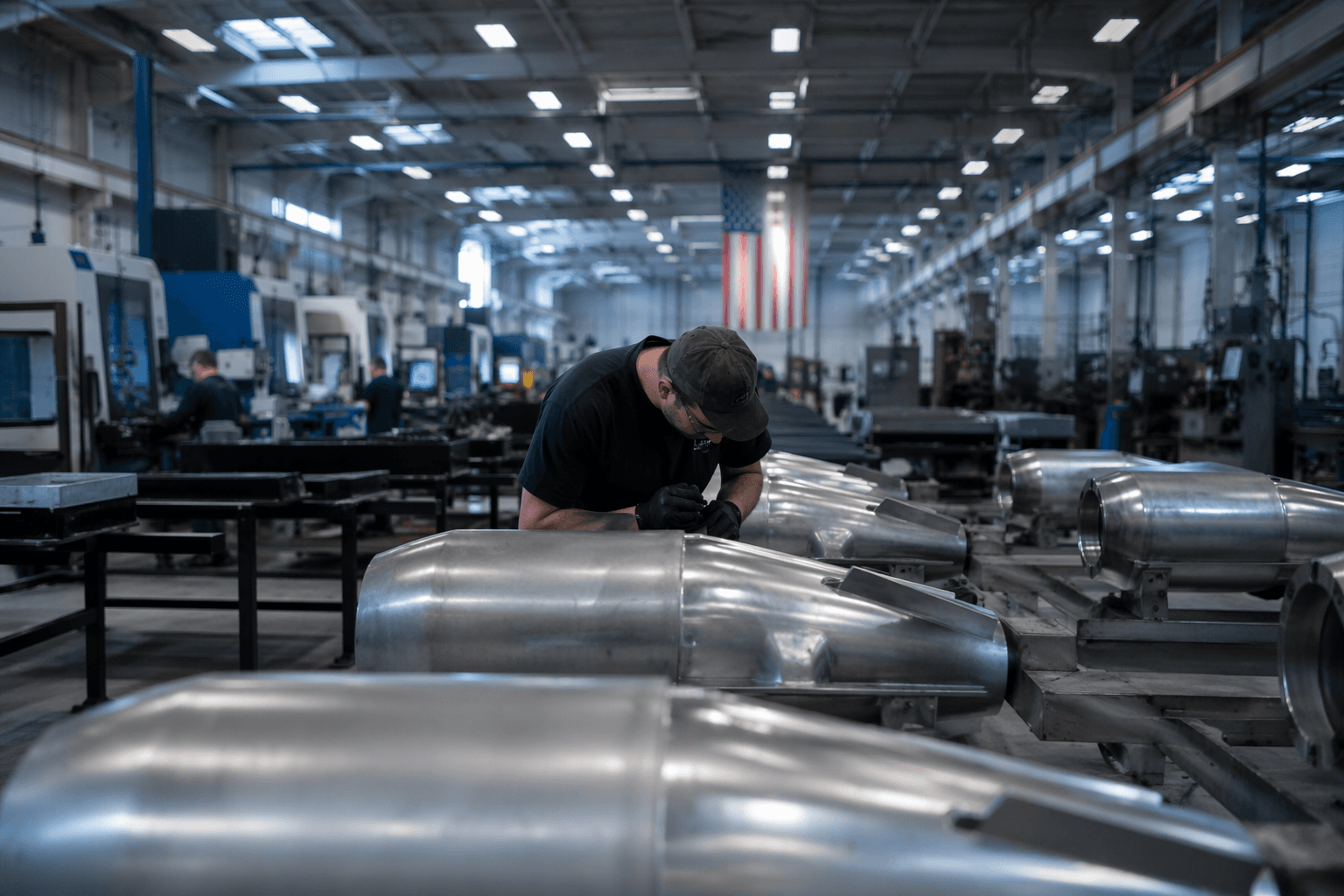
Innospace commercializes support-free titanium 3D printing for aerospace parts
Innospace says its support-free titanium process cuts build time 2.5x and costs up to 40% while targeting propellant tanks and other curved aerospace parts.
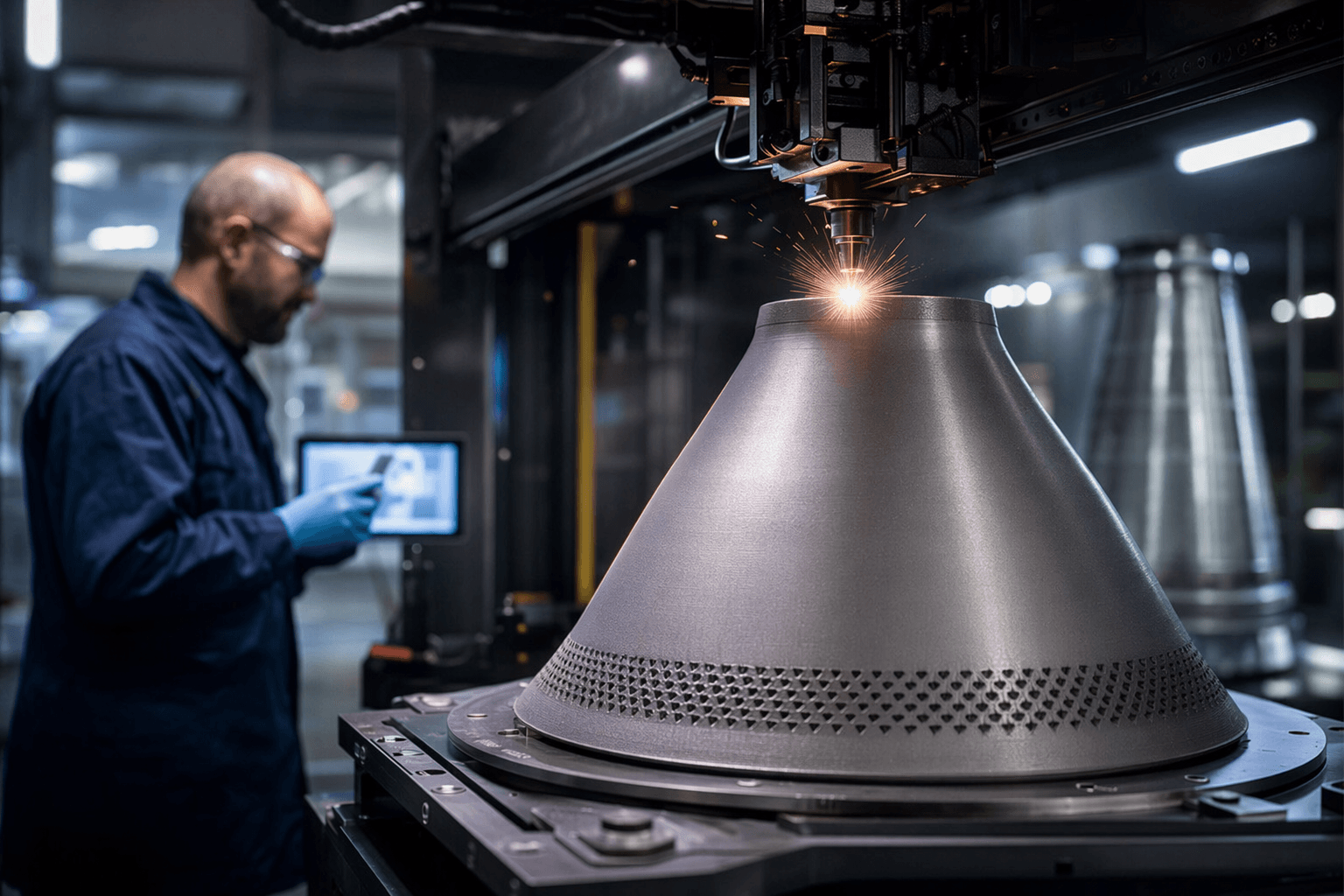
Innospace said it commercialized a support-free metal additive manufacturing process for titanium parts on April 9, claiming a first for South Korea and aiming squarely at the kind of geometry that usually turns metal AM into a support-removal slog. The process is designed for complex curved, spherical and dome-shaped components, including satellite propellant tanks and other pressure-vessel parts, with industry reporting putting the gains at 2.5x faster production and up to 40% lower cost.
That matters because support structures are not a small nuisance in metal printing. They burn time, soak up powder and machine hours, and add finishing work that can easily dwarf the print itself. Innospace, headquartered in Sejong, South Korea, is pitching this as a way to make high-precision titanium hardware cleaner to produce and easier to scale, not just as a lab trick. CEO Kim Soo-jong said the advanced metal manufacturing sector has high technological barriers to entry and strict quality-verification standards, and said the company plans to push its additive expertise into space, defense and satellite-structure markets.
The move also fits the way Innospace has been building itself around flight hardware rather than abstract R&D. In 2025, the company created an Advanced Manufacturing Division to produce rocket engines and core components in-house, and industry reports said that division used metal powder-bed-fusion equipment to support serial production of Hanbit parts. That is the real signal here: this is not a paper exercise, it is a manufacturing capability being folded into an active launch company.
The timing also lands against a broader South Korean push in aerospace metal AM. In 2025, Korea Institute of Industrial Technology-led researchers, working with Korea Aerospace Research Institute and other partners, reported a 130-liter titanium tank, 640 mm in diameter, that survived cryogenic pressure testing under liquid-nitrogen conditions. The tank used Ti-6Al-4V and directed-energy deposition, and it showed that Korea’s aerospace supply chain is moving closer to space-grade titanium hardware, one pressure-vessel milestone at a time.
For FDM and resin users, the lesson is simpler than the headline: design out supports whenever you can. Innospace’s pitch is the industrial version of the same rule that saves desktop makers the most pain. Fewer supports mean cleaner surfaces, less post-processing and fewer geometry compromises, whether you are printing a resin bracket or a titanium dome.
This article was produced by Prism’s automated news system from verified source data, official records, and press releases, then run through automated quality and moderation checks before publishing. The system is built and supervised by the people who set the standards it runs under. Read our full AI policy.
Did this article answer your question?