All3DP guide helps hobbyists choose TPU only when it fits the job
TPU only pays off when the part truly needs flex. The smart move is knowing when elasticity beats PLA or PETG, and when it just adds tuning headaches.
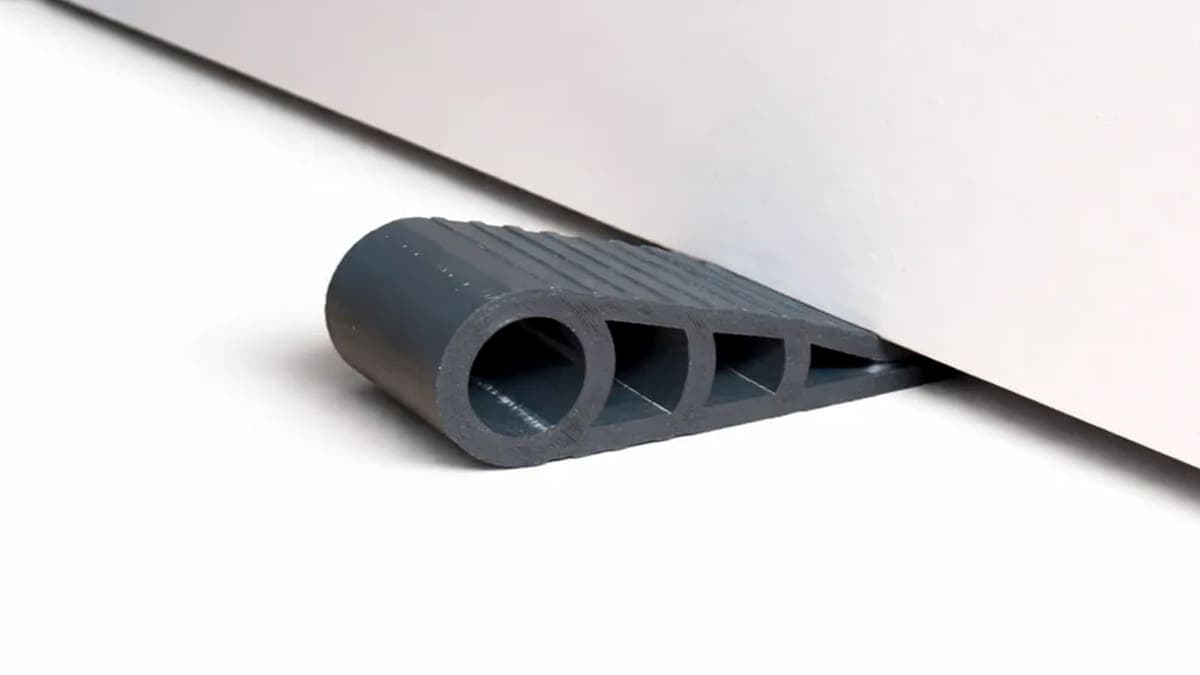
A gasket that leaks, a bumper that cracks, or an RC tire that flattens out are the kinds of failures TPU is meant to prevent. All3DP’s June 17, 2026 guide is built around a useful question in flexible filament: what part failure would cost you more, a little extra tuning or the wrong material altogether?
When TPU is the right tool
TPU makes the most sense when the part has to move without giving up. Spacing washers and other high-stress parts are obvious candidates; Prusa’s materials guide includes them, but the list gets more interesting when you think about everyday hobby prints: stamps, RC tires, shoe soles, belts, grips, gaskets, protective bumpers, and wearable components all benefit from a material that can deform and rebound instead of cracking or snapping.
That same logic applies to repeated bending or compression, and to end-use flexible parts rather than decorative softness. Formlabs’ TPU 90A Powder is aimed at strong, flexible, skin-safe prototypes and finished parts, with uses that include grippers, padding, cushions, prosthetics, orthotics, and patient-specific devices.
Where rigid filament still wins
The case against TPU is not that it is bad. It is that it is often unnecessary. If the part is mostly structural, mostly cosmetic, or only needs to be easy to print, standard filament usually gets you there faster and with less risk. Choose TPU only when flexibility is doing real work, not because the spool looks interesting on the shelf.
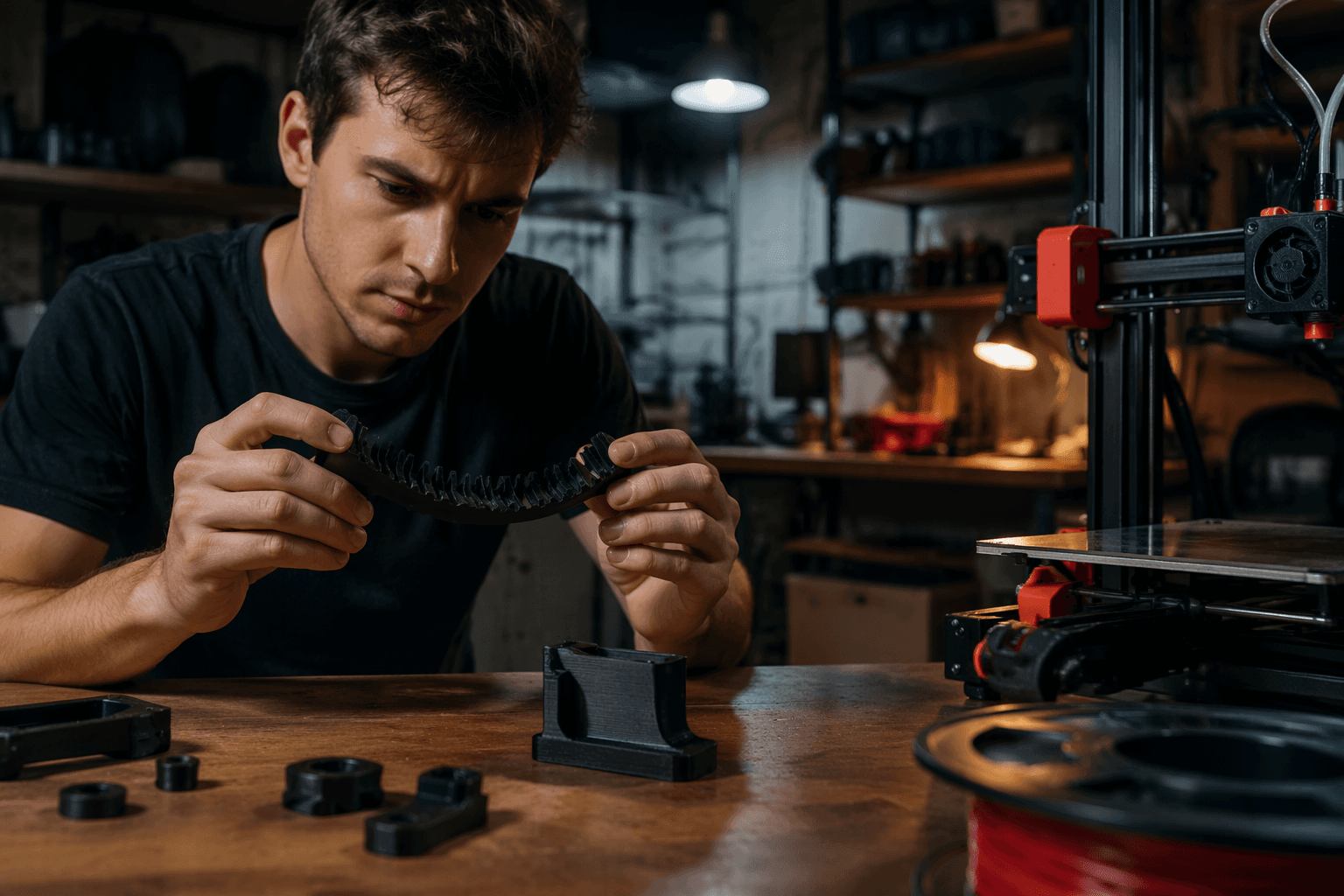
Flexible materials bring excellent flexibility, tenacity, and chemical resistance, but they are relatively uncommon, more expensive, and best left to advanced users because the print difficulty is high. In practice, that means TPU can be the wrong answer for rigid enclosures, brackets, large flat parts, and anything where clean bridging or sharp overhangs matter more than softness. If PLA or PETG already fits the job, TPU only adds complexity.
The printing tax that comes with flex
TPU asks more of your machine and more of your patience. The usual pain points are low print speed, very bad bridging and overhang performance, difficult support removal, stringing, and hygroscopic behavior. That last point matters because TPU’s moisture sensitivity can turn a promising spool into a frustrating string factory if you do not store and dry it carefully.
This is why flexible filament is rarely the easiest path for a first pass. A part that could be printed cleanly in a rigid material may turn into a slower, fiddlier job in TPU, especially if you need supports or crisp top surfaces. The threshold is simple: choose TPU when the part’s job depends on compliance, not when you just want to avoid redesigning the model for a more forgiving filament.
- Use TPU when the part needs to bend repeatedly without failing.
- Use TPU when cushioning, grip, or skin contact matters.
- Use a rigid filament when speed, clean geometry, and easy supports matter more.
- Use TPU despite the tuning hassle when a rigid print would crack, slip, or feel wrong in use.
Why the category keeps expanding
TPU is used in automotive, transportation, aerospace, sporting goods, and medical device work. The hobby side is getting pulled along by the same pressure: more use cases, more formulations, and more reasons to print flex without treating it like a special occasion.
Recreus is part of that arc. Recreus entered the FDM market in 2013 with Filaflex, which it presented as the first TPU filament ever developed for FDM 3D printers. Its Filaflex line now spans Shore hardnesses from 60A to 95A, which gives makers a wide spread from softer, more supple behavior to firmer flexible parts. Recreus says its Filaflex 2.20 system can cut a part that once took about eight hours in conventional TPU to under three hours.
What the latest products are trying to fix
A lot of the recent innovation around TPU is aimed at one thing: making it less punishing to print. Bambu Lab has launched TPU for its AMS, Amolen showed new TPU variants at RAPID + TCT 2025 in Detroit, and Recreus’s faster Filaflex 2.20 system points to the same trend from a different angle. The market is clearly rewarding materials that keep TPU’s useful stretch while reducing the time and friction that usually scare people off.
The TPU filament market is at USD 819.3 million in 2025 and is projected to reach USD 2.0789 billion by 2034, at a 10.9 percent CAGR.
This article was produced by Prism’s automated news system from verified source data, official records, and press releases, then run through automated quality and moderation checks before publishing. The system is built and supervised by the people who set the standards it runs under. Read our full AI policy.
Know something we missed? Have a correction or additional information?
Submit a Tip