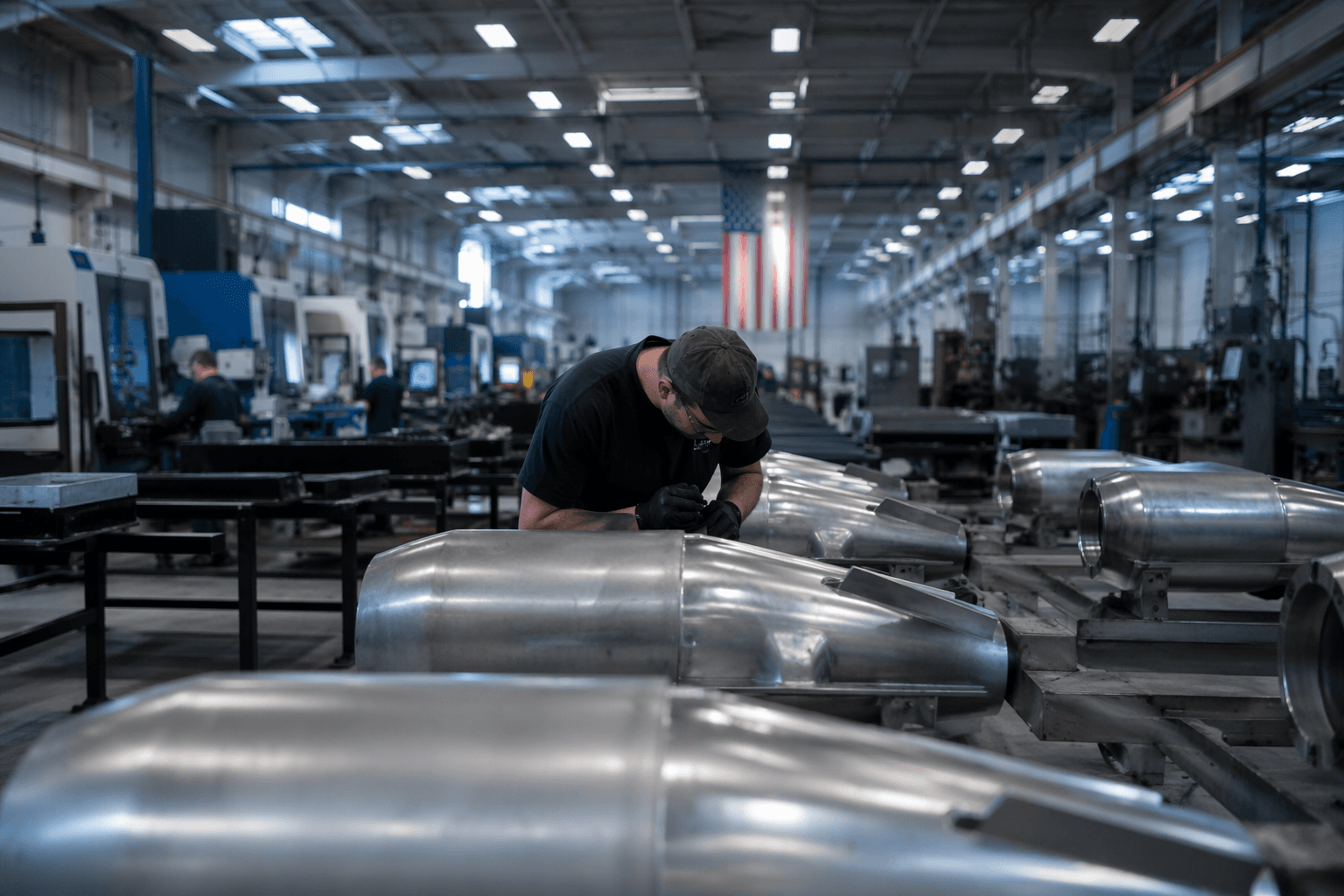
Alquist 3D to print Walmart expansions with A1X concrete robots
Walmart is going bigger with Alquist 3D’s A1X robots, turning 3D-printed concrete from a pilot into repeat retail expansion work.
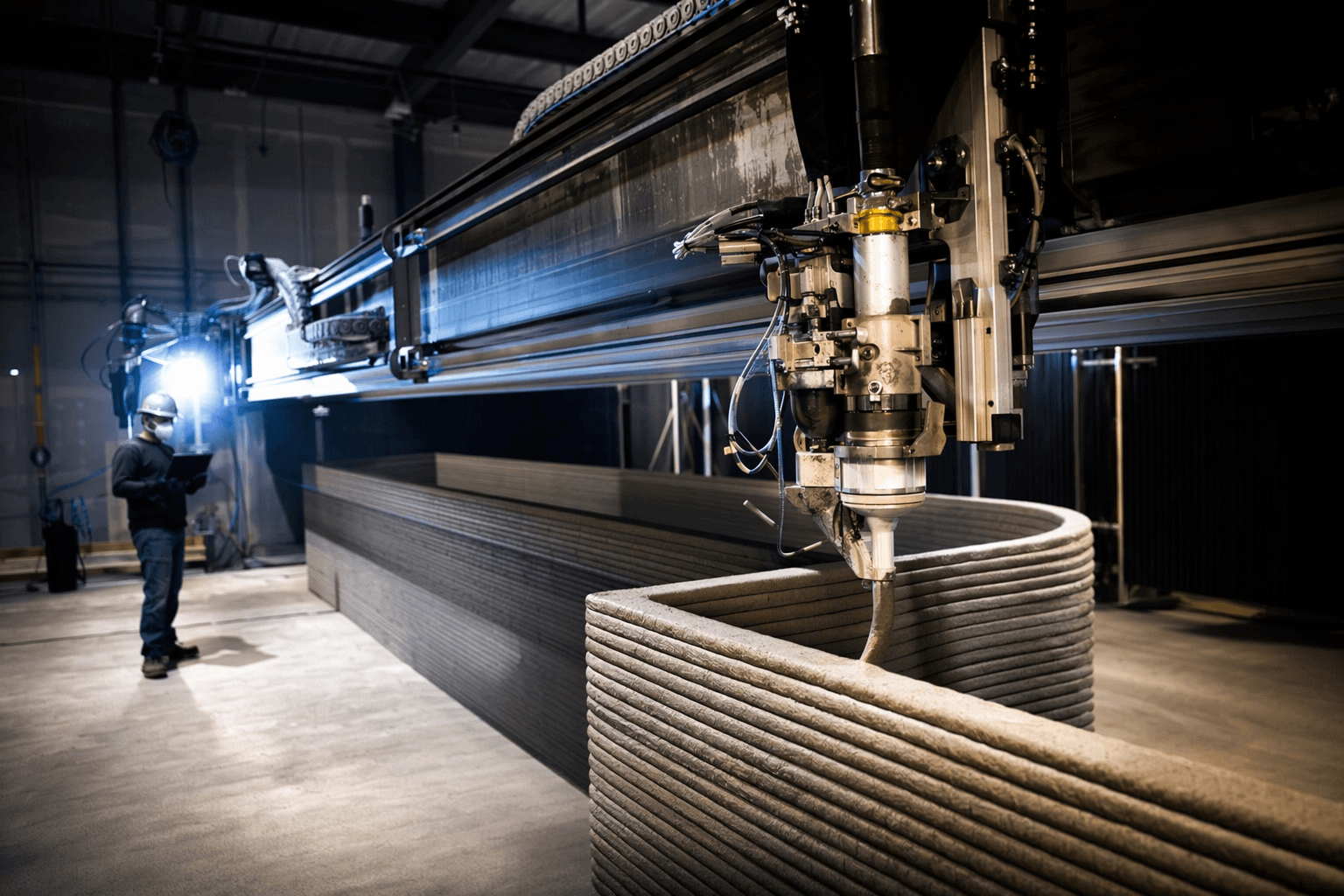
Alquist 3D is moving its concrete-printing play from one-off showcase builds to a repeatable Walmart rollout, and the scale is hard to miss: more than a dozen store expansions across the United States will use the company’s A1X robotic system.
The latest wave builds on two earlier Walmart projects that already gave the format real-world proof. In Athens, Tennessee, Walmart opened a nearly 8,000-square-foot addition with 20-foot-high printed walls, a build Walmart described as one of the largest free-standing 3D-printed commercial concrete structures in the United States. In Owens Cross Roads, Alabama, Alquist and Walmart followed with a 5,000-square-foot expansion whose walls were printed in 75 hours and completed in one week. That Alabama addition supported Walmart’s online pickup and delivery operations, and Tom Ward, Walmart U.S. senior vice president of central operations, called it “a huge milestone” because the job did not exist three years earlier.
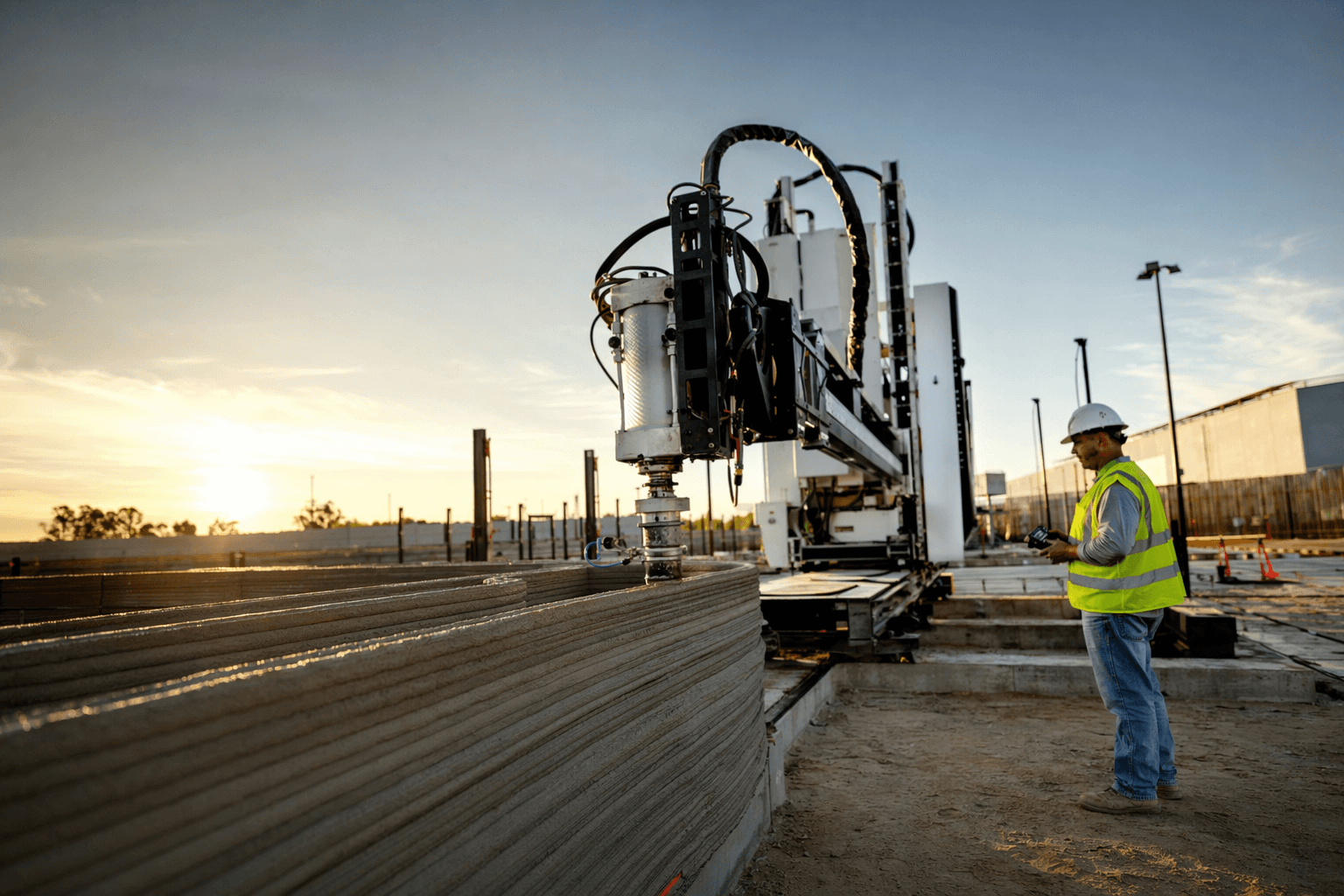
Now Alquist is pushing the model into something closer to an industry standard. The company’s April 2026 announcement said 12 A1X systems were purchased through Hugg & Hall and FMGI, along with 2 A1 systems for education and workforce programs. Alquist said the A1 Series launch marked its first major commercial deployment of the platform, and it said the broader Walmart program will use a new partnership structure in which FMGI owns and leases the printers while Hugg & Hall finances and services them.
For hobby readers, the hardware details are the part worth watching. The A1X uses a KUKA robotic arm on a modular rail system, giving the machine enough reach to extend build dimensions on site. Alquist says that setup has let it print walls up to 20 feet high, with the printer laying down inch-thick layers at about 200 mm/s. That is not desktop speed, but it does show where the big gains in concrete printing come from: wide bead deposition, consistent wall geometry, and enough throughput to keep crews moving instead of waiting on forms.
The catch is familiar to anyone who has watched additive manufacturing mature in other materials. Material costs still matter, and Alquist has not framed concrete printing as a magic cost killer. The savings come from shorter build times and smaller crews, which only work if the system can be deployed, serviced, and trained like normal construction equipment. That is why the company has paired the rollout with Aims Community College, where a 3D concrete printing course runs fully online, is self-paced, takes 20 to 25 hours, and starts the first Monday of each month.
That training pipeline matters as much as the Walmart contract. Alquist’s move from Athens to Alabama and now to a dozen-plus expansions shows the same lesson the maker world keeps relearning: once the workflow, service model, and materials start lining up, a technology stops looking like a demo and starts looking like infrastructure.
This article was produced by Prism’s automated news system from verified source data, official records, and press releases, then run through automated quality and moderation checks before publishing. The system is built and supervised by the people who set the standards it runs under. Read our full AI policy.
Did this article answer your question?