ATF Targets 3D Printed Gun Parts, Raising Hobbyist Regulation Fears
ATF’s focus is moving from printed guns to replica parts and conversion devices. That could put props, cosplay shells and file-sharing communities under new scrutiny.
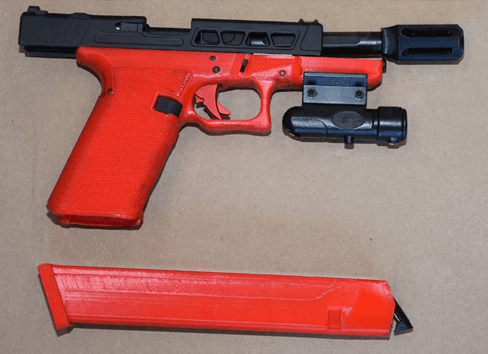
The latest ATF push is no longer aimed only at finished 3D-printed guns. It is moving into replica parts, unfinished frames and conversion devices, a shift that could put prop builders, cosplay makers and file-sharing communities under far closer federal scrutiny.
ATF has said people who make their own firearms may use a 3D printing process so long as the firearm is detectable under the Gun Control Act. The agency also says privately made firearms do not need serial numbers or registration if the maker is not engaged in the business of manufacturing firearms for livelihood or profit. That permission, however, stops where a print crosses into a regulated firearm or a prohibited component.
The clearest warning came in ATF’s December 27, 2022 open letter, which said a “partially complete, disassembled, or nonfunctional” pistol frame can still be regulated if it may readily be completed into a functional frame. That interpretation landed after the ATF and DOJ frame-or-receiver final rule took effect on August 24, 2022. For makers, the practical line is tighter than it first appears: a print does not have to leave the printer ready to fire before it starts drawing federal attention.
The agency’s enforcement focus has also widened beyond whole guns to parts that change how a weapon operates. Federal prosecutors and ATF have pursued 3D-printed machine gun conversion devices, including switches, auto sears, swift links and lightning links. ATF says machinegun conversion devices made by additive manufacturing are treated as machine guns under federal law, which puts printed conversion hardware in the same enforcement lane as the gun itself.
That approach fits a longer federal pattern. In 2021, the DOJ Office of Inspector General said ATF does not have statutory authority to regulate the methods used to manufacture firearms, but it does enforce federal laws governing illegal sale, possession and use. ATF says it routinely collaborates with the firearms industry and law enforcement to monitor new technologies and manufacturing trends that could affect public safety. In a 2022 case, the agency said a 3D-printed plastic handgun successfully fired and passed through a TSA metal detector without setting off the alarm, and in 2024 ATF highlighted a national crackdown on machine gun conversion devices, including 3D-printed versions.
For the 3D printing world, that signals a broader precedent. The question is no longer just whether a print is a gun. It is whether an unfinished shell can be “readily” completed into a frame, or whether a small printed part can act as a conversion device. That is where ordinary makers, replica hobbyists and STL-sharing communities can accidentally cross the line.
This article was produced by Prism’s automated news system from verified source data, official records, and press releases, then run through automated quality and moderation checks before publishing. The system is built and supervised by the people who set the standards it runs under. Read our full AI policy.
Did this article answer your question?