Anycubic Patent Aims to Cut Printer Noise by Speed Range
Anycubic’s patent would tune printer noise reduction by speed range, aiming to keep fast machines tolerable at home as the company pushes 600 mm/s printing.
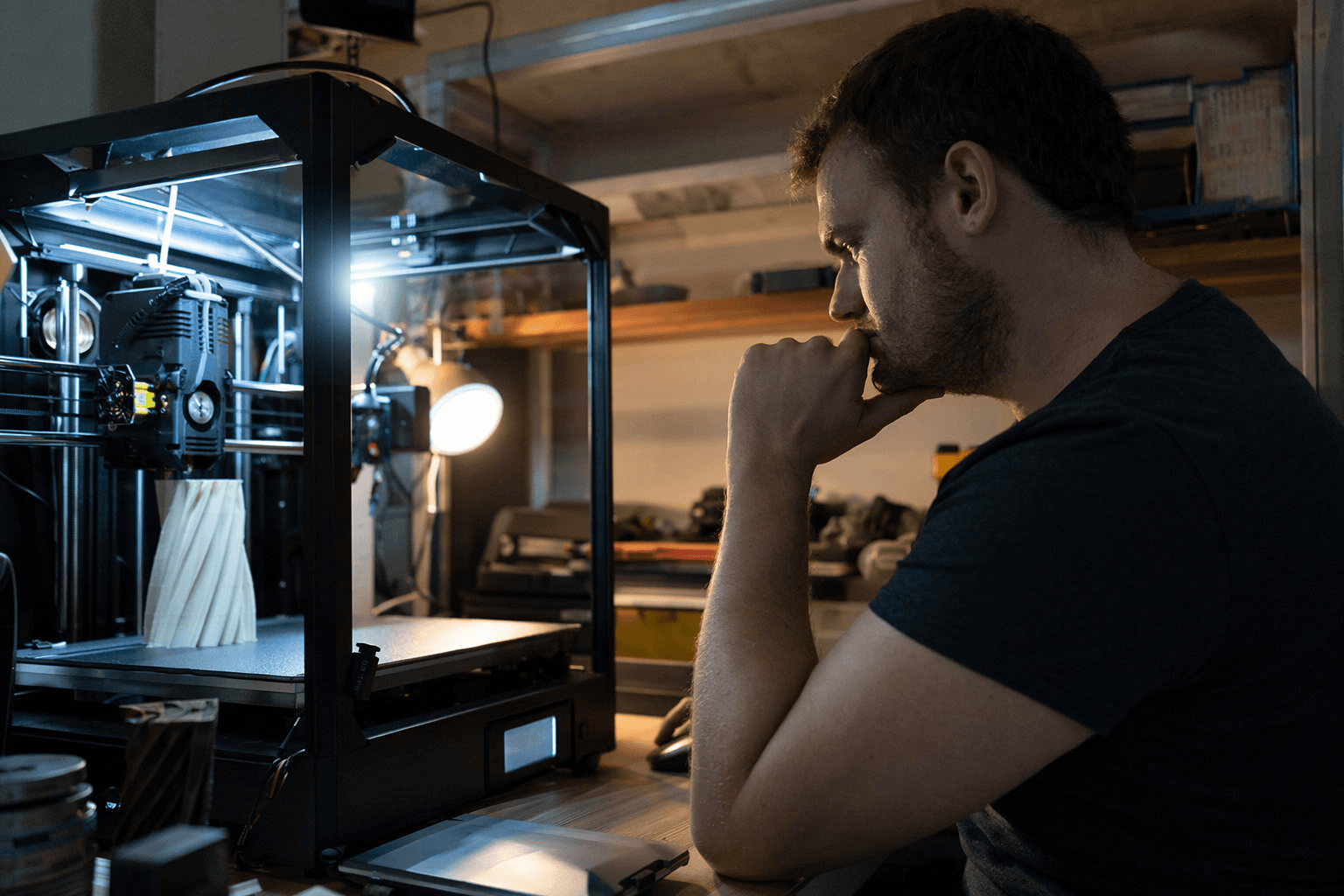
Noise is one of the biggest hidden barriers to living with a fast desktop printer, especially in a home office, classroom, or shared workspace. Anycubic’s new Chinese patent application takes aim at that problem with a simple idea: do not apply one blanket noise profile across the whole motion system, but tune noise reduction by speed range.
The proposal breaks calibration into different speed segments, gathers motor feedback for each segment, and then adjusts active noise-reduction parameters based on how the machine behaves at those speeds. That matters because a printer’s sound signature is not constant. A motion system can be relatively calm at one velocity, then turn buzzy, rattly, or resonant at another as manufacturers keep chasing higher print speeds.
Anycubic has been moving in that direction for years. The company, founded in 2015, has positioned its consumer printers around high speed, precision, and auto-leveling. Its Kobra 2 is rated up to 250 mm/s, while the Kobra S1 advertises printing speeds up to 600 mm/s and a 44 dB quiet print mode. Anycubic’s own materials also describe the Kobra S1 as using resonance compensation and dynamic flow compensation, which puts the patent in line with the company’s broader push to pair throughput with usability.
That makes the filing worth watching, even if it is not tied to a specific shipping model. Fast FFF printers already rely on vibration-management tools such as input shaping, and Klipper and Marlin Firmware both describe that approach as a way to reduce ringing and improve print quality during rapid motion changes. Anycubic’s patent suggests the company may be looking for a more granular version of that idea, one that reacts differently at different speeds instead of treating the whole machine the same way.
The timing also fits the broader patent race in China. A 2026 academic article said Chinese 3D-printing patent applications surged after 2019 and reached 75% of global applications by 2023. In that environment, even incremental improvements can become strategic.
There is also a practical reason this matters beyond marketing language about “silent” printers. A 2023 UL and Chemical Insights Research Institute report said 3D printers are used in classrooms, maker centers, laboratories, and offices, and that printer use can elevate indoor ultrafine particle and VOC levels. A quieter machine is not just less annoying; it is easier to place where people actually work.
The patent does not prove a product is imminent, but it does show Anycubic thinking about more than raw speed. That is a meaningful shift for a brand whose next generation may have to be as careful about noise as it is aggressive about print times. Anycubic is also doing this amid active IP competition, after SprintRay filed a patent infringement lawsuit against Anycubic entities in the District of Delaware on February 17, 2026.
This article was produced by Prism’s automated news system from verified source data, official records, and press releases, then run through automated quality and moderation checks before publishing. The system is built and supervised by the people who set the standards it runs under. Read our full AI policy.
Did this article answer your question?