Australia’s 3D printing push aims to boost supply chain resilience
Australia’s 3D printing play is really a resilience test: can local machines, materials, and repair shops keep critical systems alive when imports stop?
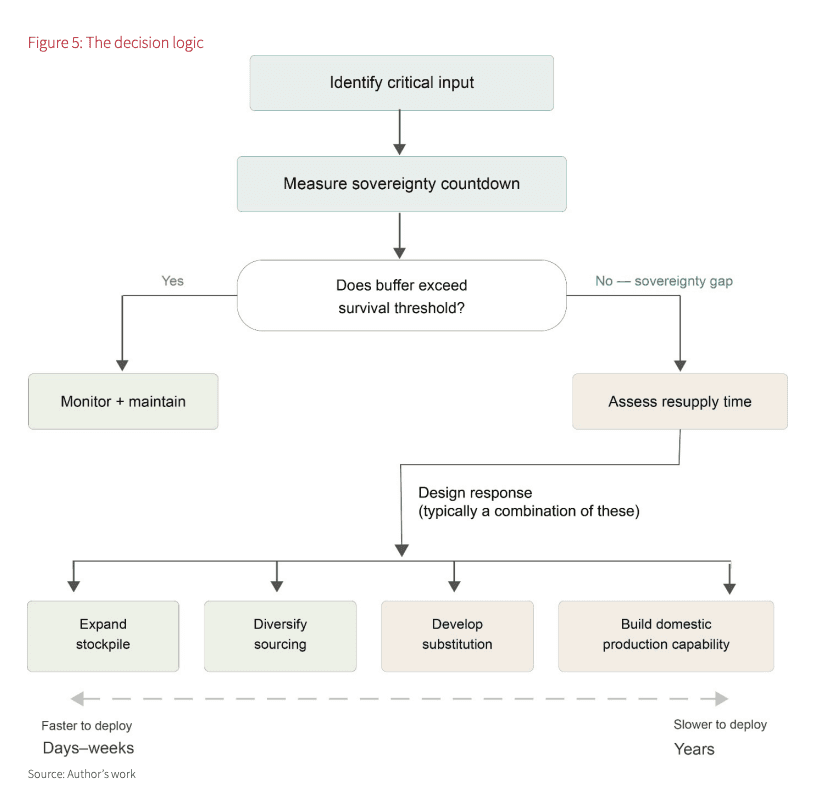
Australia’s newest 3D printing push is less about shiny machines than about how long the lights stay on when imports stall. ASPI’s new report treats resilience as a countdown problem, asking how many days, weeks, or months critical systems can run before outside supply runs dry. That is where additive manufacturing stops being a maker buzzword and starts looking like infrastructure.
The countdown behind the headline
The Australian Strategic Policy Institute’s *Make Stuff Here… Or Else*, published on 12 June 2026, is a follow-up to its 2025 *Make Stuff Here* blueprint. Its core idea is the “Sovereignty Countdown,” the practical window before a critical service or supply chain runs dry after external supply is disrupted. ASPI’s argument is blunt: Australia’s prosperity rests on systems that look permanent, but depend on continuous inputs from beyond its borders.
The report says that recent shocks, including the Covid-19 pandemic and geopolitical disruption, exposed how fragile that dependence can be. Water, energy, fuel, food logistics, and communications all operate inside the same constraint: once the flow of parts, chemicals, fuel, or materials stops, the clock starts ticking. ASPI says the country has become reliant on storage and logistics rather than domestic production capacity, which can extend time but does not regenerate supply.
Why 3D printing belongs in this conversation
This is the part hobbyists will recognize immediately. Additive manufacturing is not being framed here as a novelty, a bench-top curiosity, or even just a prototyping shortcut. It is being treated as a way to rebuild a production layer that sits closer to where parts are needed, without pretending Australia needs to recreate every factory model from the 20th century.
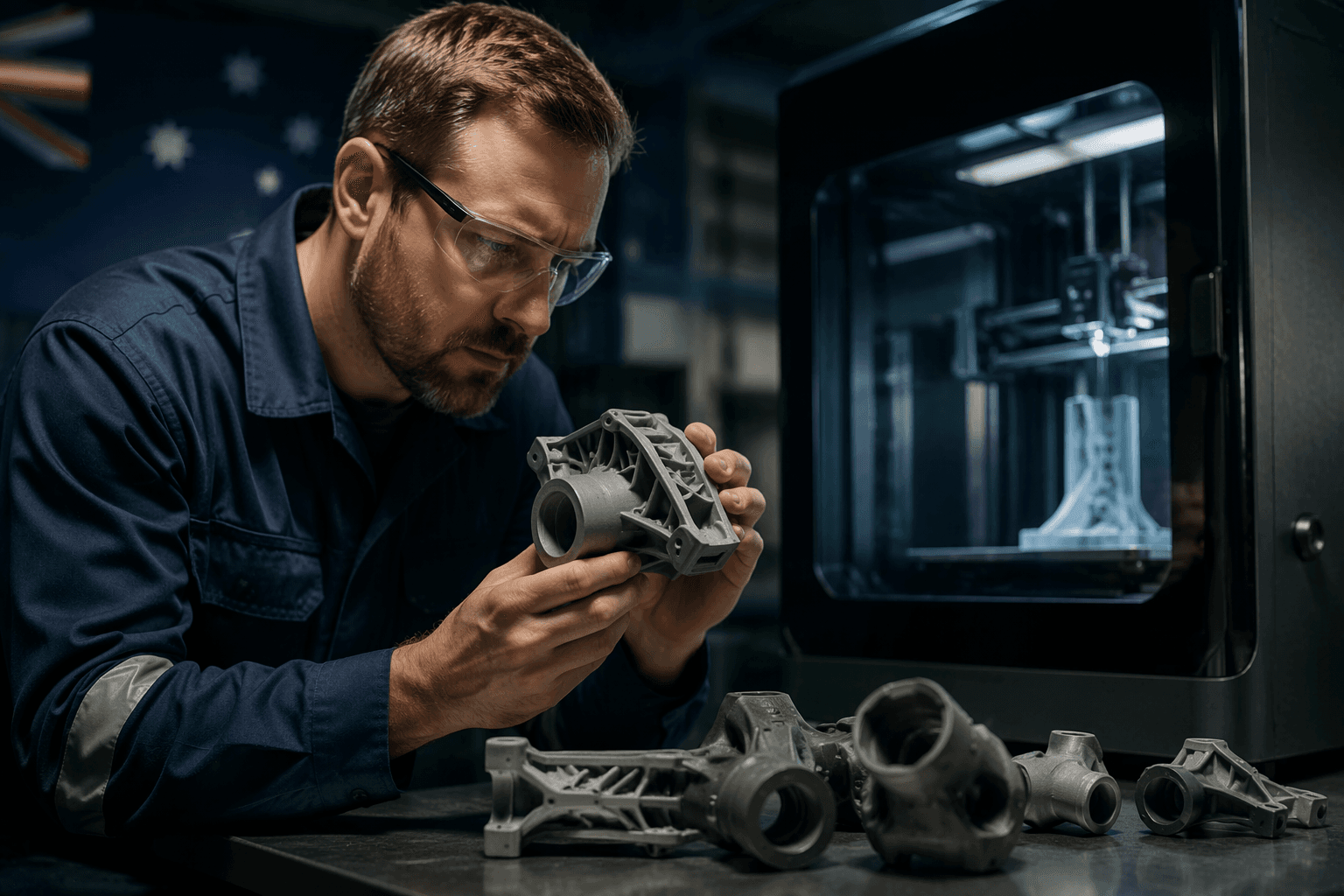
Steven Camilleri, the report’s author and co-founder and CTO of metal printer maker SPEE3D, uses 3D printing as the concrete example of distributed, digitally driven fabrication. That matters because the real strength of additive manufacturing is not only speed. It is proximity, flexibility, and the ability to produce spare parts, repair components, and maintenance items without waiting for a shipping lane to cooperate.
For makers, that is the useful lens. A printer farm, a local machine shop, or a repair-focused print service becomes more than a side hustle when it can turn a hard-to-source part into a same-week replacement. That is the same logic ASPI is applying to national resilience, just at a scale most hobbyists never have to think about until something breaks and no one stocks the part anymore.
What the report says needs fixing
ASPI’s answer is not “print everything.” It is to measure the point where a system becomes vulnerable and then decide whether to stockpile, redesign, substitute, or rebuild. The report recommends a National Resilience Test, in which governments and critical-infrastructure operators identify key inputs, quantify how fast they are consumed, and compare those countdowns against a National Survival Threshold.
That is a useful frame for the 3D printing community because it turns the conversation from abstract capability into concrete bottlenecks. If the supply chain breaks, what actually helps?
- Machine access: not just desktop printers, but reliable access to industrial-capable systems that can produce useful parts on demand.
- Domestic materials: polymers, powders, metals, and feedstocks that do not disappear the moment shipping gets weird.
- Repair capacity: hardware that can be serviced locally, with parts and know-how that keep machines running.
- Workforce training: operators who can move between design, print prep, post-processing, and maintenance.
- Distributed production: small print farms and regional shops that can turn local demand into local output instead of waiting for imports.
Those are the levers that would strengthen a maker ecosystem. They are also the levers that separate a resilience strategy from a press-release story about “innovation.”
The case studies make the risk feel real
ASPI’s report points to water-treatment chemicals, liquid fuels, and fertiliser as examples of how different countdown timelines can still end in the same place: a system that cannot function if the next shipment does not arrive. SPEE3D says urban drinking-water chemicals may be held in only a few weeks of supply, sometimes as little as a fortnight. The same source says national diesel cover is typically discussed in weeks rather than strategic depth. Fertiliser is slower-burning, but no less serious, because an interruption may not show up until the harvest fails months later.
That spread of timelines is exactly why the report argues for measuring resilience instead of assuming it. A few weeks can feel comfortable until the lead time for a replacement part, a chemical shipment, or a machine repair is longer than the buffer. Once that happens, storage buys time, but not recovery.
Where defence enters, and where it stops
The broader policy backdrop is plainly defence-heavy. The Department of Defence says it has identified seven Sovereign Defence Industrial Priorities, including aircraft maintenance, repair, overhaul and upgrade, continuous naval shipbuilding and sustainment, and domestic manufacture of guided weapons, explosive ordnance, and munitions. That tells you where a lot of the political energy is going: keeping military systems supplied, maintained, and locally supported.
An Australian Army Research Centre study pushes the same point from another angle. It says Australia lacks productive capability in vital categories such as prepared food, manufactured metal products, medical products, and clothing, even though it has upstream capabilities that could be redirected in a crisis. That is a striking signal for anyone who works with printers, materials, or small-batch fabrication: the gap is not only about invention, but about turning capability into repeatable production.
So yes, there is a real opportunity here for hobbyists and small print businesses. But the biggest near-term gains are likely to come from the boring parts of the ecosystem, the ones that make printing dependable instead of exciting: more access to serious machines, more domestic material options, more repair and post-processing capacity, and more people trained to keep the whole chain moving. If Australia’s 3D printing push succeeds, it will not look like a single breakthrough. It will look like a thousand local decisions that make replacement parts, maintenance, and distributed production easier to do before the countdown runs out.
This article was produced by Prism’s automated news system from verified source data, official records, and press releases, then run through automated quality and moderation checks before publishing. The system is built and supervised by the people who set the standards it runs under. Read our full AI policy.
Know something we missed? Have a correction or additional information?
Submit a Tip