Autodesk Wonder 3D Generates Editable 3D Assets From Text and Images
Autodesk's Wonder 3D exports .OBJ files straight from text or image prompts, putting AI-generated geometry directly into your print workflow.
Autodesk dropped Wonder 3D into its Flow Studio platform on March 4, 2026, adding a generative AI model that converts text prompts and reference images into editable 3D geometry and textures. The tool lives inside the Wonder Tools suite and is available across all Flow Studio subscription tiers, meaning anyone already paying for the platform gets access without an additional tier upgrade.
Flow Studio itself has a specific lineage worth knowing. Originally launched as Wonder Studio, the platform was built around automating VFX-heavy tasks: motion capture processing, camera tracking, character animation. Wonder Dynamics' founders and teams are now integrated under Autodesk, and Wonder 3D extends that existing AI infrastructure into geometry generation territory.
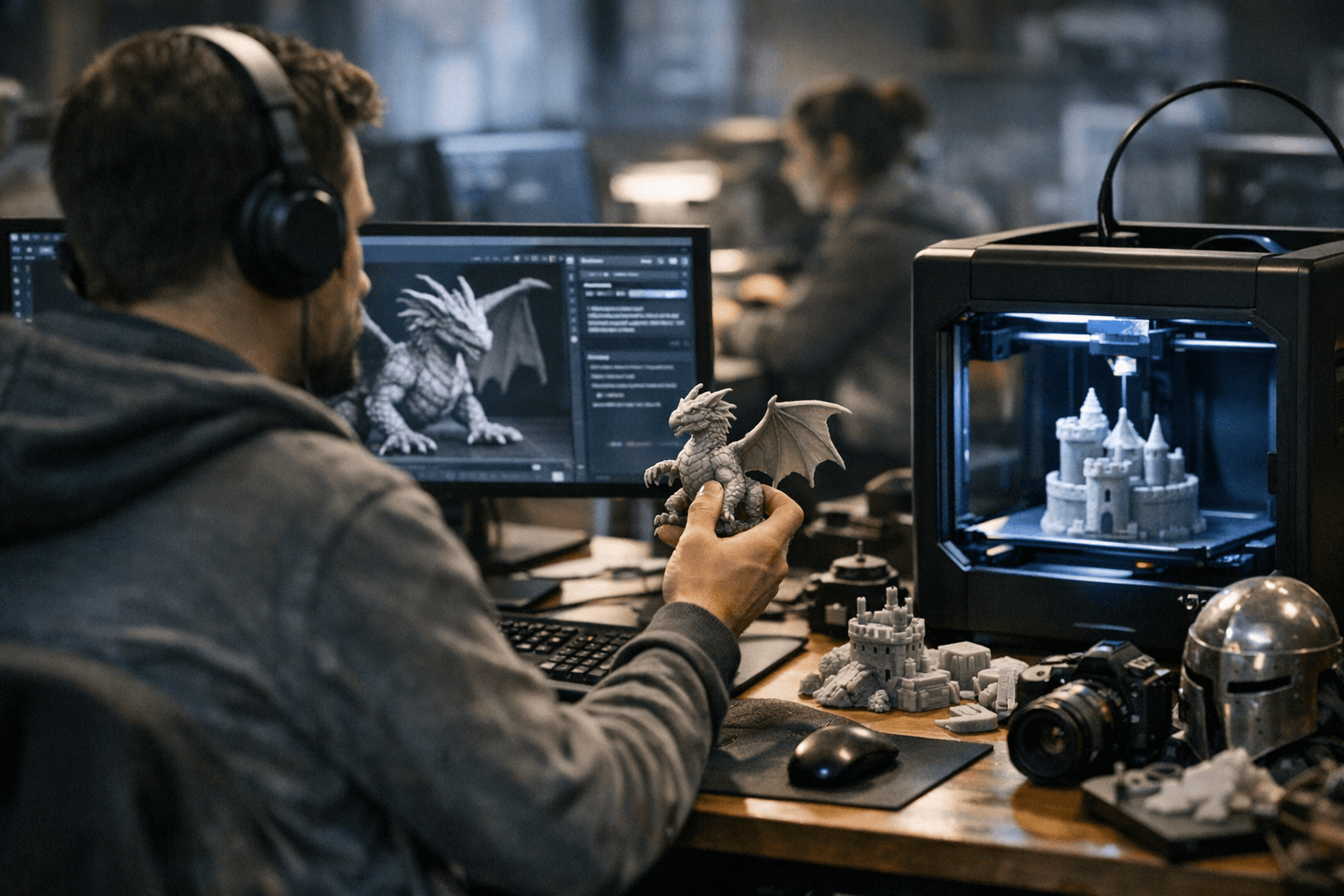
Three workflows drive the tool. Text-to-3D takes a written description and outputs a textured 3D model. Image-to-3D converts sketches, concept art, or reference photos into textured geometry. Text-to-Image handles 2D concept generation first, letting you develop and select ideas before committing them to 3D. For the printing community specifically, the relevant detail is that generated models export as .OBJ files, which means the path from prompt to slicer is shorter than it sounds on paper.
Autodesk's example outputs published alongside the announcement include a sword model, a boba tea wizard character, a vintage-style lunchbox rendered on a circular wooden pedestal, and a small explorer figurine in a green outfit and scarf. These are clearly promotional renders, but they give a reasonable sense of the surface fidelity the system is targeting.
The honest caveat, flagged explicitly by DigitalProduction, is that the mesh structure, topology quality, and rigging suitability of Wonder 3D outputs have not yet been independently tested. Autodesk describes the assets as "fully editable" and says users can refine, remix, and reuse them across projects. But topology cleanliness is what actually determines whether a generated mesh survives a boolean operation, holds up through Blender's remesher, or prints without requiring significant repair in Meshmixer. That question stays open until someone runs real exports through a real workflow.
Reddit user Delicious-Shower8401 on r/TopologyAI framed the announcement usefully: "instead of treating AI as a separate toy or a one-click gimmick, Autodesk is positioning it more like a practical workflow tool for generating editable 3D starting points from prompts or reference images." The same user noted the inclusion of remesh and texture editing tools as meaningful, since they suggest Autodesk understands the output is a starting point rather than a finished asset, and concluded it looks like "one of the more practical AI-to-3D releases lately."
For rapid concept blocking, early-stage prop exploration, or generating a rough mesh to hand off to your slicer for a first test print, Wonder 3D has a plausible place in the workflow. Whether it saves time or creates cleanup work depends entirely on how clean those generated meshes actually are, and that answer requires hands-on testing with real exports.
This article was produced by Prism’s automated news system from verified source data, official records, and press releases, then run through automated quality and moderation checks before publishing. The system is built and supervised by the people who set the standards it runs under. Read our full AI policy.
Did this article answer your question?