Bambu Lab launches Pure PLA in China with food-safe positioning
Bambu Lab is pitching Pure PLA in China as food-safe, with EU-based testing and clearer limits for real food-contact use.
Bambu Lab’s new Pure PLA line in China is aimed at a question makers keep asking and datasheets often dodge: what, exactly, is safe to put near food after the print comes off the bed? The answer Bambu is pushing is narrower than a blanket “food-safe” sticker. It ties the material to European food-contact testing, spells out the limits, and makes clear that the finished part still matters as much as the filament on the spool.
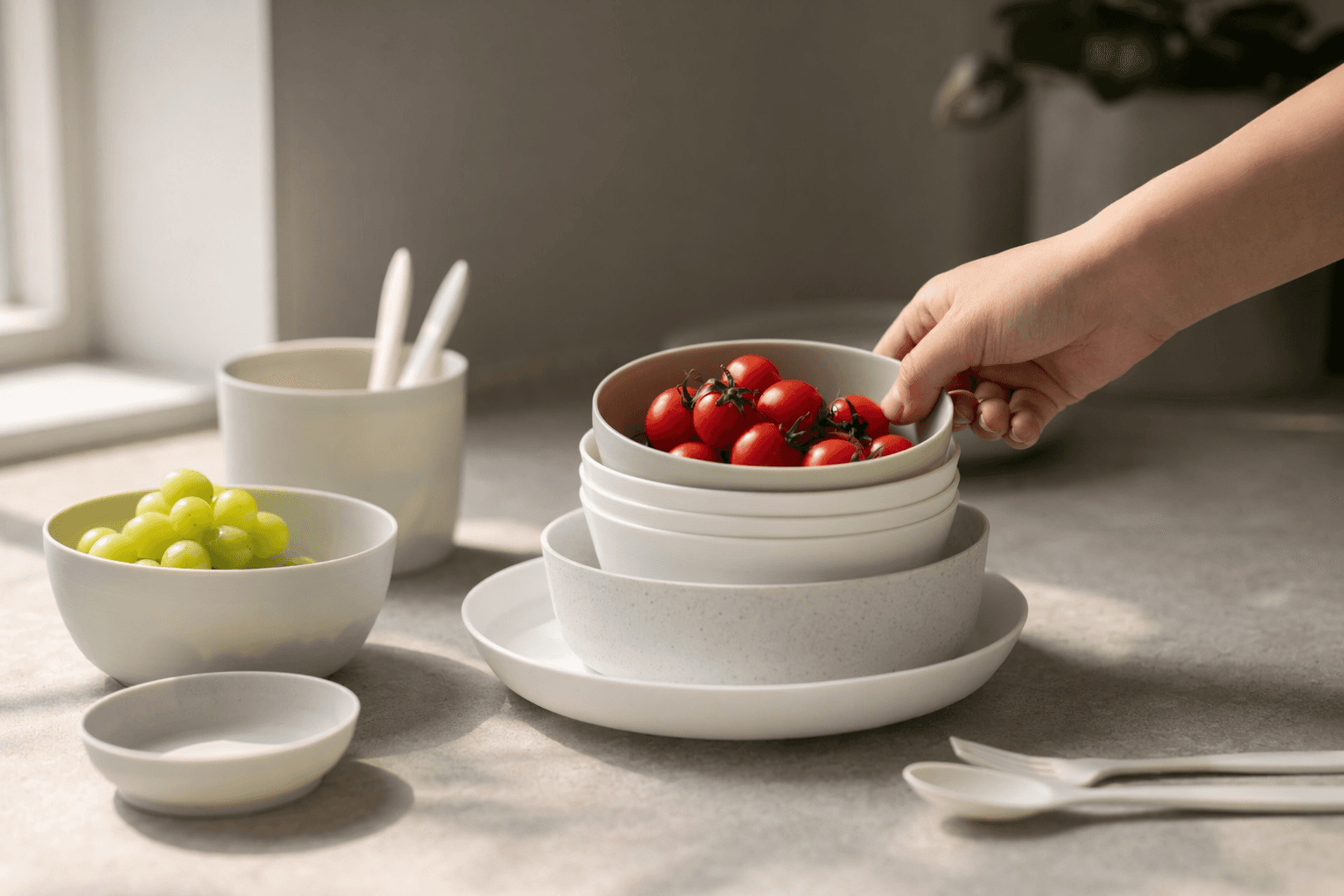
That positioning matters for the jobs people actually print. Cookie cutters, kitchen organizers, pantry inserts, and snack containers all sound simple until the part has to be cleaned, reused, and trusted around food. Bambu’s food-contact testing page says the company uses EU Regulation No. 10/2011, the standard for plastic materials intended to come into contact with food. It also says printed samples are soaked in food-simulating liquids and checked to see whether overall and specific migration stay within EU limits.
Bambu’s testing page lists Bambu PLA Basic, Bambu PLA Matte, and Bambu PETG Translucent among the filaments it has tested for those food-contact scenarios. That is a more concrete approach than the usual marketplace chatter around “food-safe PLA,” but it still stops short of making every printed part safe for every use. Formlabs and Stratasys both emphasize that food safety depends on the full workflow and the end use, not just the base polymer.
That distinction is the real story here. A filament can be tested, documented, and positioned carefully, but a printed part still carries layer lines, internal gaps, and porosity that can trap residue and make repeated cleaning difficult. That is why the community keeps treating food-contact printing as a process problem, not just a material choice. A one-off cookie cutter is not the same thing as a reusable kitchen container with deep channels, and Bambu’s language seems built around that reality.
The move also fits Bambu Lab’s broader materials strategy. In the United States, the company already sells a wide PLA lineup, including PLA Basic, PLA Matte, PLA Translucent, PLA Tough+, PLA-CF, PLA Silk+, PLA Glow, PLA Wood, PLA Marble, PLA Galaxy, and PLA Aero. Pure PLA looks like the next step in making consumable selection feel more deliberate and less like forum archaeology.
For Bambu, that is the point. Pure PLA is not just another filament launch. It is an attempt to turn “food-safe” from a vague maker shorthand into something tied to a named standard, a testing method, and a much tighter definition of where printed-part safety really begins and ends.
This article was produced by Prism’s automated news system from verified source data, official records, and press releases, then run through automated quality and moderation checks before publishing. The system is built and supervised by the people who set the standards it runs under. Read our full AI policy.
Did this article answer your question?