Creality Ender-3 V4 Combo Review Tests Speed, Multicolor Filament System
Creality's Ender-3 V4 Combo promises 500 mm/s speeds and multicolor printing at entry-level pricing, but does the new CFS system actually deliver?
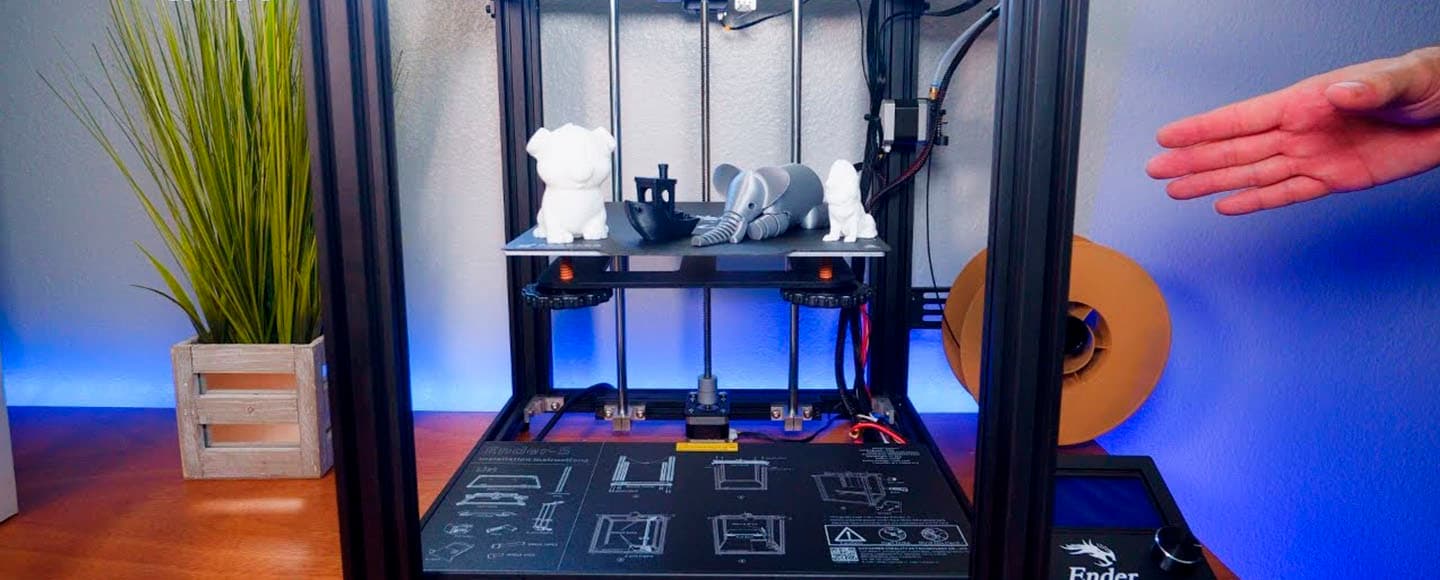
The Ender-3 name carries a lot of weight in this hobby. Since the original model essentially democratized desktop FDM printing, every new iteration gets scrutinized hard by the community, and the Ender-3 V4 Combo arrives with two genuinely interesting additions to the formula: a claimed top speed of 500 mm/s and the new Creality Filament System (CFS) for multicolor output. Whether those features hold up in real-world use is exactly the kind of question worth digging into.
What the Ender-3 V4 Combo is
This is Creality's attempt to bring multicolor printing into the entry-level segment without asking you to buy a separate multi-material unit or retrofit your machine after the fact. The "Combo" designation means the CFS is bundled directly with the printer, which matters for the value calculation. You're not just buying a fast Ender-3 variant; you're buying what Creality is positioning as a complete multicolor workflow out of the box.
The advertised 500 mm/s top speed puts it in the conversation with machines that cost significantly more, at least on paper. That number is a peak figure, not a sustained print speed, so the practical question is how the machine performs at the speeds it actually runs most print jobs.
The Creality Filament System (CFS)
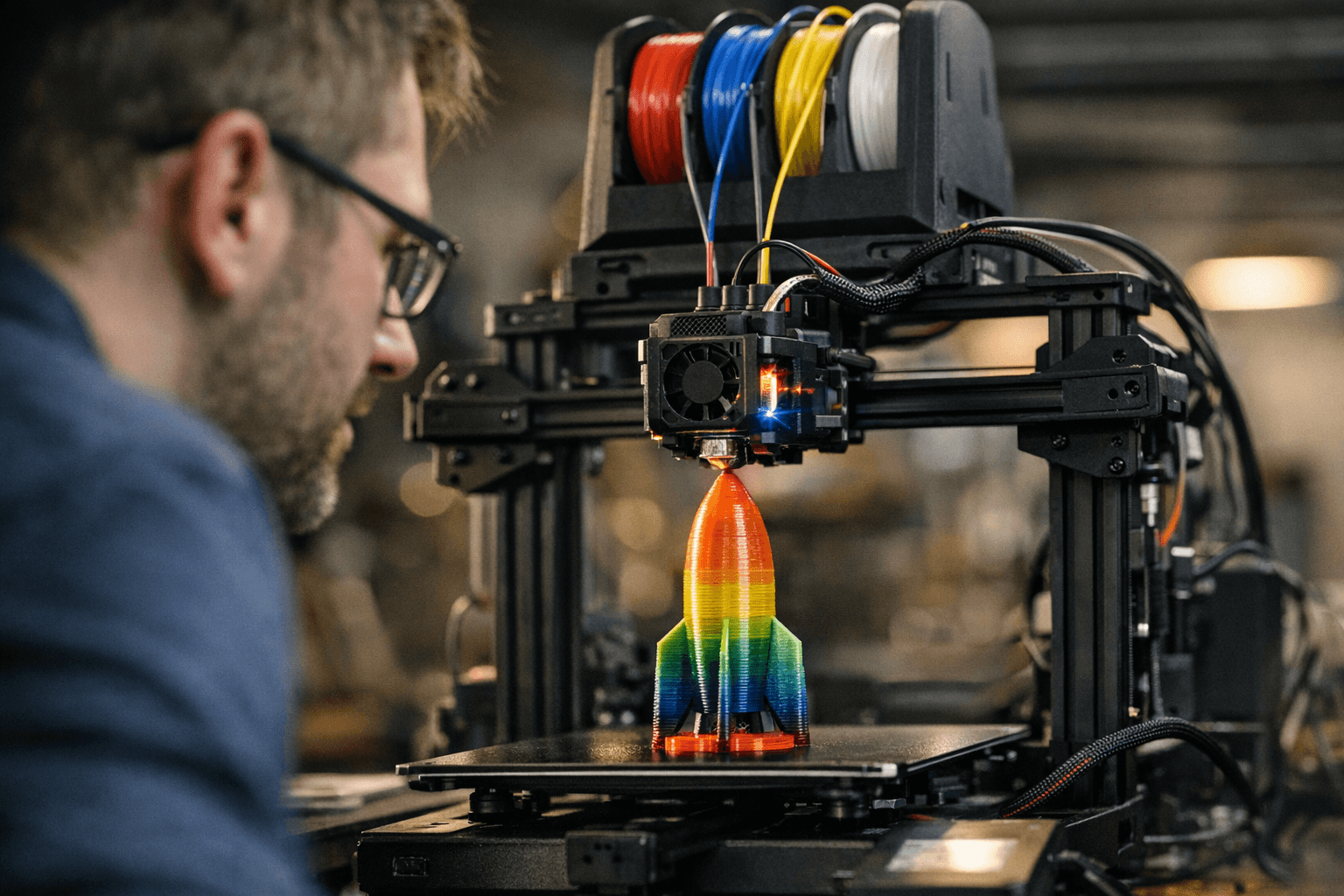
The CFS is the headline feature here, and it's worth understanding what it actually is before getting too excited or too skeptical. Creality's system handles filament switching to enable multicolor prints, joining an increasingly crowded field that includes Bambu Lab's AMS, Prusa's MMU3, and various third-party options. The key distinction Creality is pushing is accessibility: this is supposed to be the multicolor solution that doesn't require a significant learning curve or a premium price point.
What that means practically is that setup complexity, purge behavior, and filament change reliability all become critical evaluation points. Multicolor systems live or die on how cleanly they manage transitions and how much filament they waste in the process. A system that produces color bleeding or requires massive purge towers eats into the value proposition fast.
Speed claims versus real-world performance
500 mm/s is the kind of spec that looks great in a product listing and deserves serious scrutiny on the test bench. For context, many community members have found that even machines rated for high speeds often hit quality walls well before their maximums when printing detailed geometry or bridging. The Ender-3 V4's motion system, hotend, and part cooling all have to work in concert to make high-speed printing viable rather than just technically possible.
The relevant benchmark isn't whether the printer can move the toolhead at 500 mm/s; it's what the output looks like at 200, 300, and 400 mm/s across different geometries. Layer adhesion, stringing, and dimensional accuracy under speed are where entry-level machines typically show their limits, and that's precisely the kind of performance data that separates a useful review from a spec sheet summary.
Entry-level positioning and what it means for you
Creality is explicitly targeting the accessible end of the market with this machine, which sets specific expectations. Entry-level doesn't mean low quality in 2026's FDM landscape, but it does mean you're likely looking at tradeoffs somewhere, whether in build quality, software experience, community support maturity, or the reliability of the CFS system across extended use.
The value case for the Ender-3 V4 Combo hinges entirely on whether the CFS works well enough to justify the combo purchase over buying the base Ender-3 V4 alone. If the multicolor system adds meaningful capability without a steep troubleshooting tax, it's a compelling bundle. If it introduces jam-prone complexity or inconsistent color transitions, the math changes quickly.
What to watch when evaluating this printer
If you're deciding whether the Ender-3 V4 Combo belongs in your setup, focus your attention on a few specific areas:
- CFS reliability over multiple filament swaps: single-session tests don't reveal long-term behavior
- Purge volume and waste filament per color change: this directly affects per-print cost
- Print quality at speeds between 150 and 300 mm/s, where most real jobs actually run
- How the machine handles flexible or specialty filaments, which stress both the speed claims and the CFS feeding system
- First-layer consistency, which remains the most reliable indicator of overall machine calibration quality
The broader context
Creality releasing a combo unit that bundles multicolor capability at entry-level pricing is a meaningful market signal. It suggests the company sees AMS-style systems as table stakes for competitive positioning, not premium differentiators. That's good news for the community overall, because competition at this tier pushes quality up and price down across the board.
The Ender-3 V4 Combo is a machine worth watching closely. The specifications are ambitious for its price segment, the CFS integration is a genuine attempt to solve a real workflow problem, and the Ender-3 lineage means Creality will have strong community pressure to get the execution right. The real story is whether the hardware lives up to the spec sheet, and that answer only comes from hours on the build plate.
This article was produced by Prism’s automated news system from verified source data, official records, and press releases, then run through automated quality and moderation checks before publishing. The system is built and supervised by the people who set the standards it runs under. Read our full AI policy.
Did this article answer your question?