Creality unveils connected 3D printing workflow at RAPID TCT 2026
Creality used Boston to push a full bench-to-output workflow, with the SPARKX i7, a desktop filament recycler, and Creality Cloud doing the heaviest lifting.
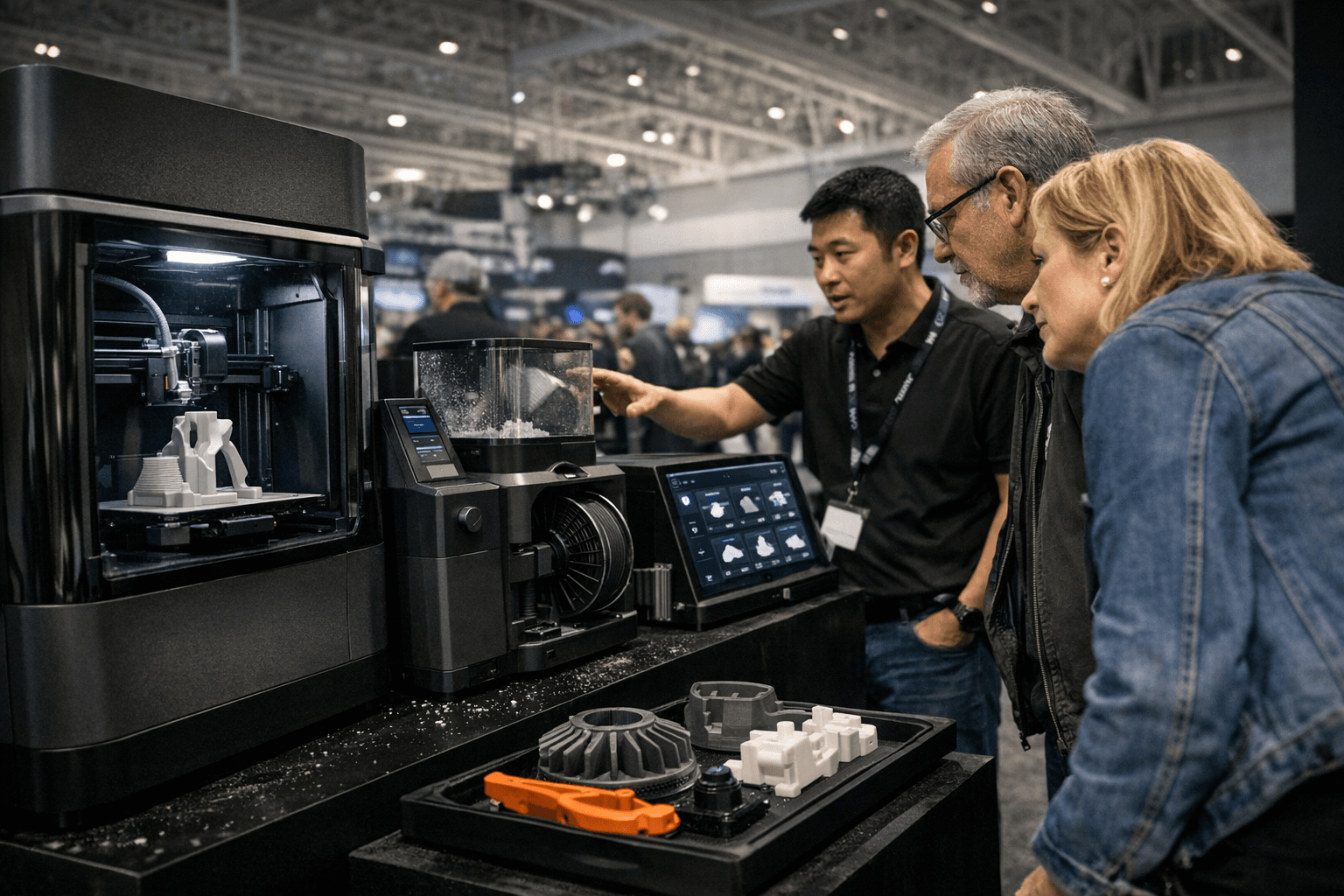
Does this save hobbyists time, space, or failed prints versus a mixed-brand setup? That was the real question hanging over Creality’s showing at RAPID + TCT 2026 in Boston, where the company used North America’s largest additive manufacturing and industrial 3D printing event to pitch a connected workflow instead of another standalone printer. The show ran April 13-16 at the Thomas M. Menino Convention & Exhibition Center, drew more than 400 product and service providers, and packed more than 160 technical presentations into four days.
Creality framed its latest push as a closed-loop creative chain that ties together 3D printing, 3D scanning, laser engraving, air purification, material processing, and cloud management. That matters because the desktop market has spent years selling separate fixes for separate headaches. If your bench already has a printer, a dryer, a scanner, a slicer, and a cloud library from different brands, Creality is trying to sell you the shortcut: one platform from concept to finished object. A scanned broken bracket, for example, could move from capture to cleanup to replacement print without bouncing between mismatched software and hardware.
The most immediately relevant piece for home users was the SPARKX i7. Creality positioned it as a multicolor-friendly printer with a quick-swap hotend, a redesigned color-changing mechanism, and a four-color filament system built to cut waste. The company also says the machine uses CubeMe, which turns portraits into 3D models ready for printing, and it markets the printer with AI monitoring, automatic calibration, and real-time mobile operation. Creality claims the setup can reduce multicolor waste by 50 percent, which is the sort of number that gets attention from anyone who has watched purge towers eat half a spool.
Creality had already previewed the SPARKX i7 at CES 2026 in January, so Boston looked more like the next step in a rollout than a fresh reveal. The same is true of the Filament Maker M1 and Shredder R1, which Creality first introduced on March 6 as a desktop recycling and filament extrusion system. On Indiegogo, the project pulled in HK$43,784,770 from 4,457 backers after setting a goal of HK$783,000, and Creality says the campaign hit that target in 16 minutes and 32 seconds. For a shop that hates tossing failed prints, supports, and purge waste into the bin, the promise is obvious: turn scrap back into usable filament and feed it into the next job.
The Falcon T1 makes the broader strategy even clearer. Creality bills it as a five-in-one laser engraver workstation with diode, infrared, MOPA, fiber, and UV options, which is useful if your bench also cuts and engraves. Creality Cloud, with more than 1 million models, rounds out the lock-in play. The strongest parts of the ecosystem are the ones that solve real workflow pain today: multicolor efficiency, recycling, and software that keeps the whole stack in one place. The rest still feels like the company building a bigger booth around the printer aisle.
This article was produced by Prism’s automated news system from verified source data, official records, and press releases, then run through automated quality and moderation checks before publishing. The system is built and supervised by the people who set the standards it runs under. Read our full AI policy.
Did this article answer your question?