FullSpectrum Brings HueForge-Style Color Mixing to Tool-Changing 3D Printers
Ratdoux's FullSpectrum fork of OrcaSlicer brings HueForge-style layer mixing to tool-changing printers, but keep your layer heights between 0.08 and 0.12 mm or expect stripes.
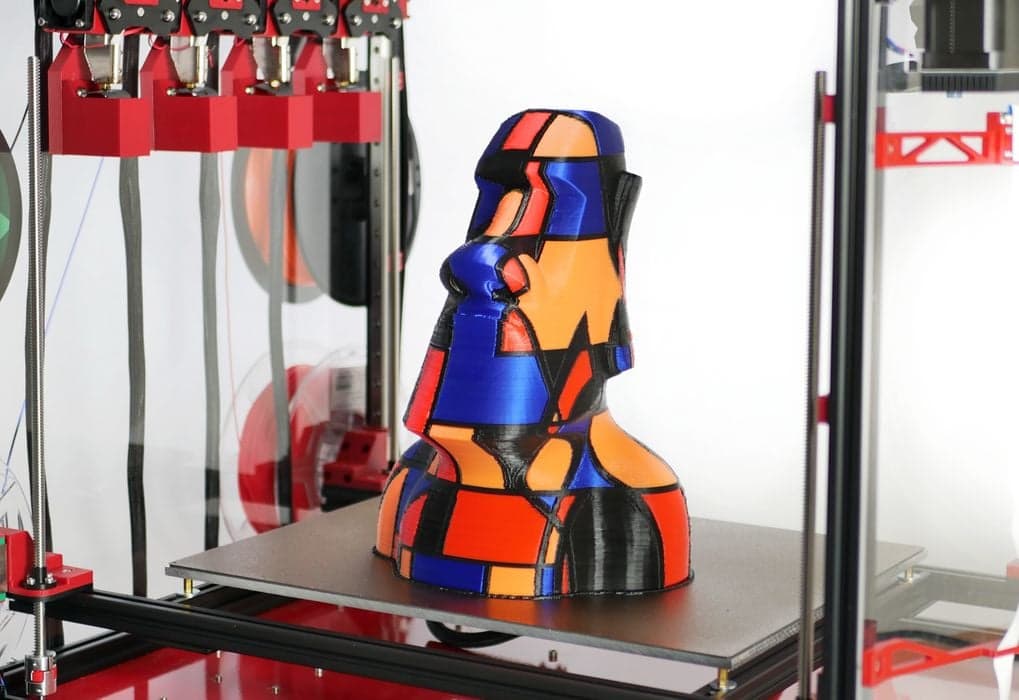
A community developer known as Ratdoux published FullSpectrum, an open-source fork of OrcaSlicer that lets tool-changing printers produce surprisingly broad color palettes by rapidly alternating thin layers between physical filaments. The technique mirrors what HueForge does for lithophanes and color prints, but targets hardware like the Snapmaker U1 with its independent print heads rather than the AMS-style filament switchers that have dominated the multi-color conversation lately.
The core idea is straightforward: stack semi-translucent filament layers in alternating patterns and the eye blends them into a mixed color. The GitHub repository, where the project lives under the name Full Spectrum, describes it as adding "support for virtual mixed-color filaments, enabling you to create new colors by alternating layers between physical filaments." A pair of test towers demonstrating the palette achievable from just three filaments, red, blue, and yellow, shows how far that approach can stretch a basic spool collection.
FullSpectrum is, technically, a fork of a fork of a fork. Ratdoux built on Snapmaker Orca, which itself descends from OrcaSlicer (SoftFever's project), which was forked from Bambu Studio, which came from PrusaSlicer by Prusa Research, which originated as a fork of Alessandro Ranellucci's Slic3r. That lineage matters because it means FullSpectrum inherits a mature slicer codebase and the accumulated work of the RepRap community. Ratdoux credits u/Aceman11100 in the GitHub acknowledgements for the original inspiration behind the mixed-color filament feature.
The technique has real constraints worth knowing before you start a six-hour print. Wombly Wonders documented the limits in a video that Hackaday referenced: you need layer heights in the 0.08 mm to 0.12 mm range. The standard 0.2 mm introduces visible striping, particularly with opaque filaments. Fully translucent filaments create a different problem, blending a little too aggressively at the edges. The HueForge community has spent considerable time characterizing filament translucency, and that knowledge base will likely map directly onto FullSpectrum as the project matures.
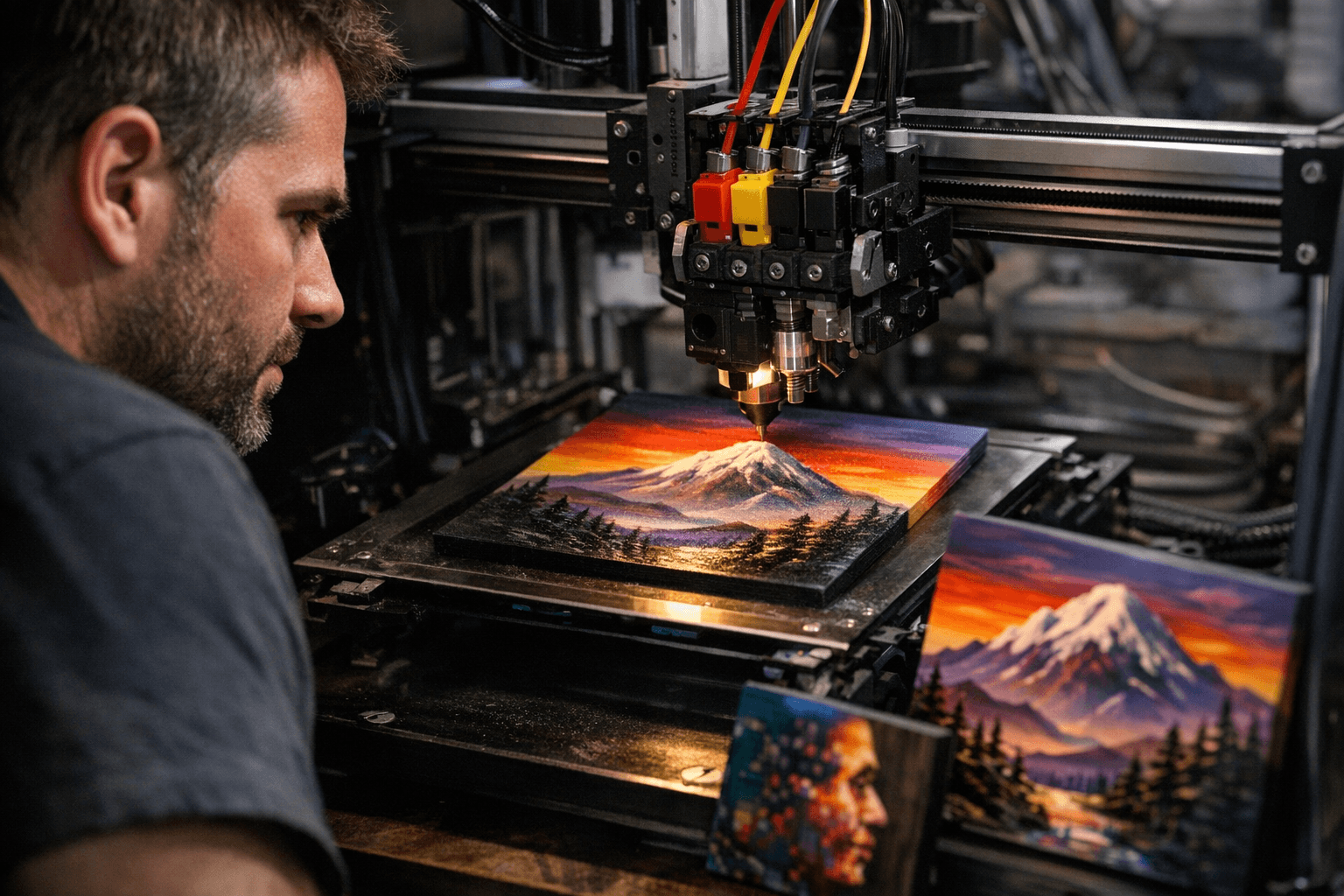
The project's own GitHub README includes a disclaimer that shouldn't be buried: "This fork is currently in active development and has NOT been tested on actual hardware!" Ratdoux is actively looking for Snapmaker U1 owners to test and validate the feature. So this is genuinely early-stage software. The stable release is available on the GitHub Releases page, and the project is licensed under the GNU Affero General Public License, version 3 (AGPLv3). The repository also includes a Dithering Settings section in the feature list, though details on that implementation weren't fully documented in the available README fragments.
Tool changers have been having a moment. The Snapmaker U1 and the Prusa XL represent a hardware approach that sidesteps the filament-buffer complexity of systems like the AMS, and FullSpectrum is purpose-built for that architecture. Whether the color mixing holds up across longer prints and real-world overhangs is exactly what Ratdoux needs testers to find out. If you have a U1 collecting dust between projects, this is a legitimate reason to fire it up.
This article was produced by Prism’s automated news system from verified source data, official records, and press releases, then run through automated quality and moderation checks before publishing. The system is built and supervised by the people who set the standards it runs under. Read our full AI policy.
Did this article answer your question?