Hackaday tests sealing methods for watertight FDM prints
Hackaday’s seal test boils watertight FDM down to one question: use slicer fixes when you can, and reach for coatings when pressure or geometry will beat the print.

Which waterproofing method works for which job?
That is the question Hackaday puts on the bench in its comparison of watertight FDM methods. The core problem is familiar to anyone who has watched a print look perfect on the screen and then leak in the real world: FDM can leave microscopic gaps between stacked roads of plastic, so water does not need much help to find a path through the part.
Hackaday’s approach matters because it treats waterproofing as a workflow choice, not a single trick. Sometimes the answer is in the slicer, sometimes it is in the geometry, and sometimes the part only survives after coating, sealing, or other post-processing. For makers, that is the difference between salvaging a container and throwing away a failed print.
Start with the job, not the myth of a universal fix
A planter, a storage container, a custom fluid path, and a functional enclosure all ask different things of a printed part. A low-stress container may tolerate a bit of tuning in wall count and print settings, while a more demanding part may need a surface-sealing step to close off the tiny voids that FDM can leave behind.
That is the practical value in Hackaday’s comparison. It pushes the decision upstream, before the print starts, so you can decide whether slicer tweaks are enough or whether the part should be designed with a coating step in mind from the beginning. In other words, waterproofing is not just a finish. It is part of the build plan.
When slicer changes are the right first move
For jobs where the part mostly needs to hold still water, the cheapest fix is often the one that happens before the filament ever leaves the nozzle. Increasing wall count, tightening print settings, and shaping the part so it does not invite leaks can go a long way before you reach for epoxy or chemical smoothing.
That is also why this story resonates with the maker habit of testing rather than guessing. A printed part that leaks is not always a bad part. Sometimes it is simply a part that was sliced for appearance instead of containment. If the goal is a watertight shell, the slicer becomes as important as the hardware.
When coatings and post-processing save the part
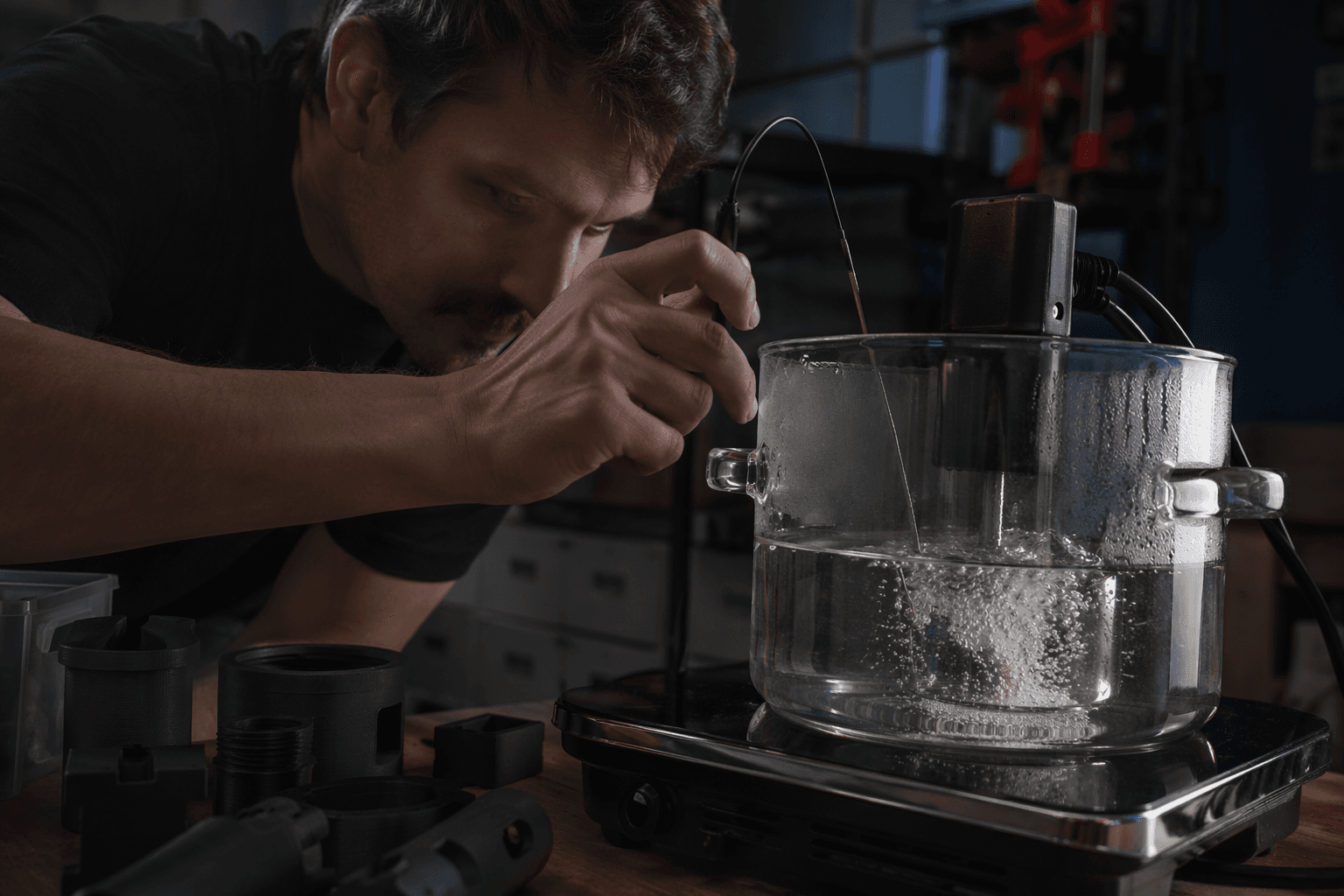
Once pressure, long-term soaking, or tricky geometry enters the picture, post-processing becomes much harder to ignore. Coatings and sealing methods can bridge the microscopic gaps that FDM naturally leaves, especially when the part must resist more than a casual fill test.
That matters for functional enclosures and custom fluid paths, where a failure is not just cosmetic. If a print has to survive repeated contact with water, then sealing the surface can be the difference between a usable part and a leak that keeps coming back. Hackaday’s comparison is useful because it shows that the repair method should match the risk, not just the shape.
Why pressure changes everything
The broader 3D-printing world has been making the same point for years: water resistance is not the same as pressure-proofing. Formlabs describes a partnership with the Undersea Robotics and Imaging Lab at the University of Rhode Island that tested FDM, SLA, and SLS multi-part assemblies in an underwater simulation pressure chamber, a reminder that depth and pressure make sealing much harder than a simple sink test.
That distinction matters for anything that lives beyond the desktop maker space. Formlabs says watertight 3D-printed enclosures are relevant to underwater robotics, deep-sea imaging, and other submerged applications, where the part is not just avoiding drips but surviving a real pressure load. A print that passes on the bench may still fail once the environment starts pushing back.
Why SLA gets mentioned in the same conversation
FDM is not the only process in the watertight discussion. Formlabs says SLA printed parts are not porous in the same way FDM parts can be, and that smooth SLA surfaces help reduce rough-surface air gaps in assemblies. That makes SLA a useful point of comparison whenever a project calls for a cleaner sealing surface.
NOAA has also used SLA and SLS 3D printers for coral research equipment that needs waterproof housings and mounts. That use case shows how quickly this topic moves from hobby convenience to practical field hardware. When the application is underwater or saltwater-adjacent, sealing is not a finishing touch. It is part of the part.
The maker lesson Hackaday’s test reinforces
Hackaday has previously described FDM prints as notoriously difficult to waterproof because of microscopic holes between layers, and that old warning still stands. What changes in the newer comparison is the framing: instead of assuming there is one correct sealing method, the article treats waterproofing as a set of tradeoffs between cost, finish quality, and durability.
That is also where the Hackaday.io project Brick Layers: Making 3D Prints Super Waterproof fits in. It takes the opposite path from coatings and chemical smoothing, aiming for pressure-proof waterproofing through slicer settings alone. Put beside Hackaday’s method test, it underscores the same lesson from two directions: you can fight porosity before printing or after printing, but the best answer depends on the job in front of you.
For makers who need a watertight part now, the real takeaway is simple. Use slicer changes when the part’s job is modest, use coatings or post-processing when the geometry or pressure demands more, and assume from the start that a print meant to hold water needs design, slicing, and finishing to work together. That is how a leaky-looking FDM shell becomes something you can actually trust when the water goes in.
This article was produced by Prism’s automated news system from verified source data, official records, and press releases, then run through automated quality and moderation checks before publishing. The system is built and supervised by the people who set the standards it runs under. Read our full AI policy.
Know something we missed? Have a correction or additional information?
Submit a Tip