Japanese Maker Shares Meshfuse 3D Printed Screen Stencil for FDM Printers
A free MakerWorld file from AN turns an FDM printer into a mesh-fused screen-printing stencil maker, with real limits on detail and plate size.
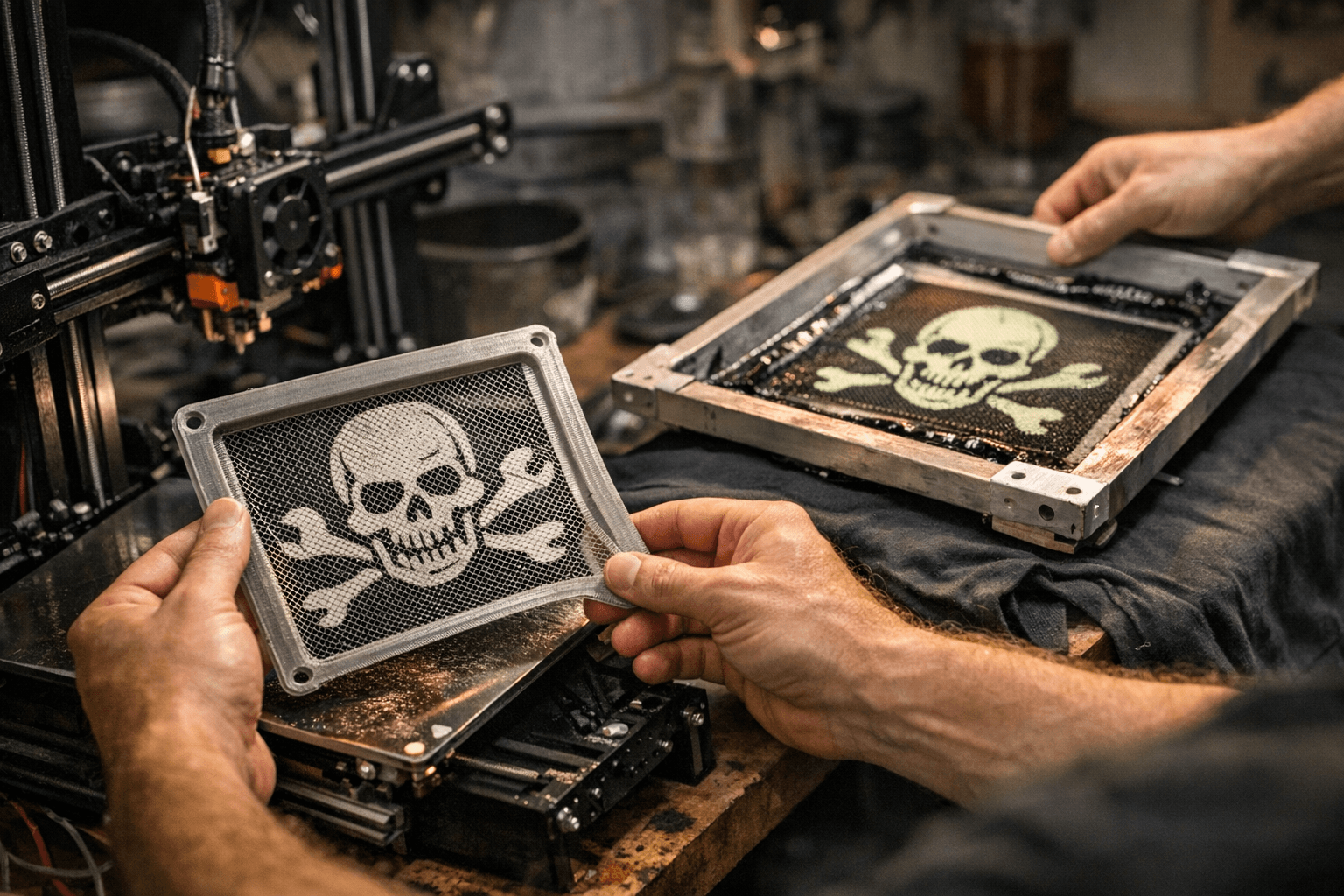
A free MakerWorld file is letting desktop FDM printers make functional screen-printing stencils right now, and the pitch is unusually practical: fuse the mesh into the print, skip traditional screen-making tools, and keep the setup simple enough for small-run merch. The model, MeshFuse Screen, is credited to designer AN and was published on March 8, 2026.
AN says the idea started with a basic problem: the method of inserting mesh during 3D printing looked promising, but there was no obvious example of anyone doing that exact process online. So AN tested it and packaged the result as a stencil workflow that turns a regular printer into a screen-printing tool. The English listing describes it as a way to make stencils without emulsion, and the Japanese page frames it as a 3D-printed screen-printing stencil built by fusing mesh inside the print.
The settings matter, and the model notes read like someone who has already broken a few parts getting there. AN recommends PLA or PETG and a very thin tulle mesh of about 20 denier. Textured PEI plates can leave their surface pattern in the stencil and contribute to ink bleed, which is the kind of flaw that turns a clean graphic into a muddy one fast. SuperTack plates are even riskier, with the listing warning that removal can be difficult enough to tear the mesh.
That said, the payoff is real if the goal is repeatable prints on fabric rather than razor-sharp linework. MakerWorld says the stencil is meant to make preparation easier for small production runs, and AN says prints made with the right screen-printing ink can hold up to washing and tumble drying. That puts the project squarely in the small-batch merch lane, where a hobby printer can do more than spit out prototypes.
MakerWorld’s page also shows the kind of engagement that tends to follow a clever workflow hack: boosts, comments, and a stencil collection tag. The timing fits the broader maker mood around JRRF2026, where a separate MakerWorld upload called NozzleMask was posted in celebration of the event. The bigger signal is that 3D-printed screen printing is moving from curiosity to workable niche, echoing a 2025 Springer paper on adaptive screen printing that described stencil-and-mesh integration as a way to improve flexibility and, in some cases, resolution for non-prismatic features.
This article was produced by Prism’s automated news system from verified source data, official records, and press releases, then run through automated quality and moderation checks before publishing. The system is built and supervised by the people who set the standards it runs under. Read our full AI policy.
Did this article answer your question?