LEAP 71 and Fraunhofer IGCV showcase bi-metal 3D-printed aerospike concepts
LEAP 71 and Fraunhofer IGCV are pushing bi-metal aerospike printing toward a future where one part can carry two metals, much like hobby prints already mix materials in simpler ways.

LEAP 71 and Fraunhofer IGCV put bi-metal aerospike concepts in front of the additive manufacturing crowd with a setup that paired computational engineering with Fraunhofer’s dual-metal selective laser melting. The hardware is aimed squarely at aerospace, but the bigger idea is easier to recognize from the maker side: one printed part that carries different properties in different zones, instead of forcing a single material to do everything.
Fraunhofer IGCV says its multimaterial additive manufacturing work focuses on metallic multi-material components and on material combinations that make sense for design, manufacturing, testing, and recycling. The lab specifically lists additive multi-material manufacturing for an “Aerospike” rocket engine as one of its aerospace examples, and it also points to future uses that go beyond propulsion, including embedding sensors and actuators in a single component. That is the same design pressure hobbyists feel when they move past cosmetic multi-color prints and start chasing real function from the machine.
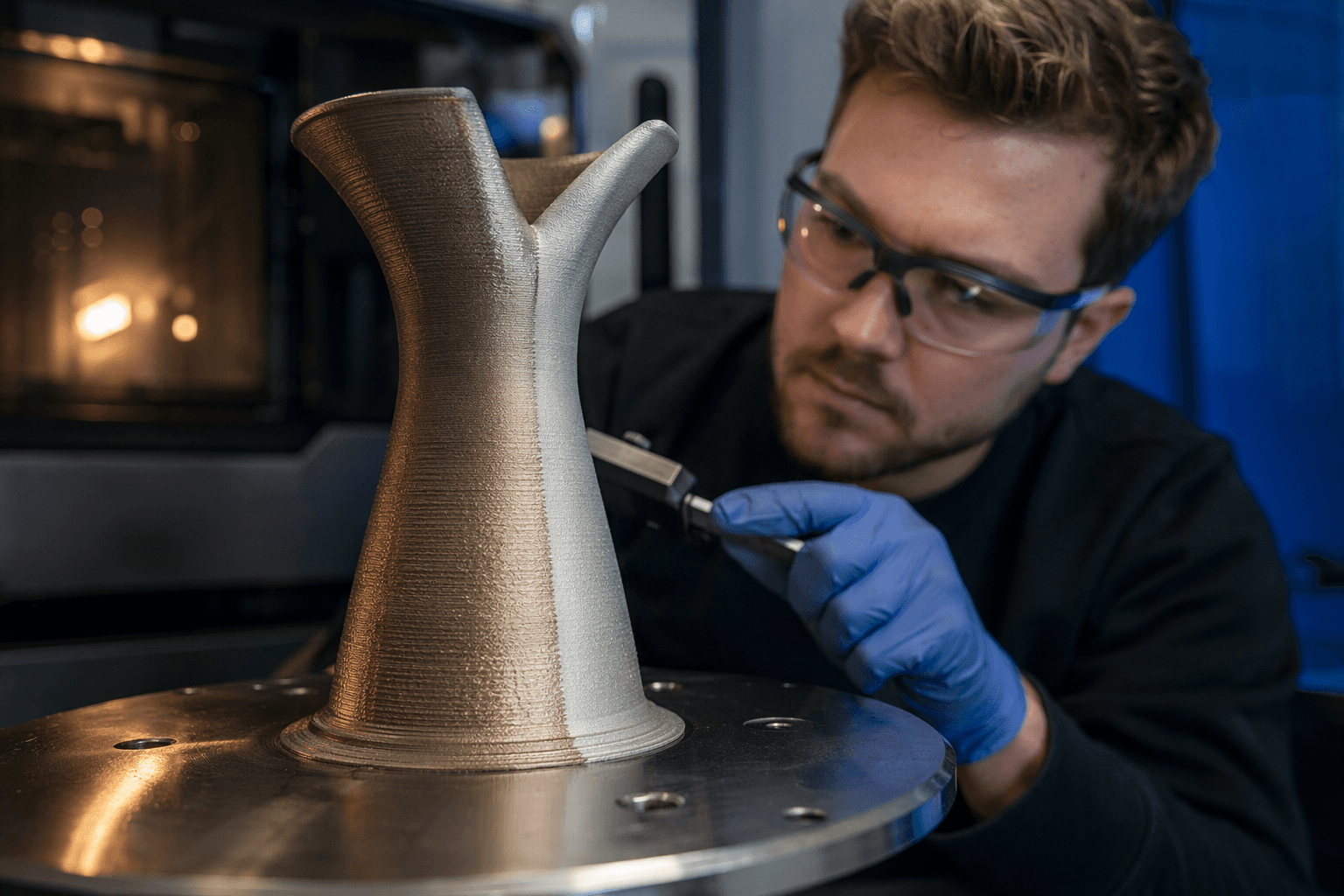
LEAP 71 has been clear that printing different metals together is still not an established process. That is why its work with Fraunhofer matters: the companies have been building an integrated workflow that links LEAP 71’s computational engineering to the lab’s dual-metal selective laser melting technology. The aerospike program has been moving in public for a while now. LEAP 71 and Aconity3D unveiled a 5 kN 3D-printed aerospike rocket engine at Formnext 2024 in Frankfurt, then hot-fired it in December 2024. LEAP 71 later said that engine ran on cryogenic liquid oxygen and kerosene.
The scale kept climbing in March 2026, when LEAP 71 and HBD said they had produced a 200 kN aerospike engine about one meter tall for upper stages of large reusable launch vehicles. LEAP 71 said that engine used cryogenic methane and liquid oxygen. For the hobby world, that is still far beyond anything on a desktop, but the pattern is familiar. Makers already use heat-set inserts, bolted hybrid assemblies, and multi-material polymer workflows to get closer to a part with the right stiffness, grip, or flex where it matters. The bi-metal aerospike work points to the same expectation moving upward into metal: not just a printed shape, but a printed assembly of behaviors.
Fraunhofer says that effort is being advanced through the MULTIMATERIAL-Zentrum Augsburg and MULTIMAT-BAVARIA II projects, with the next Augsburger Seminar for Additive Manufacturing scheduled for July 2026. The aerospike may be the flashy example, but the real shift is the one hobbyists will eventually notice first: parts that are no longer limited to one material’s compromises.
This article was produced by Prism’s automated news system from verified source data, official records, and press releases, then run through automated quality and moderation checks before publishing. The system is built and supervised by the people who set the standards it runs under. Read our full AI policy.
Did this article answer your question?