MIT Multimaterial 3D Printer Makes Working Electric Linear Motor in Three Hours
MIT’s Microsystems Technology Laboratories printed a working electric linear motor in approximately three hours using four extrusion toolheads and five materials, with estimated material cost about $0.50.
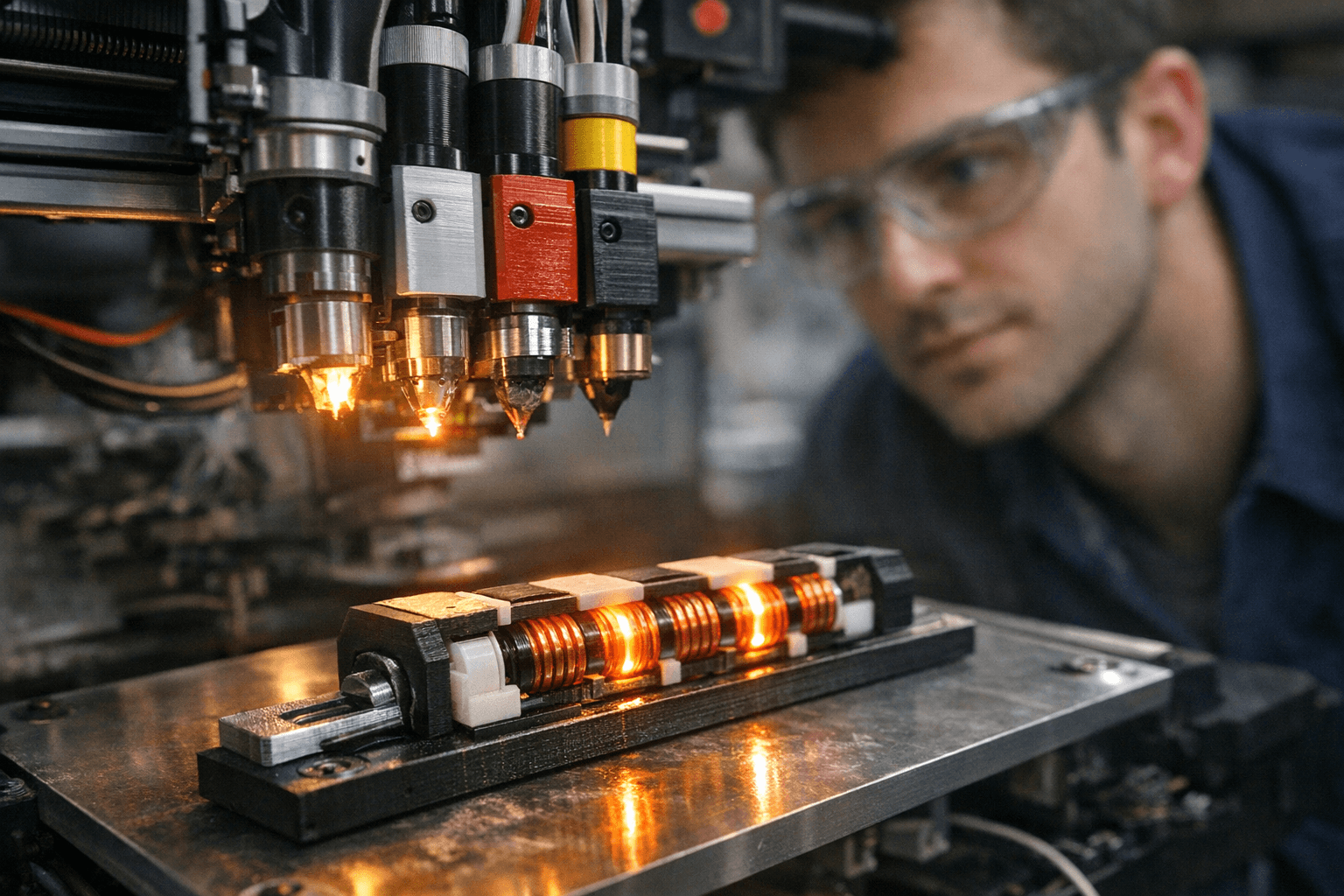
MIT researchers at the Microsystems Technology Laboratories built a multimaterial extrusion 3D-printing platform that fabricated a fully functional electric linear motor in approximately three hours using five different materials and four extrusion toolheads; only one post-processing step was required and the team estimates material cost at roughly $0.50 per device. The platform deposits materials layer by layer and switches between extruders during a single build to produce a finished electric machine in a single process.
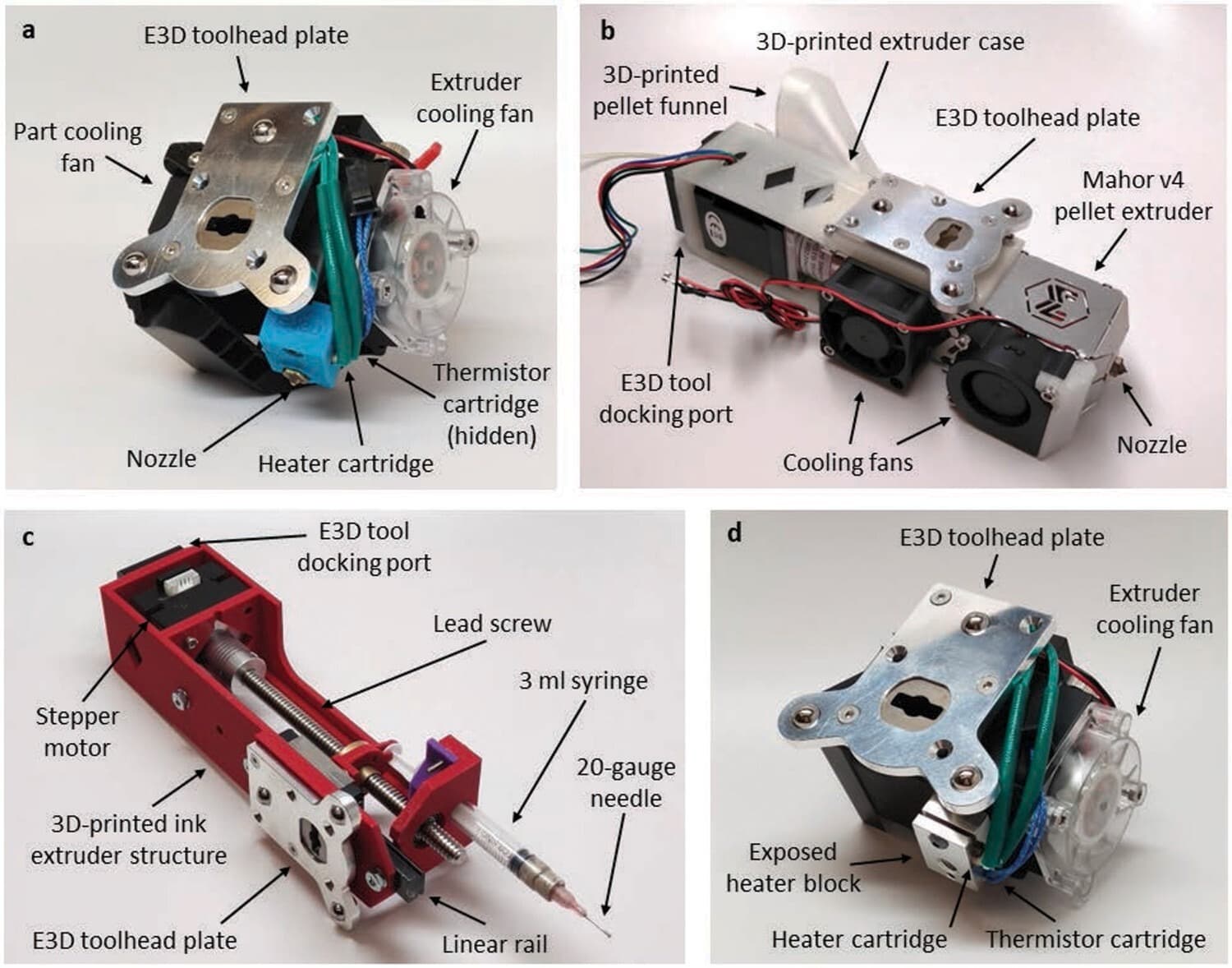
The system’s four toolheads were configured to cover an explicit practical material set. Two conventional extruders printed PLA+ as a rigid dielectric substrate and TPU as a flexible material. A pellet-feed extruder accepted magnet pellets and allowed the team to mix pellet ratios to produce either hard or soft magnetic components. A syringe extruder deposited electrically conductive silver ink to form the motor’s coil traces. Hackster.io summarized these choices as dielectric, conductive, magnetic, and flexible materials that together enable printing a wide range of functional electric components.
The demonstrator linear motor combined those materials into tangible parts: a printed flexible spring, printed hard magnets that required magnetization, a rigid PLA+ substrate, and printed conductive traces forming a coil. When the printed coil was powered the motor ran; the only post-processing step listed was magnetizing the hard magnetic components. Multiple outlets reported the total fabrication time as about three hours and repeated the material cost estimate at around $0.50.
Performance comparisons vary across reporting. Interesting Engineering and Voxelmatters stated the printed motor generated several times more actuation than a common type of linear engine that relies on complex hydraulic amplifiers. 3D Printing Industry used the more conservative phrasing that the final motor matched or exceeded the performance of comparable devices manufactured through more complex methods. The research notes do not include raw numerical metrics such as newtons of force, watts, or efficiency figures for the demonstrator.
Luis Fernando Velásquez-García, principal research scientist at MIT’s Microsystems Technology Laboratories and senior author of the paper in the journal Virtual and Physical Prototyping, framed the work as an engineering integration challenge. He said, “There were significant engineering challenges. We had to figure out how to marry together many different expressions of the same printing method, extrusion, seamlessly into one platform.” The team also incorporated strategically placed sensors and a new control framework to ensure precise tool positioning because small misalignments between layers can compromise electric machine performance.
Velásquez-García placed the demonstration in a broader manufacturing context and spelled out next steps. “This is a great feat, but it is just the beginning. We have an opportunity to fundamentally change the way things are made by making hardware onsite in one step, rather than relying on a global supply chain. With this demonstration, we’ve shown that this is feasible.” He added, “Even though we are excited by this engine and its performance, we are equally inspired because this is just an example of so many other things to come that could dramatically change how electronics are manufactured.” The team plans to integrate magnetization into the printing process, demonstrate fully printed rotary motors, and expand the platform’s toolset.
The work is presented as a proof of concept rather than a commercial product. The paper appeared in the journal Virtual and Physical Prototyping and Voxelmatters reported on the project on February 21, 2026. MIT News supplied images under a Creative Commons Attribution Non-Commercial No Derivatives license with the credit line courtesy of the researchers and lists media contact expertrequests@mit.edu and phone 617-253-2700 for press inquiries.
This article was produced by Prism’s automated news system from verified source data, official records, and press releases, then run through automated quality and moderation checks before publishing. The system is built and supervised by the people who set the standards it runs under. Read our full AI policy.
Did this article answer your question?