MSF uses 3D printing for burn masks as Gaza supplies dwindle
Only two 3D scanners were left in Gaza as MSF ran out of filament and spare parts, while children made up 85% of its 88 active facial-burn cases.
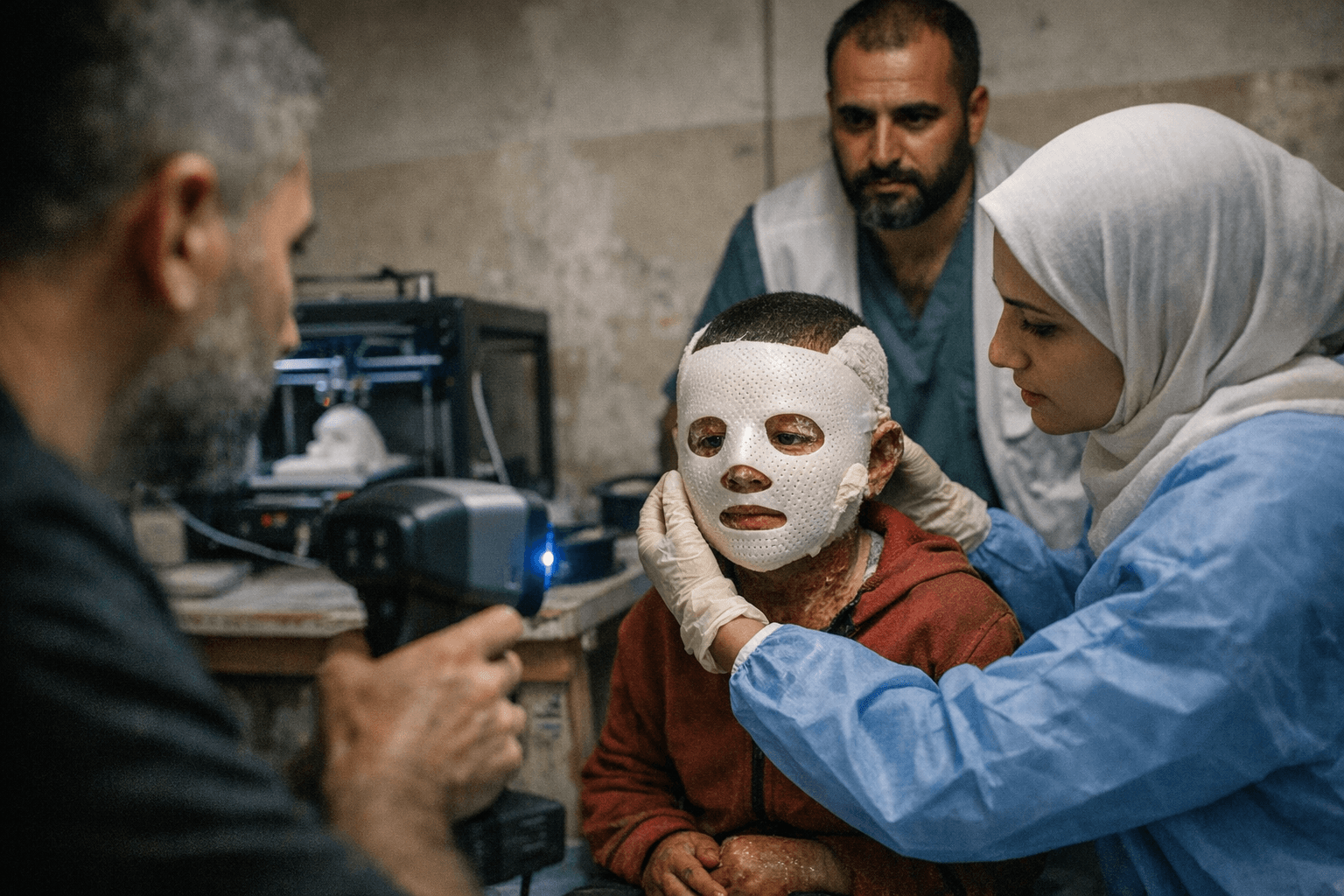
Only two functioning 3D scanners were left in Gaza as Médecins Sans Frontières warned its burn-mask program was running on fumes. The organization said it was running out of filament and spare parts, a hard stop for a workflow that depends on digital imaging, accurate scans and custom-fit compression masks for children with facial burns.
MSF said its Gaza City clinic was treating an alarming number of severe facial burns, with children making up 85% of its current cohort of 88 active patients. The masks it produces are not cosmetic add-ons. They are transparent, printed compression devices that apply pressure to healing burns to limit scarring and contractures, helping prevent permanent disfigurement and disability. MSF has treated burn patients in Gaza since 2011, and when COVID-19 made it harder to send patients outside Gaza in 2020, the group began making the masks locally. Since then, MSF said it has been the only provider of 3D-printed physiotherapy masks in Gaza.
The strain sharpened after Israeli authorities revoked MSF’s registration to work in Palestine, along with 37 other NGOs, on 3 December 2025, cutting off a supply route for new materials. MSF said that after hostilities resumed on 18 March 2026, burn patient numbers rose sharply. In April, its Gaza City clinic was seeing an average of more than 100 patients with burns and injuries a day. That kind of volume is brutal for any burn service, but especially one built around printed, individualized care that cannot be mass-produced when the scanners, filament and replacement parts dry up.
The pressure is not limited to Gaza City. At Nasser hospital, the largest functioning hospital left in Gaza, MSF said it had carried out more than 1,000 surgical operations for burn patients since May 2024. Seventy percent of those patients were children, most under age five. MSF says severe burns demand multiple surgeries, daily dressing changes, physiotherapy, pain management, psychological support and sterile conditions, all of it harder to maintain when painkillers, clean water, food and medical supplies are scarce.
The technology itself is not mysterious, but it is fragile in the field. MSF’s model relies on digital imaging, scanning, printing and fitting, plus staff who can work with telemedicine and tailor devices to upper-arm amputations or facial and neck burns. Its reconstructive surgery program in Amman, Jordan, established in 2006, has used 3D printing for upper-arm prosthetics and burn masks, and an MSF pilot there began in 2017. By February 2018, 14 patients had enrolled in the Amman prosthesis project, eight had been fitted with nine prostheses, and raw material costs ranged from $20 to $50.
MSF’s Foundation says its 3D program supports burn victims in Jordan, Gaza, Syria and Haiti, and nearly 500 patients have benefited overall. In Gaza, that ceiling is being tested now, not by the printer alone but by the supply chain around it.
Know something we missed? Have a correction or additional information?
Submit a Tip