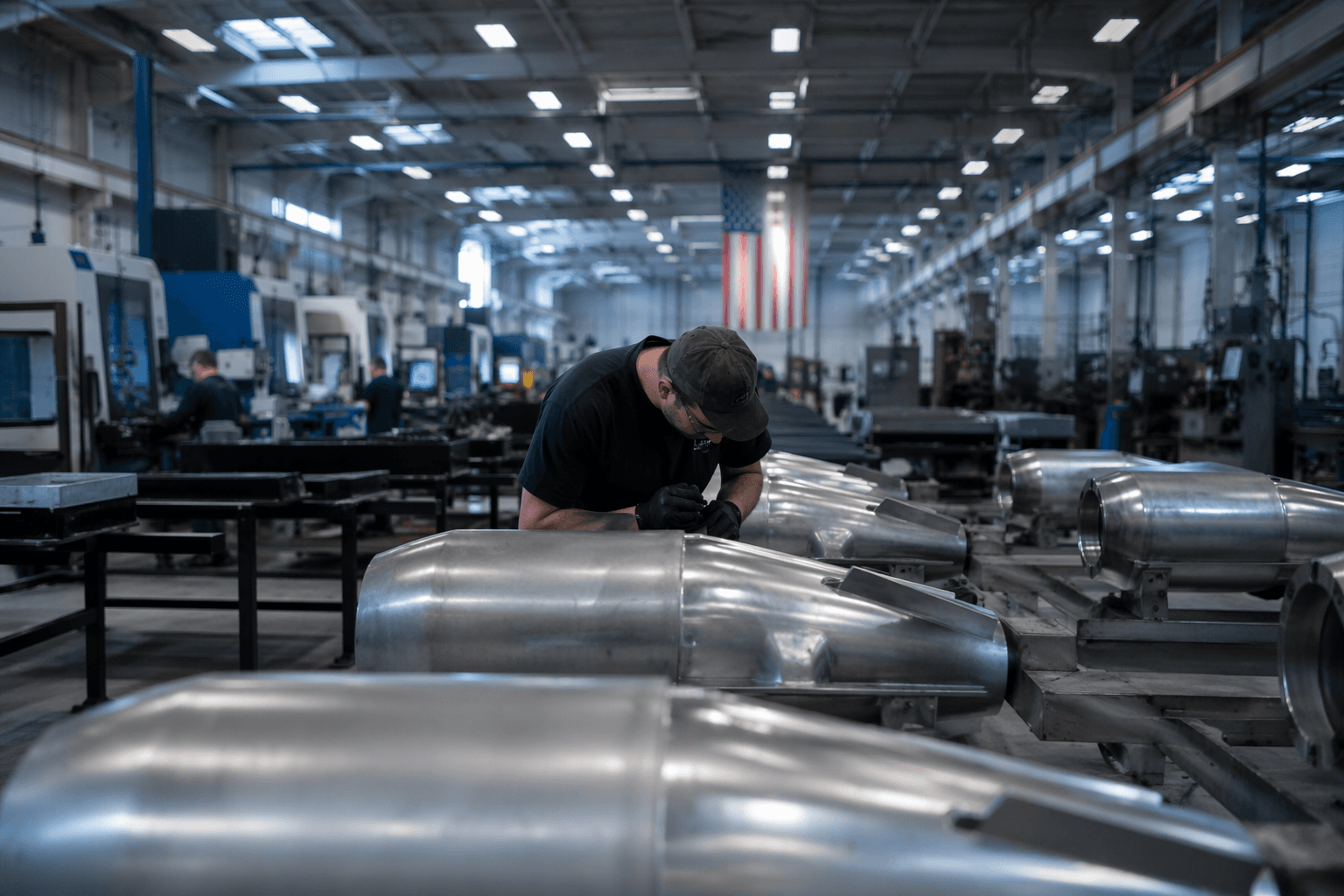
Nike Air Works Program Brings Eight Global Designers Into 3D Printed Footwear
Eight designers from eight cities will build 3D-printed Air Max silhouettes at Nike's Beaverton campus in May, working alongside the same Zellerfeld that already sells a fully TPU-printed Air Max 1000 for $179.
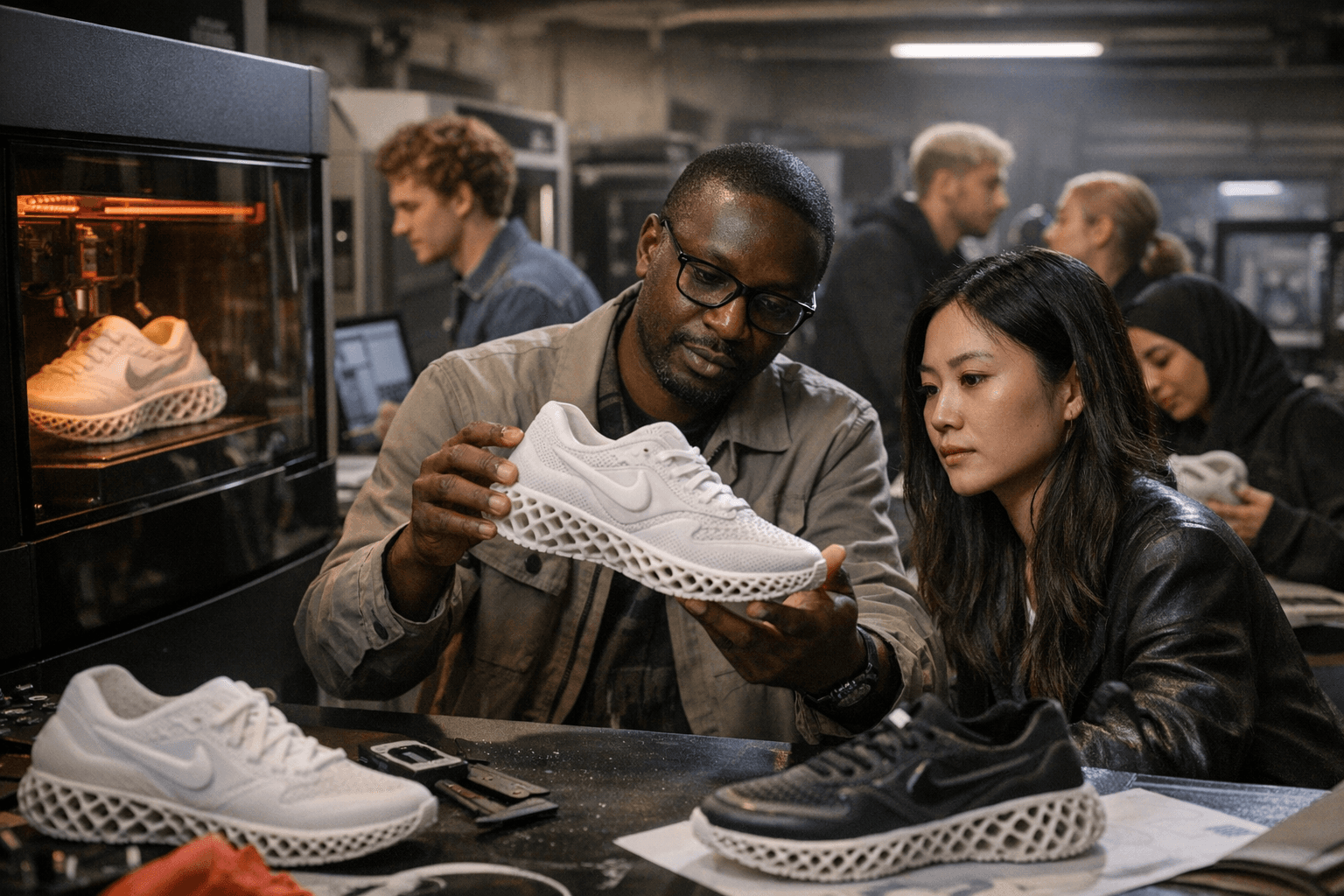
Nike chose Air Max Day 2026 to announce Air Works, a four-day R&D residency in which eight independent designers will work alongside Nike engineers and 3D printing specialist Zellerfeld to produce their own Air Max silhouettes, each ending in a limited friends-and-family release. It is less a design contest and more a structured laboratory: the program runs May 11 through May 14 at Nike's Philip H. Knight Campus in Beaverton, Oregon, and the resulting shoes are not going to retail. Instead, each designer will drop their shoe locally within their own community, with those releases building toward Air Max Day 2027.
The eight designers represent Beijing, London, Los Angeles, Mumbai, New York, Paris, Shanghai, and Tokyo. Nike describes the session as collaborative, with designers working alongside Nike mentors using what the company calls Nike-only tools. The closed-loop nature of that process is worth sitting with: these are not off-the-shelf slicer workflows. But the manufacturing partner in the room, Zellerfeld, already ships product you can buy.
That matters because Zellerfeld's track record with Nike is specific and instructive. The Air Max 1000, released through Zellerfeld at $179, is a fully 3D-printed slip-on built entirely from zellerFOAM TPU, no stitching, no glue, single-piece construction with a web-like lattice upper and sculpted midsole that single-material FDM cannot yet replicate at that surface quality. The Air Max 95000, priced at $249, went further: a dual-Air unit setup with a larger heel bubble and a smaller forefoot pod, nested inside a printed chassis where lattice density shifts by zone to tune cushioning stiffness selectively. Zellerfeld also co-developed Project Nectar for the 95000, a combined material formulation and toolpath system that achieves outsole-level abrasion resistance and co-printed decorative detailing in a single print pass without secondary lamination. That last point is the hard constraint to internalize if you are working on TPU midsole projects at home: printing structural and decorative elements simultaneously without a bonding step is precisely the bottleneck that separates Zellerfeld-level results from desktop output.
The Air Works shoes will almost certainly iterate on these same fundamentals. Expect gradient-density lattice midsoles, integrated decorative geometry, and probably whole-shoe TPU construction as the shared design vocabulary. What the eight designers bring is the cultural surface layer: geometry choices, silhouette proportions, and visual identity specific to their cities. That is where the design inspiration for the maker community lives, even if the materials pipeline is currently out of reach.
Here is what to track as this unfolds. Watch whether any of the eight designers document their May residency publicly; open documentation from sessions like this is how printable techniques actually propagate through the community. Follow Zellerfeld's drop channel for the friends-and-family releases over the next year. Pay attention to whether any Air Works shoe introduces a structural departure from what the 1000 and 95000 already demonstrated, particularly around upper construction or new Air unit integration. And watch for any Project Nectar toolpath information that surfaces in accessible formats, because that co-printing approach is the most practically relevant technical development in this entire lineage for anyone currently printing TPU on a Bambu or Prusa.
Nike's decision to frame the 40th year of Air around a 3D printing program rather than a retro reissue cycle is the clearest internal signal yet that additive manufacturing has a permanent seat at the Swoosh's design table.
This article was produced by Prism’s automated news system from verified source data, official records, and press releases, then run through automated quality and moderation checks before publishing. The system is built and supervised by the people who set the standards it runs under. Read our full AI policy.
Did this article answer your question?