Peopoly’s Giga 800 brings industrial pellet printing to $15,000
Peopoly’s Giga 800 pushes pellet-fed big-format printing to $15,000, pairing an 800 mm cube build volume with a price that undercuts most industrial rivals.
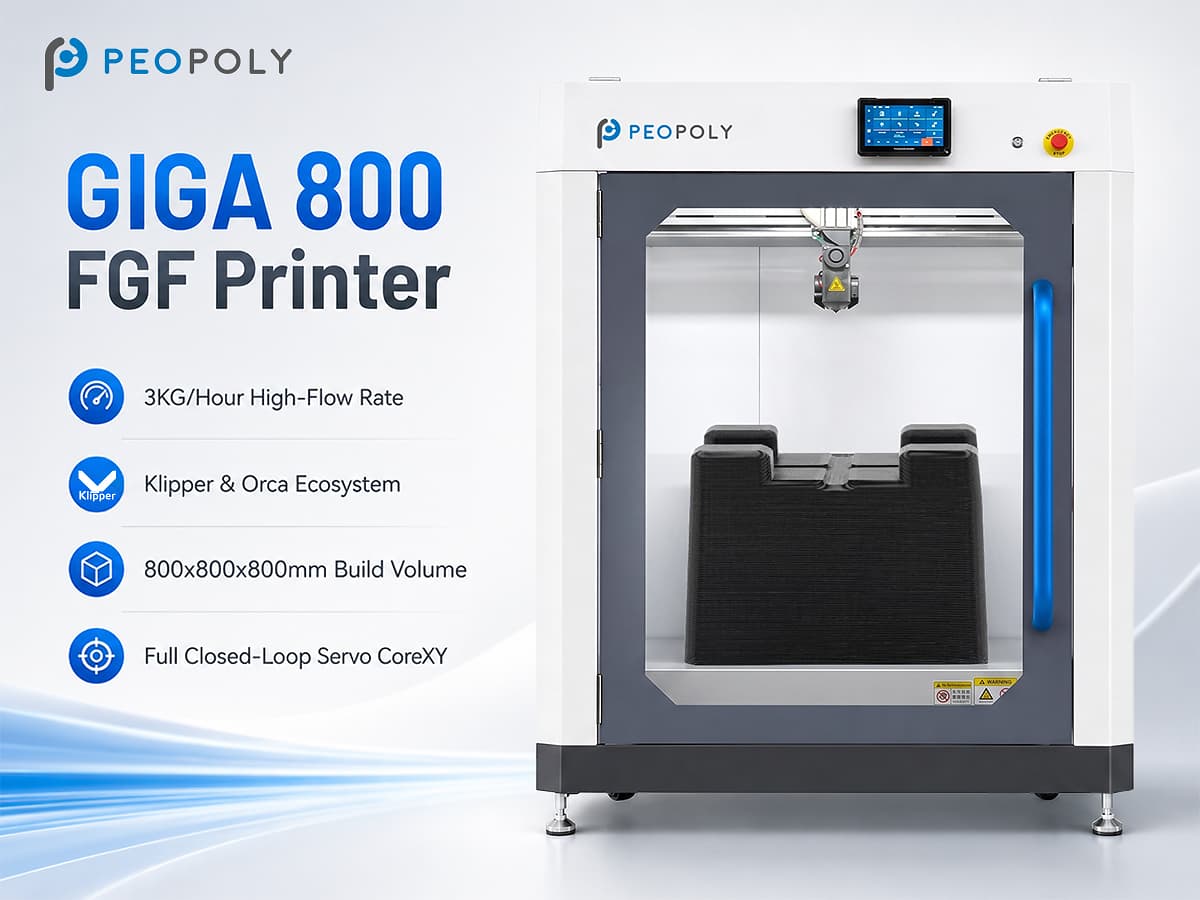
Pellet-based large-format printing just moved a lot closer to the reach of smaller shops and serious makers. Peopoly launched the Giga 800 on May 14, 2026, pitching it as a professional-grade fused granular fabrication machine with an 800 by 800 by 800 millimeter build volume, a 3 kilogram-per-hour extrusion rate, and a $15,000 price tag.
That price matters because pellet printing changes the math. Peopoly says the machine can cut material costs by up to 90 percent by printing directly from raw pellets instead of filament. That is a major draw for anyone trying to make oversized parts without paying filament premiums, but it does not erase the tradeoffs. A printer this size still demands floor space, tighter process control, and a production mindset that is closer to shop equipment than a casual desktop tool.
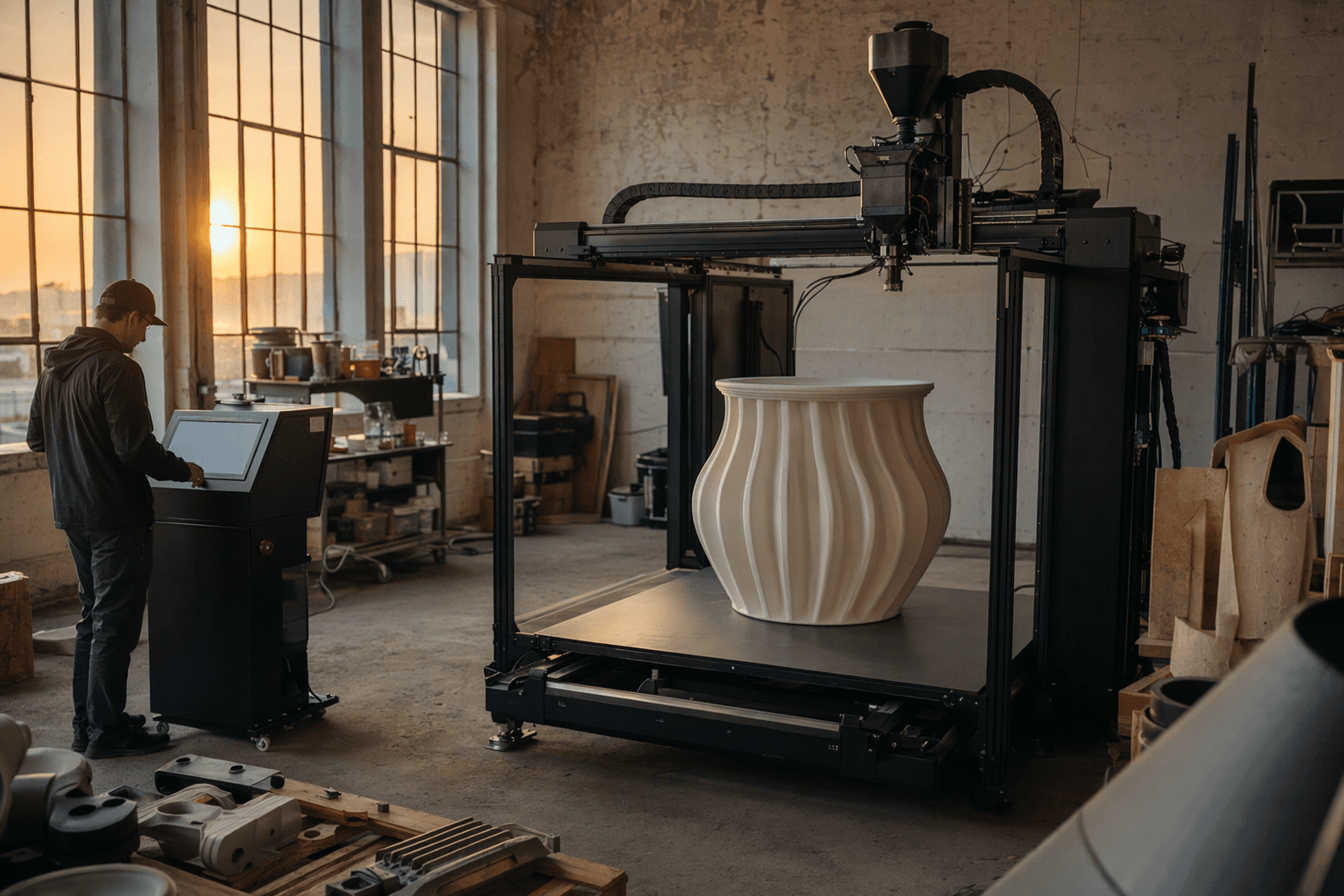
Peopoly is also trying to make the workflow feel less locked down. The Giga 800 uses open-source Klipper and Orca Slicer, includes WiFi integration, and relies on advanced retraction and pressure advance to reduce oozing and post-processing. The company says the machine uses a heavy-duty closed-loop servo CoreXY motion system and a sealed material hopper built for 24/7 production. Just as important for many buyers, Peopoly says the system avoids proprietary software and material lock-in.
The intended use cases are squarely industrial. Peopoly is aiming the Giga 800 at printing farms and at jobs like composite mold making, automotive fixtures, and large architectural models. That puts it in the same conversation as the larger pellet systems that have historically lived well above hobby budgets. re:3D’s GigabotX 2 XLT, for example, is listed at $25,300 with a 552 by 740 by 765 millimeter build volume, while Titan Robotics’ Atlas 3.6 has been described as one of the market’s largest production pellet printers with a 50 by 50 by 72 inch build envelope.
The broader appeal is easy to see. Pellet-fed systems can already work with virgin or recycled pellets, flake, or regrind, and earlier coverage has noted that fused granular fabrication has long been held back by the cost and complexity of low-cost pelletizers and choppers. Peopoly’s move does not make big-format pellet printing simple, but it does make it harder to dismiss. The Giga 800 is not just a larger printer. It is a bid to make industrial pellet economics feel attainable.
This article was produced by Prism’s automated news system from verified source data, official records, and press releases, then run through automated quality and moderation checks before publishing. The system is built and supervised by the people who set the standards it runs under. Read our full AI policy.
Know something we missed? Have a correction or additional information?
Submit a Tip