Proximal Sound Printing achieves 10× resolution and 4× lower power for PDMS
Concordia and UC Davis researchers show proximal sound printing can make PDMS parts with tenfold finer features while using one quarter of the acoustic power and 1600× less streaming.
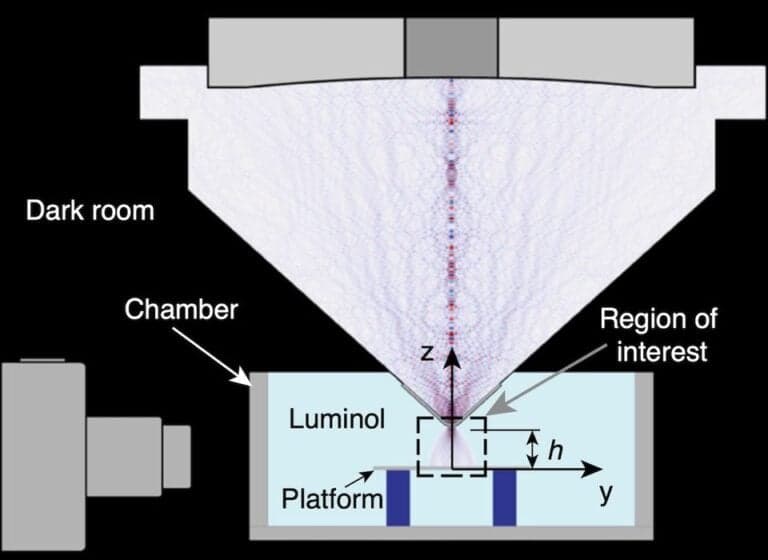
Concordia University researchers, with collaborators at the University of California Davis, demonstrated Proximal Sound Printing (PSP) can produce PDMS microstructures at ten times finer resolution while cutting printing power to one quarter and reducing acoustic streaming velocity by 1600 times. The team describes PSP as a new class of additive manufacturing where on-demand polymerization occurs through ultrasound waves interacting with printing material right at the proximity of the acoustic aperture by inducing cavitation.
Prior direct sound printing approaches relied on focused ultrasound to create cavitation bubbles whose collapse triggered sonochemical polymerization, but those methods hit practical limits. Earlier direct sound printing produced feature sizes in the one to two millimeter range and suffered from fluid motion that disturbed the build zone and made complex or multi-material structures difficult to fabricate. The PSP work explicitly addresses those limits by changing the printing geometry rather than the basic physics.
PSP routes ultrasound through a guiding acoustic chamber that ends in a small printing aperture covered by a thin aluminum film barrier. Placing the acoustic source much closer to the build surface - the proximal geometry - is central to the reported gains in control, repeatability and feature size modulation through aperture tuning. By leveraging high-intensity focused ultrasound to induce localized sonochemical reactions, PSP achieves direct polymerization at microscale resolution and overcomes challenges in resolution improvement, multi-material printing, and fabricating complex structures in sound-based additive manufacturing.
The paper and subsequent coverage list quantified improvements as enhancing resolution tenfold, reducing printing power fourfold, and decreasing maximum acoustic streaming velocity 1600 times. Demonstrations reported include direct 3D printing of unmodified PDMS microstructures, complex microfluidic channels, flexible sensors, multi-material composite structures and functional microfluidic devices. The PSP process is explored through sonochemiluminescence experiments and high-speed imaging and demonstrated by the successful printing of multi-material composite structures and functional microfluidic devices.

Mohsen Habibi, a co-author who spent nearly a decade as a researcher at Concordia, framed the advance in plain terms: “One of the major limitations of sound printing methods [is their] comparatively low printing resolution. With PSP, we have demonstrated that highly detailed components can be fabricated accurately using ultrasound waves,” Habibi said. He added, “PSP represents a major step forward for sound printing, a technology still in its early stages. We hope this platform soon finds a home not only in academic research but also in widespread public use.”
The formal article appears under the title “Proximal sound printing: direct 3D printing of microstructures on polymers” in Microsyst Nanoeng and carries DOI 10.1038/s41378-025-01035-w; indexing entries reported include PMID 41500993 and PMCID PMC12780252. Affiliations listed include the Optical Bio Microsystems Laboratory, Micro-Nano-Bio Integration Center, Department of Mechanical, Industrial and Aerospace Engineering, Concordia University, Montreal, QC, Canada and the Department of Mechanical and Aerospace Engineering, University of California at Davis, Davis, CA, USA. Lead author contact is given as m.packirisamy@concordia.ca.
If the numerical claims hold under independent replication, PSP could push sound-driven printing from proof-of-concept DSP into practical fabrication for lab-on-chip systems, soft electronics, wearable diagnostics and soft robotics by enabling direct printing of commercially available heat-curing resins such as PDMS without rheological modification or photoinitiators.
This article was produced by Prism’s automated news system from verified source data, official records, and press releases, then run through automated quality and moderation checks before publishing. The system is built and supervised by the people who set the standards it runs under. Read our full AI policy.
Did this article answer your question?