Raise3D Expands Beyond FDM, Simplifying SLS for Production Users
Raise3D's RMS220 SLS system targets the gap below €100,000 industrial machines, with volume deliveries starting around March 2026.
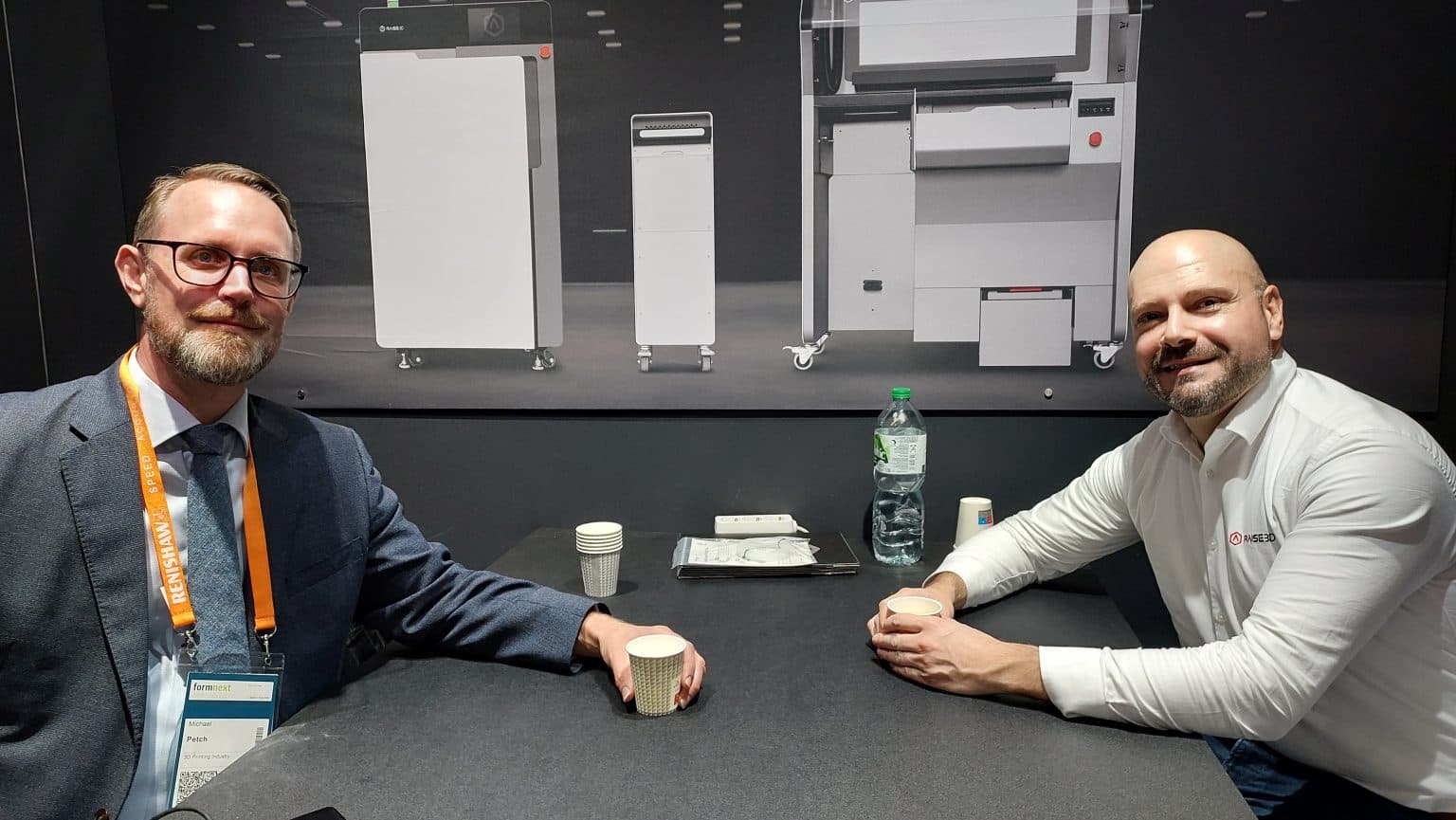
Raise3D arrived at TCT Asia with something most people in the FDM world didn't expect from them: a credible SLS pitch aimed squarely at production users. The company's RMS220 system, built around a complete polymer sintering and post-processing workflow, is designed to occupy the mid-market gap between entry-level desktop units and industrial systems that run well over €100,000.
That's a meaningful wedge to go after, and Raise3D has been working toward it quietly. Internal SLS development had been underway for several years before the public announcement came at TCT Asia in March 2025. Volume deliveries were expected to begin around March 2026, roughly a year after that reveal, which COO Fernando Hernandez framed as notably fast compared to rivals that have spent several years moving from announcement to commercial availability. He acknowledged that some customers are impatient given Raise3D's newcomer status in SLS, but the company's pre-order pipeline and production-focused early adopters suggest the market is taking the machine seriously.
SLS Product Manager Zhewen Ma sat down with 3Dnatives at TCT Asia to walk through the RMS220's workflow. The conversation covered compatible materials and their management, post-processing integration, and how the system approaches mass production throughput. The core claim is that the RMS220 packages everything a production user needs without requiring the kind of deep SLS expertise or capital outlay that industrial systems demand.
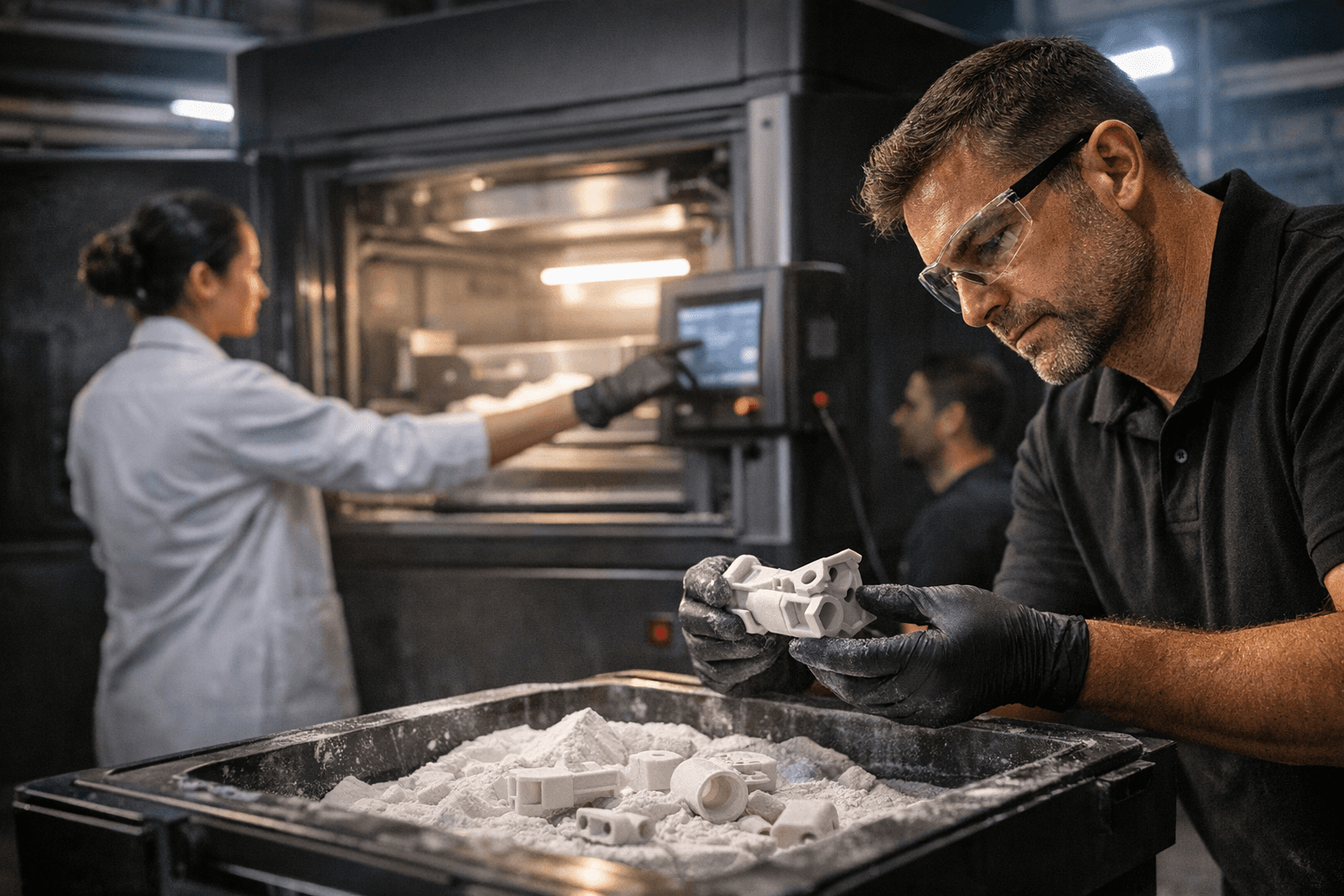
What makes the technical picture more interesting is what Raise3D is doing beyond polymer sintering. The company is experimenting with metal part production through ColdMetalFusion, a process developed by Germany's Headmade Materials. The approach binds metal powder in a polymer matrix, runs it through the RMS220 without any hardware modifications, and then puts the resulting green parts through a debinding and sintering chain: a water-based blasting cabinet, chemical treatment, and a furnace cycle at around 1,000 degrees Celsius. Hernandez described the post-print sequence as elaborate, but argued that because Raise3D has cut the capital cost on the printing hardware side, the overall barrier to entry for metal production via this route drops significantly. The RMS220's high-speed laser and galvanometer configuration also shortens build times for metal green parts compared to slower SLS engines.
Context matters here. SLS still accounts for a small slice of Raise3D's business: FDM represents roughly 90 percent of sales today. But the move into SLS follows the company's earlier expansion into resin, and the RMS220 signals that Raise3D is deliberately broadening its technology base rather than staying in the FDM lane where it made its name. Whether the mid-market positioning holds up against established SLS players will depend on specifics the company hasn't yet made fully public, including RMS220 pricing, build volume, and compatible powder specifications. Those details will matter a great deal to production managers doing the actual ROI math.
This article was produced by Prism’s automated news system from verified source data, official records, and press releases, then run through automated quality and moderation checks before publishing. The system is built and supervised by the people who set the standards it runs under. Read our full AI policy.
Did this article answer your question?