Raise3D Partners With AMT to Streamline SLS Post-Processing for European Customers
Raise3D's AMT deal puts vapor-smoothed SLS surfaces in European shops by June 2026; here's when a 72-81% roughness reduction matters and when it kills your tolerances.
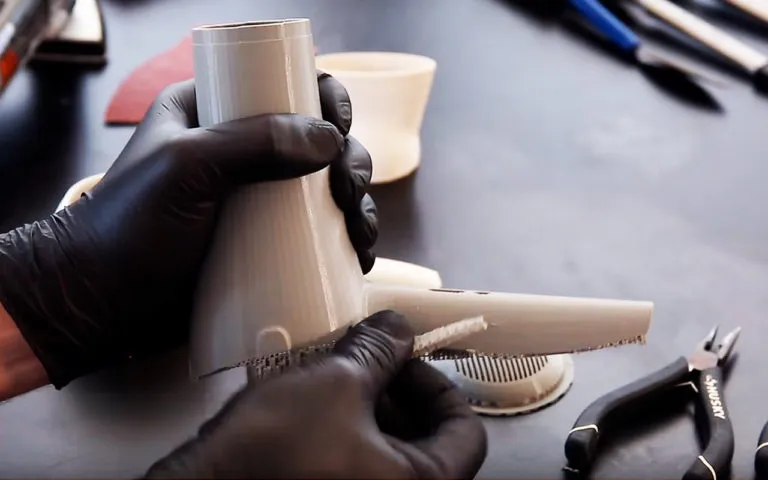
Raise3D paired with Additive Manufacturing Technologies (AMT) this week to sell preconfigured post-processing cells to European owners of its RMS220 SLS printer. The centerpiece is AMT's vapor smoothing lineup: the existing PostPro SFX and the newly unveiled PostPro SF2X, which ships from June 2026 and uses a biodegradable, non-hazardous finishing agent that targets one of the biggest barriers in professional surface finishing: chemistry handling and disposal overhead.
Under the agreement, the systems come pre-configured for Raise3D's powder materials and build formats. Raise3D described the deal as an effort to "complete our additive manufacturing workflow with advanced post-processing capabilities," and cited AMT's ability to "deliver industry-leading surface finishing" that "perfectly complements the large build volume of our RMS220." AMT framed its side of the deal around making professional post-processing cost-effective in environments where finishing chemistry compliance had previously blocked adoption.
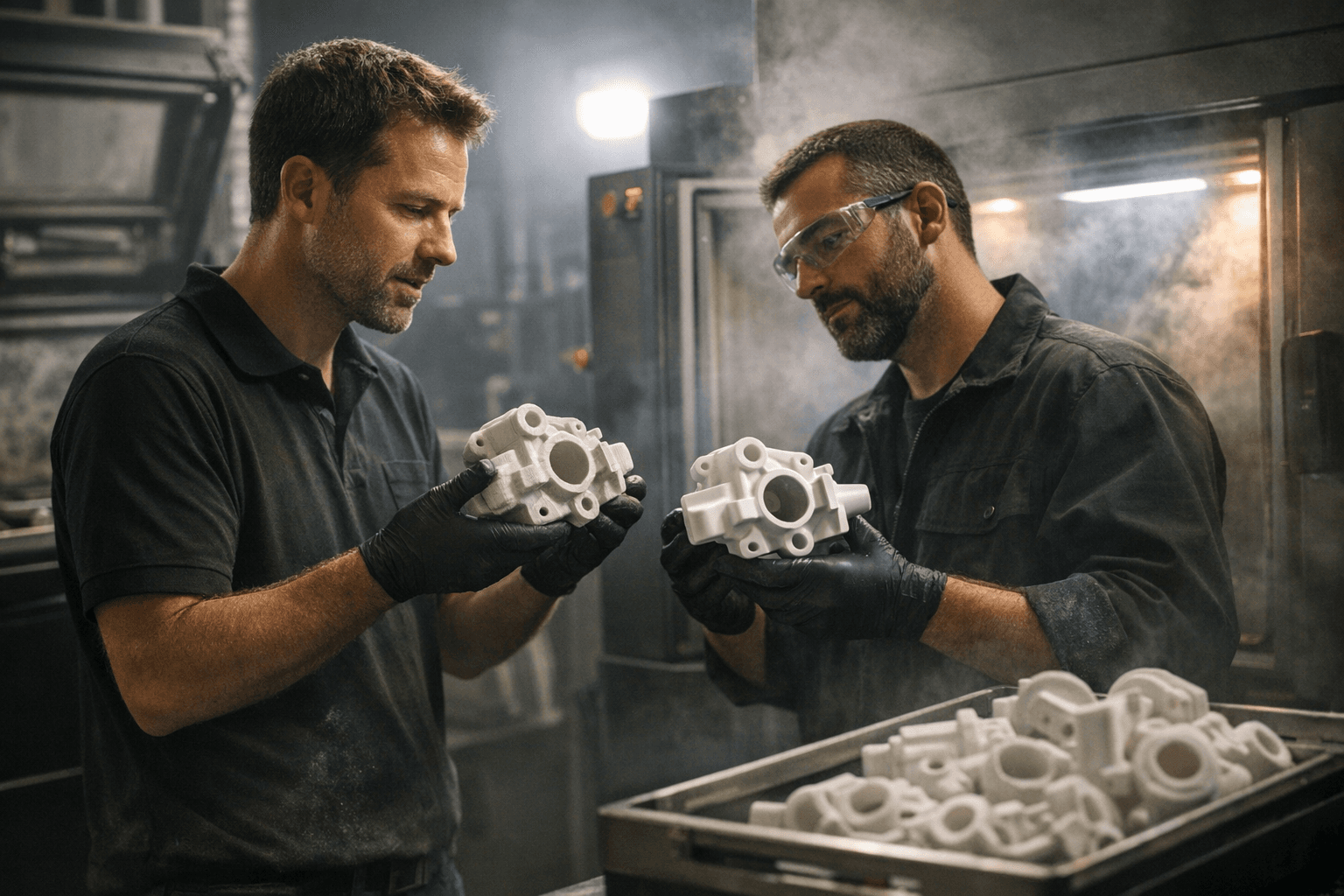
Here's what vapor smoothing actually does to an SLS nylon part. The process exposes the surface to a solvent vapor that reflows the outermost powder layer into a continuous, sealed skin. Joint testing between AMT and Formlabs found roughly a 72-81% reduction in average surface roughness (Ra) on SLS parts after smoothing. The surface seals, unlocking watertight geometry and a finish that accepts primer and paint the way injection-molded plastic does. Elongation at break also improves, making smoothed parts less brittle. The tradeoff is dimensional: the surface gains a thin consolidated layer, which matters on tight features.
That tradeoff is the crux of the decision. Smooth when the part is a consumer-facing housing, a fluid-contact enclosure, or a cosmetic prototype that needs a Class A or B finish. Skip it when you have M3 heat-set inserts, press-fit pins with 0.1 mm tolerances, or fine embossed text you need to preserve; the geometry creep will cost you. If you're designing for post-smoothing, build in extra clearance from the start and tolerance-stack accordingly.
For FDM users watching from the sidelines: acetone vapor smoothing on ABS is the closest desktop analog and works on the same principle. It also carries real risks, including flash-fire potential, pooling on flat faces, and feature washout on overhangs. A dedicated chamber, outdoor ventilation, and careful timing are non-negotiable. For materials that don't respond to acetone (PETG, PLA), epoxy flood coats like XTC-3D give controlled results but add weight and cure time. Vibratory tumbling with ceramic media remains the overlooked option for organic shapes where tight features aren't a factor.
The SF2X's biodegradable finishing agent is the detail with the longest tail. Hazardous solvent compliance, storage requirements, and disposal costs have kept vapor smoothing out of smaller fabrication shops and makerspace-adjacent service bureaus for years. Non-hazardous chemistry changes that math, and the June 2026 rollout puts it in European workflows just as demand for finished SLS output from small operations is climbing.
This article was produced by Prism’s automated news system from verified source data, official records, and press releases, then run through automated quality and moderation checks before publishing. The system is built and supervised by the people who set the standards it runs under. Read our full AI policy.
Did this article answer your question?