Rice Researchers Develop Microwave 3D Printing for Embedded Electronics
Rice researchers used microwaves to heat nanoparticle ink in a hair-width zone, a step toward printing embedded sensors and simple circuits inside parts.
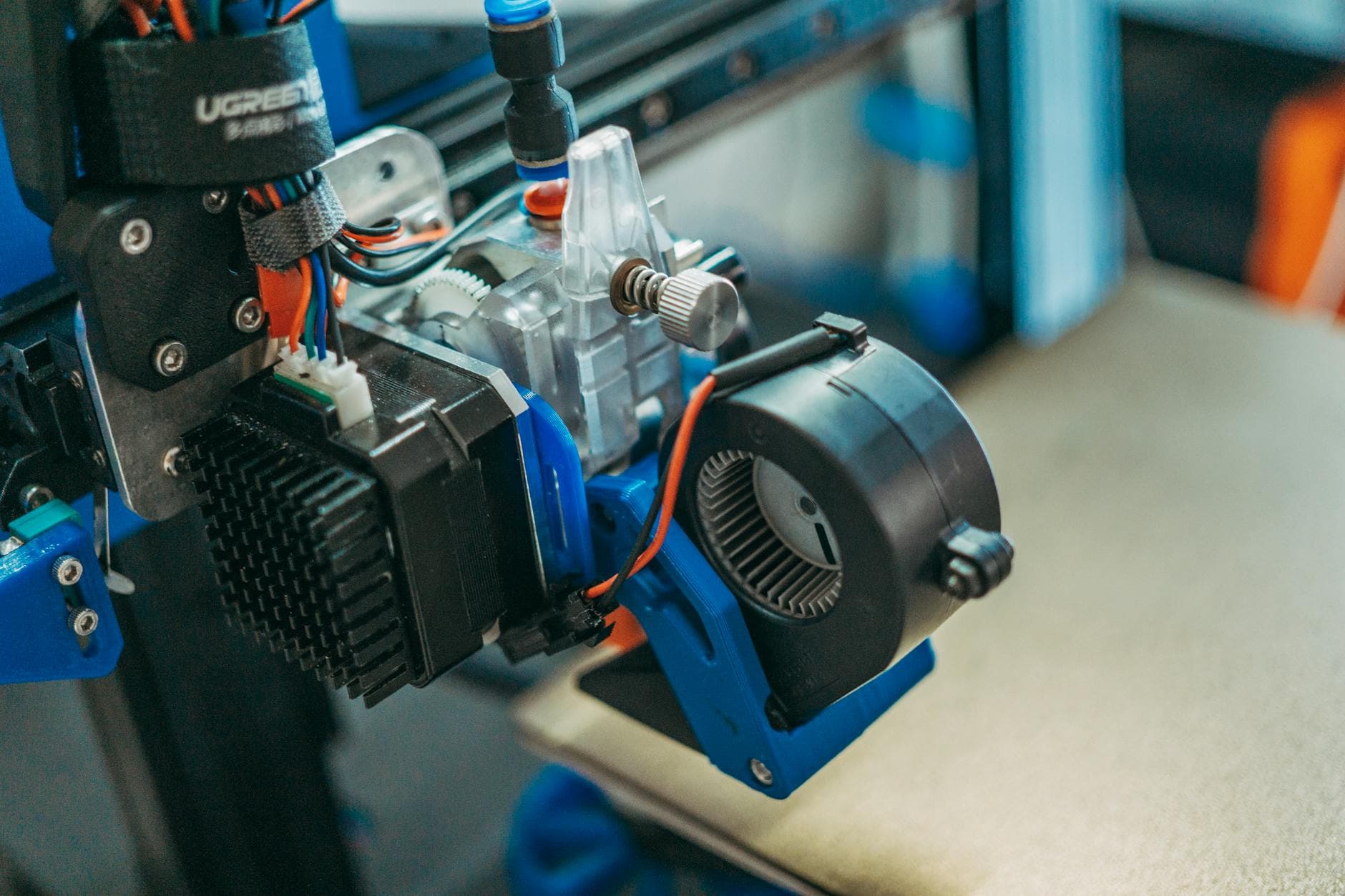
A Rice University team has built a microwave-based 3D printing system that can heat freshly deposited nanoparticle ink in a zone as small as the diameter of a human hair, then leave the surrounding material comparatively cool. That is the part makers should care about: it points to a future where a print does not stop at shape, but can carry embedded sensors, touch controls, and simple circuits inside the part itself instead of being assembled afterward.
The work centers on Meta-NFS, short for metamaterial-inspired near-field electromagnetic structure, from Yong Lin Kong’s group with co-author John S. Ho. In Science Advances, the paper titled Three-dimensional printing of nanomaterials-based electronics with a metamaterial-inspired near-field electromagnetic structure was submitted June 17, 2025, accepted January 6, 2026, and published February 6, 2026. Rice says the process addresses a limitation that has held electronics 3D printing back for more than a decade: selectively heating printed ink without damaging what sits underneath it.
The technical details matter here. In the supplementary materials, the team modeled a silver ink trace 30 micrometers in diameter on a polyethylene substrate at a print speed of 0.2 mm per second. They also measured the ink’s complex permittivity as 53.5 minus 15.6 with a network analyzer, which underscores that this is not just a broad concept about microwave heating. The paper says Meta-NFS achieves the spatial resolution and power density needed to print freeform microstructures with locally programmable electronic and mechanical properties, even inside optically opaque materials. Rice also says the microwave power can be adjusted in real time, which could help support continuous printing without constant material swapping.
What is breakthrough here is the ability to fuse circuits inside a part while keeping the rest intact. What is still lab-only is the broader workflow: this is not a desktop machine you buy and run in a garage tomorrow. Still, Rice says the printer operates in a desktop-size system, without complex facilities or labor-intensive manual processes, and can work across a wider material palette, including metals, ceramics, thermoset polymers, biopolymers, and even living biological tissue. The practical targets are soft robotics, implanted devices, and plant-integrated sensors that can monitor growth in real time.
The bigger story is where this pushes the hobby side of additive manufacturing. Kong’s group has already spent years on nanomaterial patterning and 3D-printed electronic and bioelectronic devices, and this line of work extends that program toward electronics that are printed into structure, not bolted on later. For makers, that is the real shift: printers moving from enclosure-making toward functional parts with circuitry built in from the start.
This article was produced by Prism’s automated news system from verified source data, official records, and press releases, then run through automated quality and moderation checks before publishing. The system is built and supervised by the people who set the standards it runs under. Read our full AI policy.
Did this article answer your question?