Rosa3D launches glass-fiber TPU for tough functional prints
Rosa3D’s TPU 75D swaps soft-rubber feel for stiffness and heat resistance, aiming at brackets, housings, clips, and other parts that need to survive abuse.
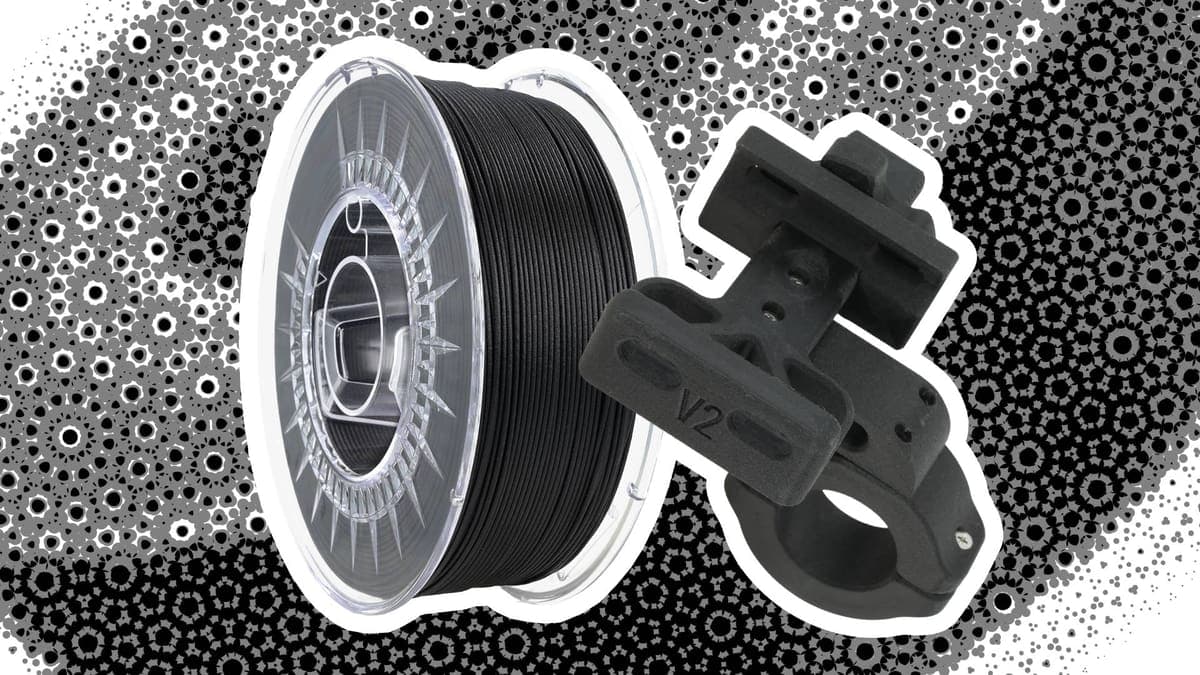
Rosa3D’s new TPU 75D is not trying to be the squishy, grip-first TPU most home printers already know. With 15% glass fiber, it pushes into a more useful lane for functional parts: semi-flexible pieces that need to flex under load, hold their shape, and survive oil, heat, vibration, and weather without collapsing the way ordinary PLA often does.
That is the real pitch here. Rosa3D says the filament is built for demanding environmental and mechanical conditions, including exposure to solvents and oils, and the company’s own technical data points make the case stronger. The material is listed with HDT-A of 155°C and HDT-B of 110°C, which puts it in a different conversation from everyday flexible filament. For under-hood-style jobs, workshop hardware, machine covers, clips, brackets, and housings, that extra stiffness matters more than a rubbery hand feel.
The tradeoff is exactly what experienced TPU users would expect. Glass fiber buys rigidity and thermal stability, but it also makes the material less forgiving. Rosa3D recommends a steel nozzle, a closed chamber, and pre-drying before every print. The company’s settings are specific: 230 to 255°C at the nozzle, 60 to 90°C on the bed, and drying at 70°C for four hours. Cooling is kept low at 0 to 30 percent, and Rosa3D warns that overheating can lead to bubbles or foaming in the material structure. That is not the profile of a plug-and-play spool for casual printing.
It also means nozzle wear becomes part of the cost of admission. Glass fiber-filled materials are harder on brass hardware, so the steel nozzle recommendation is not a suggestion to ignore. In exchange, the filament promises a satin finish, low thermal expansion, low shrinkage, strength, and thermal resistance, which are the qualities that make it attractive for parts you would normally try to outsource or machine rather than print.
Rosa3D is pricing that bet like a premium technical filament. The 1 kg spool costs 209.90 zł, while the 0.5 kg version is listed at 129.90 zł. The company says its plastics extrusion operations date back to 1979, and it has produced 3D-printing filaments since 2018, which gives the launch more weight than a one-off experiment. ROSAPLAST Sp. z o.o., the producer behind ROSA 3D Filaments, was also recognized in Forbes Diamonds 2025 and Forbes Diamonds 2026, a second straight year that signals a manufacturer leaning harder into engineering-grade materials.
For makers, the takeaway is simple: TPU 75D is not here to replace ordinary TPU. It is here when a print needs to behave more like a production part than a toy, and when stiffness, heat resistance, and chemical resistance matter more than softness.
This article was produced by Prism’s automated news system from verified source data, official records, and press releases, then run through automated quality and moderation checks before publishing. The system is built and supervised by the people who set the standards it runs under. Read our full AI policy.
Did this article answer your question?