Snapmaker Releases U1 Firmware Source Code, Opening Klipper Stack to Community
Snapmaker's U1 Klipper, Moonraker, and Fluidd repos landed on GitHub March 30 with one day to spare on a self-imposed deadline, cracking open multi-toolhead firmware logic to modders.
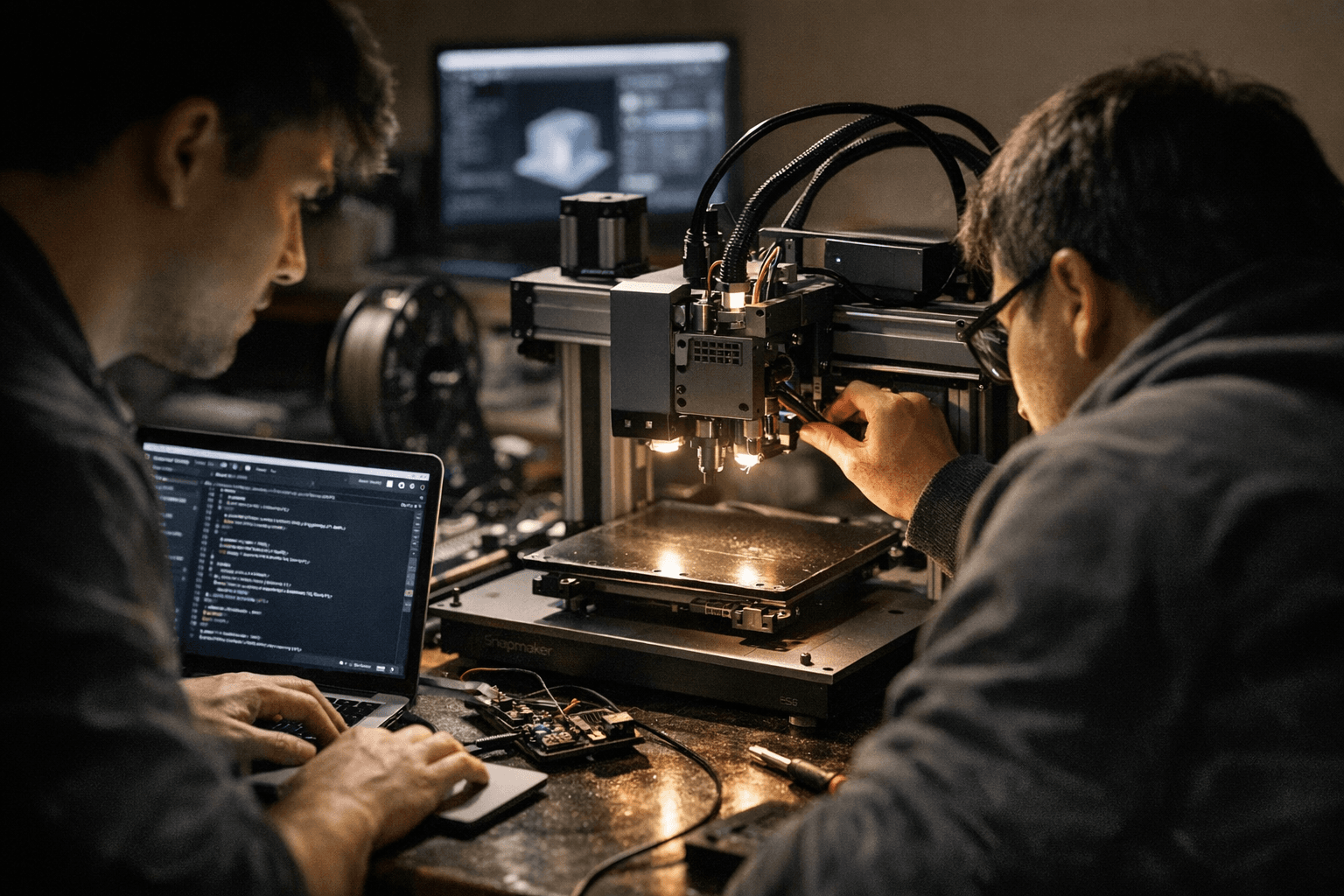
The first thing worth doing with Snapmaker's newly public U1 firmware is running a diff. Pull down the u1-klipper repo from the Snapmaker GitHub organization and compare it against upstream Klipper, and you'll immediately see where the company diverged: multi-toolhead coordination logic, the SnapSwap automatic toolhead pickup and dropoff sequences, automatic material handling routines, and intelligent calibration hooks that don't exist in stock Klipper. That's your tuning map. Those are the patches to study if you want to understand why the U1 behaves the way it does on paper.
Snapmaker published the three repositories on March 30, the final day before a self-imposed end-of-March 2026 deadline the company had stated publicly in its FAQ. The repos cover the full firmware stack: u1-klipper, u1-moonraker, and u1-fluidd, all now public under the Snapmaker organization on GitHub. The Fluidd fork was noted as unmodified prior to publication; the Klipper and Moonraker forks carry the substantive changes.
What the U1's Klipper stack reflects, according to Snapmaker's own documentation, is a deliberate break from Marlin-style architecture. Klipper separates high-level motion logic from low-level MCU execution, which is what enabled Snapmaker to coordinate four independent direct-drive toolheads on a single machine without building firmware from scratch. Publishing that work lets anyone inspect the implementation choices, propose alternatives, or port the toolchange sequences to other multi-tool builds.
The practical unlock for U1 owners is layered. At the macro level, you can now write and test custom Klipper macros with full knowledge of what the vendor has already overridden, rather than guessing at hidden config dependencies. The Fluidd fork opens UI customizations. Community bugfix velocity should increase as public code tends to accumulate eyes faster than private builds. The paxx12 extended firmware project, which had already been repackaging U1 firmware before the official code drop, had demonstrated the appetite: that fork already adds hardware-accelerated WebRTC camera streaming, V4L2 controls, and external RFID reader support via ESP32-C3 with a PN532 module.
There are real limits, though. Snapmaker's own warning is explicit: installing custom firmware doesn't automatically void the warranty, but any damage attributable to that firmware isn't covered. That's a meaningful distinction for a machine that starts at a significant price point and ships with four toolheads and automated material handling. Bootloader access and low-level MCU firmware sit outside what these repos address, so the open-source publication covers the software stack visible to Klipper, not the full hardware abstraction layer beneath it.
The broader significance here is about the Klipper ecosystem specifically. When vendors ship Klipper forks and keep them closed, community fixes for shared bugs don't flow back upstream, and users can't audit whether vendor-side safety checks are adequate. Snapmaker's code drop, however close to the wire, breaks that pattern for the U1 and creates the conditions for patches to eventually benefit the wider Klipper community. For a machine as architecturally ambitious as the U1, that's not a minor footnote: it's the difference between a proprietary appliance and a platform.
This article was produced by Prism’s automated news system from verified source data, official records, and press releases, then run through automated quality and moderation checks before publishing. The system is built and supervised by the people who set the standards it runs under. Read our full AI policy.
Did this article answer your question?