Stratasys opens new headquarters as 3D printing spans new markets
Stratasys’ 200,000-square-foot Minnetonka HQ opened as Nanoscribe scaled key resins and 3D-printed footwear pushed further into real consumer use.
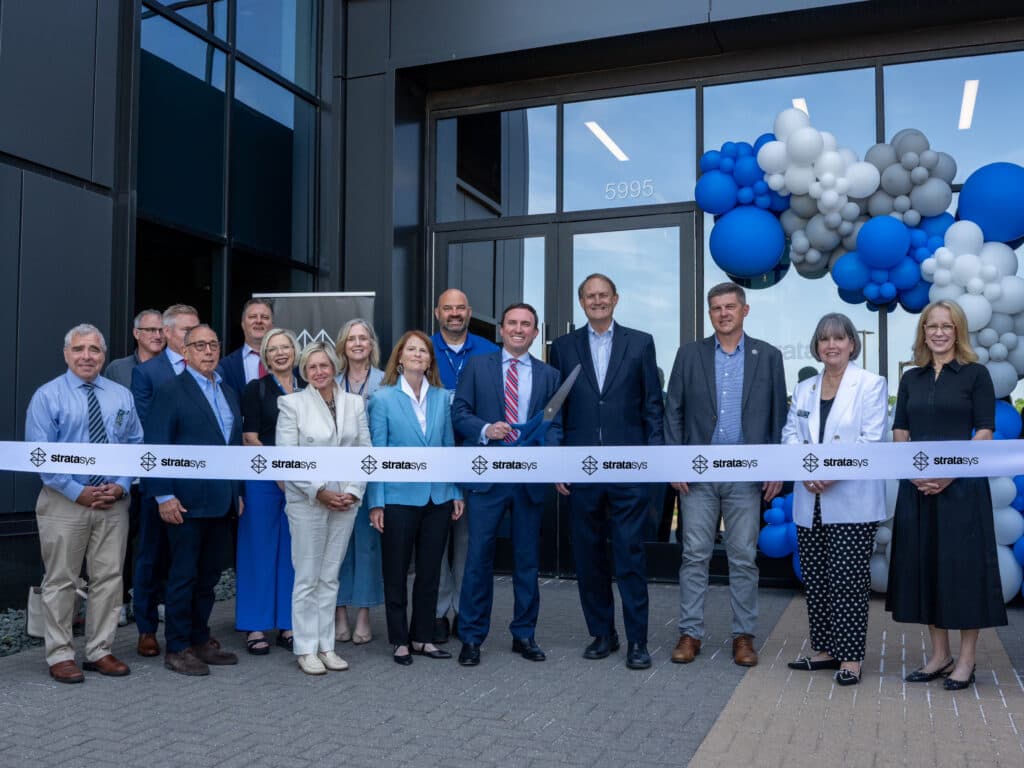
Stratasys opened its new Americas Regional Corporate Headquarters in Minnetonka, Minnesota, a 200,000-square-foot facility that folds engineering, advanced R&D, applications expertise, customer collaboration, and Stratasys Direct into one site. The June 2 opening drew U.S. Representatives Betty McCollum, Brad Finstad, and Kelly Morrison, along with House Majority Whip Tom Emmer and National Association of Manufacturers executive vice president Erin Streeter, putting a spotlight on how seriously the company is treating its U.S. footprint.
The Minnetonka move was not a sudden splash. Stratasys had already announced in August 2024 that it would relocate its U.S. headquarters from Eden Prairie to Minnetonka, and the new building turns that plan into a single operating hub. Emmer said the project is bringing “hundreds of high-skilled engineering, manufacturing, and technical jobs” to Minnesota, while McCollum and Streeter tied the site to regional manufacturing strength, industrial competitiveness, and national security. For Stratasys, the opening signals that additive manufacturing’s biggest names are still investing in physical infrastructure, not just software and showrooms.
On the materials side, Nanoscribe is making a different kind of bet on scale. The company said it expanded manufacturing capabilities for five of its most widely used photoresins, IP-Dip2, IP-S, IPX-Q, IPX-S, and IPX-Clear, and is now producing them with industrial-grade material quality and batch-specific Certificates of Analysis based on independent external measurements. That matters because resin users do not just want a material that prints once in a demo. They want repeatability, documentation, and enough process control to trust the next batch as much as the last one.
RIC Robotics adds yet another piece of the market picture. Its flagship Primus system is built to print walls up to 32 feet tall, 85.4 feet long, and 36.1 feet wide, with print speeds up to 200 mm/s, but the company still describes its robots as human-directed while full autonomy stays on the roadmap. It also says it runs 12 machines in the U.S. and has select international operations across four continents, using a Robotics-as-a-Service model rather than straight equipment sales. That framing makes the construction story less about sheer machine size and more about how autonomy gets introduced into a field build.
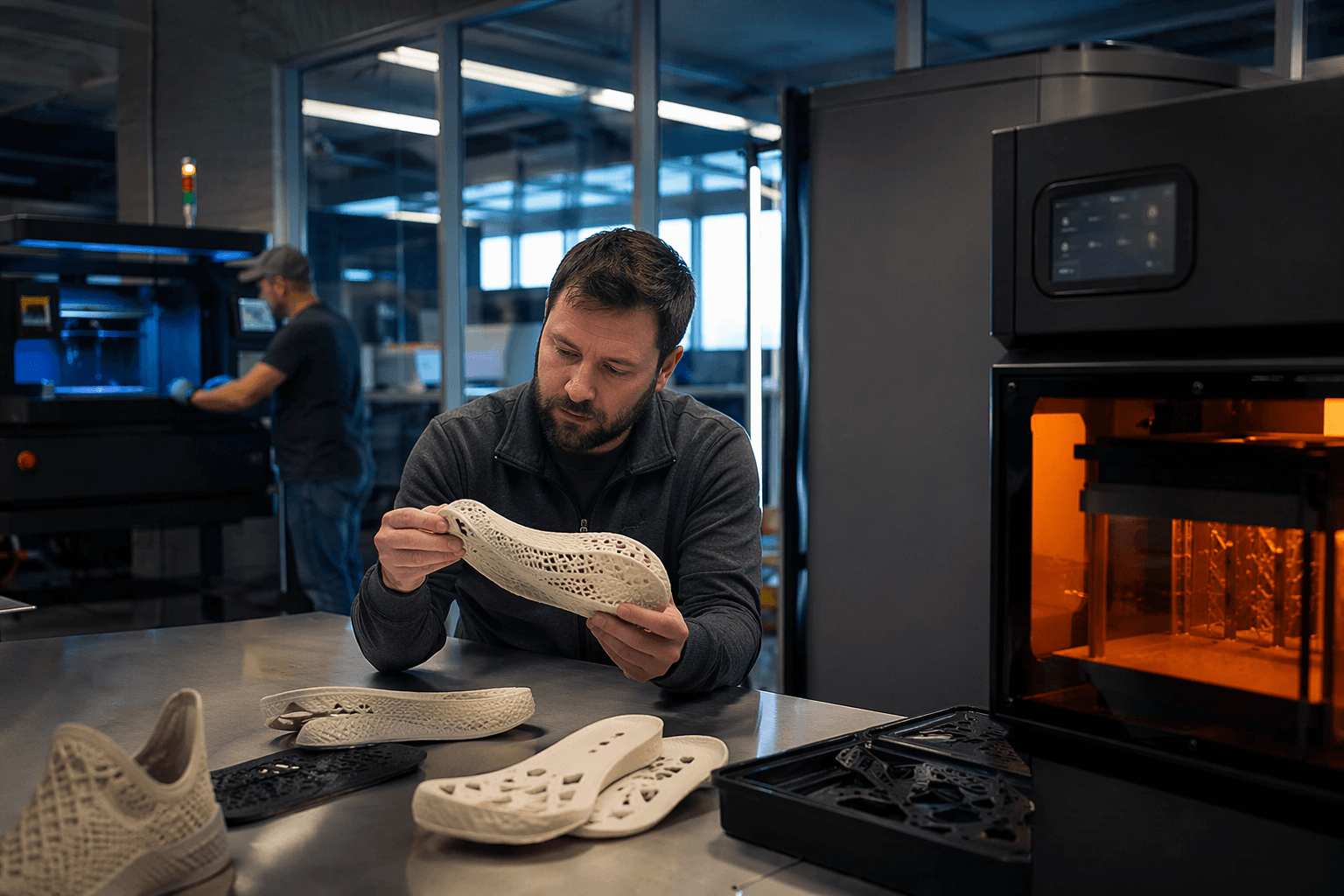
The footwear lane shows the consumer side of that same push toward repeatable production. Nike’s Air Works program brought designers from Beijing, London, Los Angeles, Mumbai, New York, Paris, Shanghai, and Tokyo to Beaverton, Oregon, and Nike says each local designer will release a limited-run friends-and-family shoe through February 2027. Nike also says the Air Max 1000 will arrive later in 2026 as a Nike By You offering. Fitasy’s May 20 announcement that it can commercially offer single-shoe purchasing for custom-fit 3D-printed footwear underscores the same shift, while adidas’ global rollout of the Climacool slip-on in 2025 showed that the category is already beyond the experimental stage.
Taken together, the day’s news shows additive manufacturing moving on several fronts at once: corporate consolidation, tighter resin quality control, construction-scale automation, and consumer products that have to be fit, sold, and repeated. The common thread is no longer novelty, but operational maturity.
This article was produced by Prism’s automated news system from verified source data, official records, and press releases, then run through automated quality and moderation checks before publishing. The system is built and supervised by the people who set the standards it runs under. Read our full AI policy.
Know something we missed? Have a correction or additional information?
Submit a Tip