Tsinghua DISH prints millimetre-scale structures in 0.6 seconds
Tsinghua's DISH printed millimetre-scale polymer parts in 0.6 seconds, using a fixed resin vat and rotating periscope to dodge a major volumetric bottleneck.
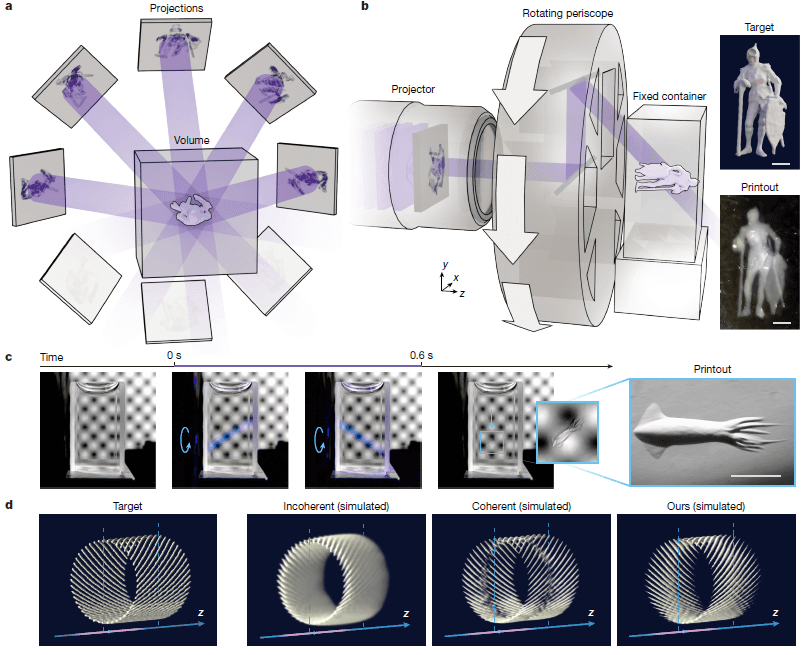
Six-tenths of a second is the kind of number that changes the conversation in resin printing. Tsinghua University’s DISH system used a fixed resin container and a high-speed rotating periscope to project holographic light fields into the vat, cutting out one of volumetric printing’s ugliest compromises: rotating the part or the vessel itself.
The work, published in Nature on February 11, 2026, came out of the Laboratory of Imaging and Intelligent Technology under Academician Dai Qionghai, Associate Professor Wu Jiamin, and Professor Fang Lu. Tsinghua says the group spent five years working through the hard parts, including high-speed modulation of multi-view light fields, holographic pattern optimization for extended depth of field, and digital adaptive optics for optical-path calibration. In its own framing, DISH is a reverse use of computational optics: instead of reconstructing a 3D scene from light, it uses high-dimensional light fields to build a physical object.
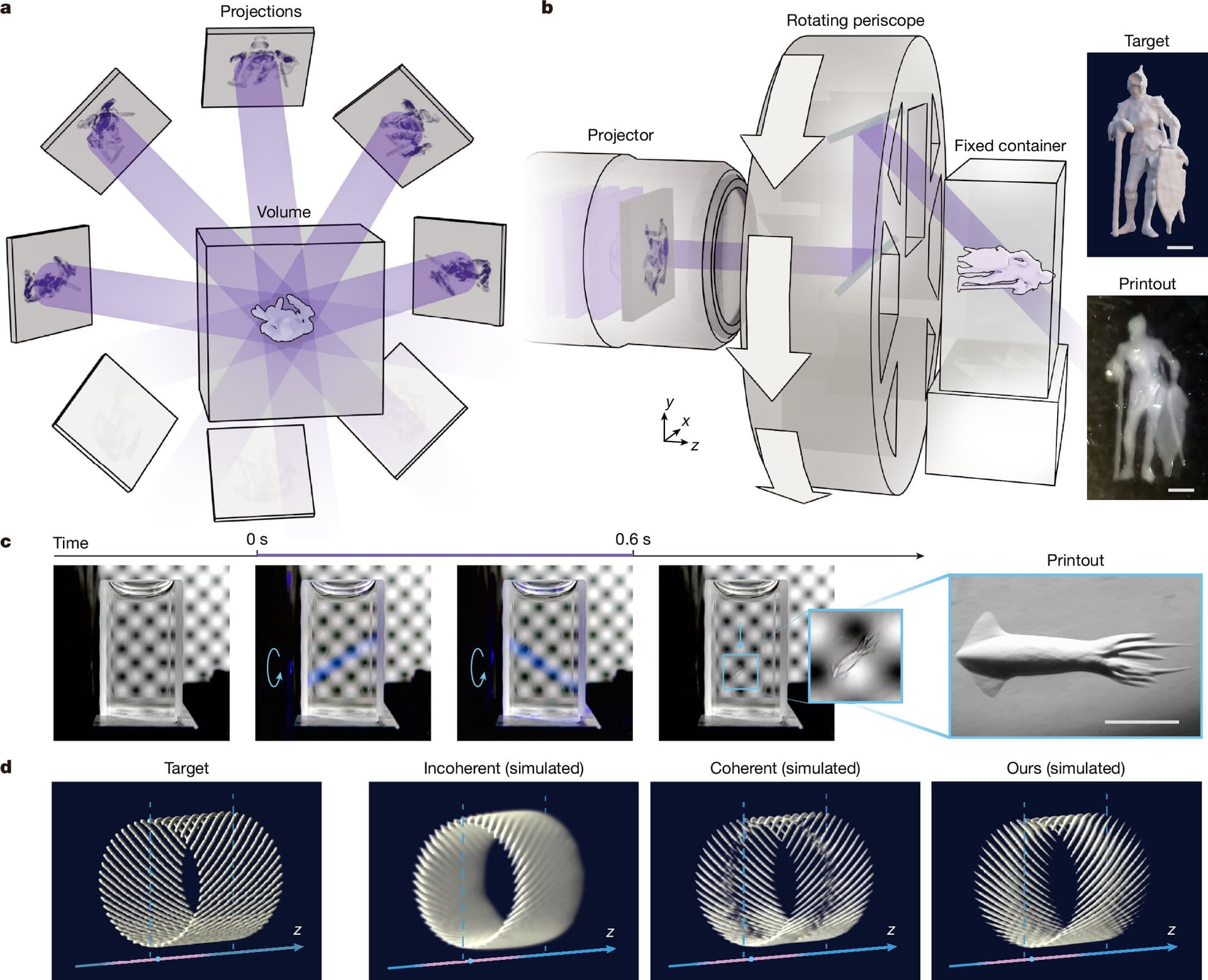
That matters because current volumetric methods, including computed axial lithography, can be boxed in by container rotation, precision loss when the image falls out of focus, and the need for high-viscosity materials to keep a printed object from sinking. DISH keeps the resin stationary. Independent reporting says the rotating periscope can redirect patterned projections at up to 10 rotations per second, while the digital micromirror device runs at up to 17,000 Hz. The system converts 180 greyscale angular dose distributions into 1,800 binary projections and uses a 405 nm laser to deliver them.
The optics are not just flashy, they are tight. Tsinghua says a 0.055 numerical aperture objective held roughly 19 micron resolution across a 1 centimetre depth range, with the finest independent positive features coming in at about 12 microns. The system was demonstrated with acrylate-based and hydrogel materials including PEGDA, DPHA, BPAGDA, GelMA, SilMA, and UDMA, which puts it squarely in the territory where soft structures, delicate geometries, and microfeatures start to matter more than brute-force speed.
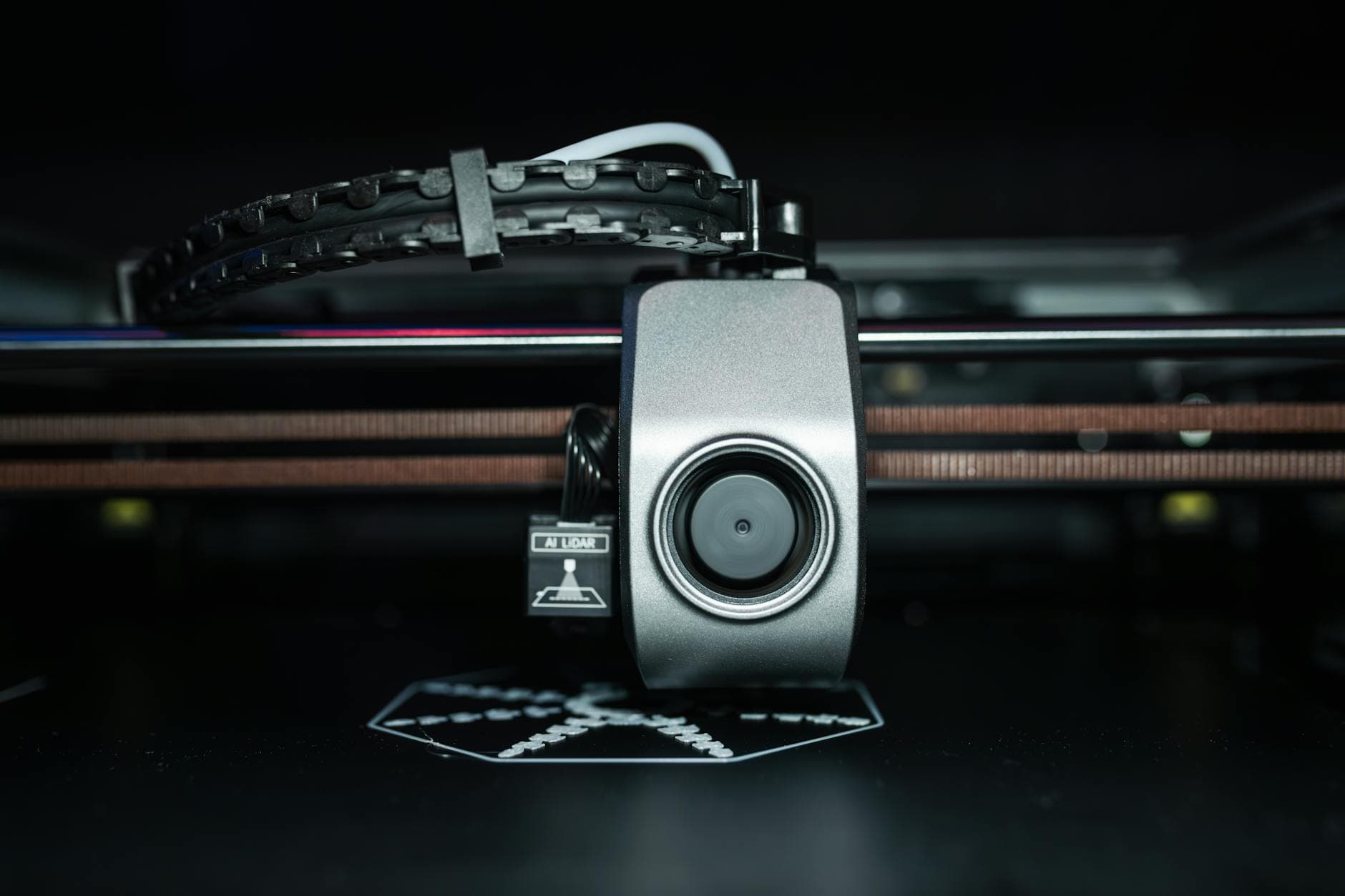
The number that will grab makers is the throughput: about 333 cubic millimetres per second, a figure Wu Jiamin has described as the fastest 3D printing speed ever recorded. That is still a lab machine, not a desktop box, but the path forward is clear enough: cleaner optics, simpler calibration, cheaper hardware, and a way to package the process for batch and successive printing through fluidic channels. If DISH keeps maturing, the biggest payoff will not be a faster layer stacker. It will be printing small parts, optics, microcomponents, and soft structures in a way that barely moves the machine at all.
Know something we missed? Have a correction or additional information?
Submit a Tip