Advanced aquascaping focuses on balance, flow, and system design
Advanced tanks fail as systems, not single mistakes. This guide ties layout, light, CO2, nutrients, fish behavior, and maintenance into one design logic.

A planted tank usually slips because of mismatched parts, not one bad trim or one missed dose: too much light for the CO2, too little plant mass for the nutrient load, hardscape that looks finished but does not control flow, or livestock choices that work against the layout. Glass and Gill’s June 27, 2026 guide treats a planted tank as a connected system that succeeds only when every piece supports the others.
Layout is the first system, not the last polish
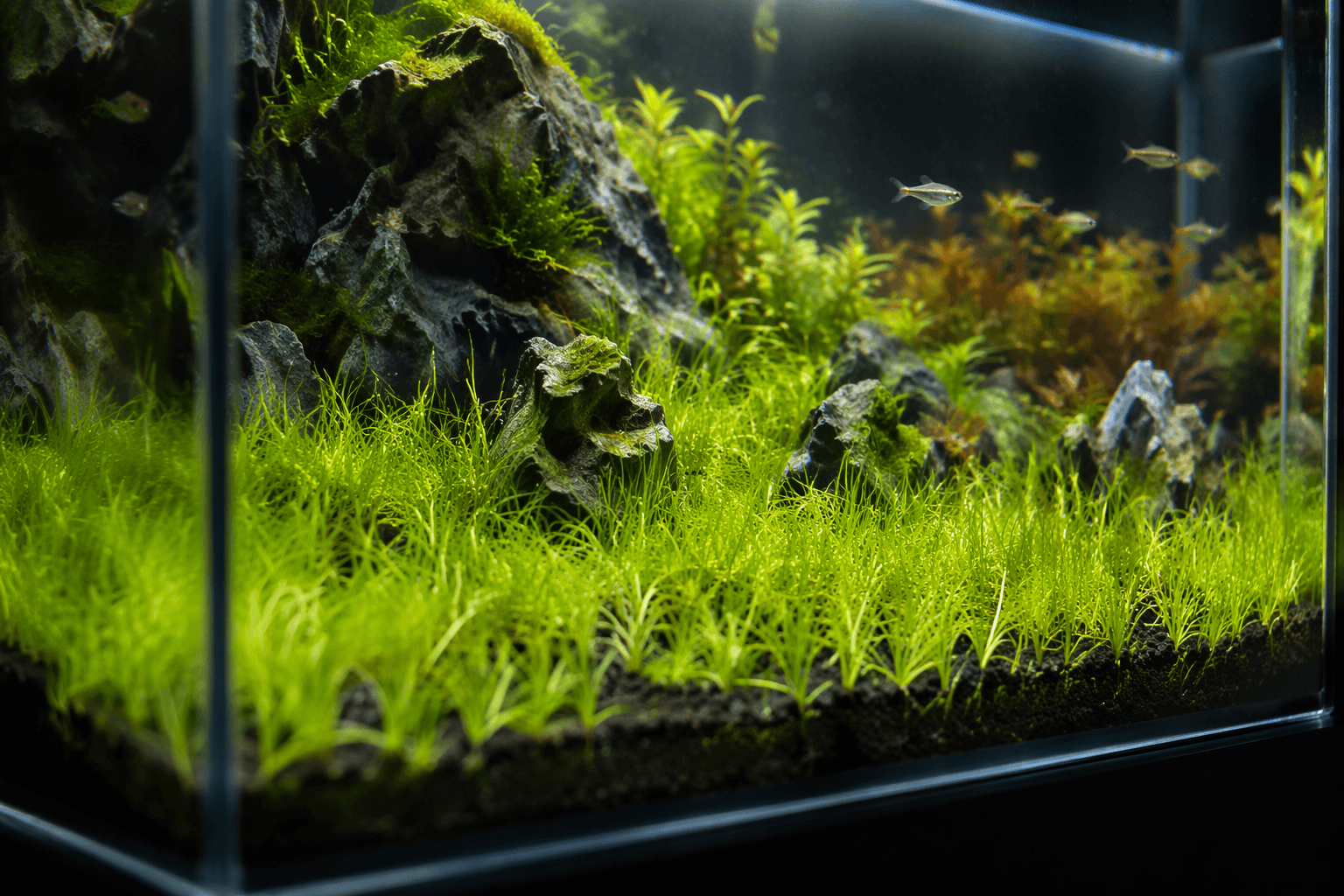
At the advanced level, aquascaping is less about filling space than shaping it. The strongest tanks use balance, visual weight, and negative space with intent, so the eye has a path through the scape and the water can move through it without dead spots. Hardscape stops being decoration and becomes structure, which is why styles such as Iwagumi, Dutch, and Nature aquascapes matter as foundations rather than endpoints.
Aqua Design Amano identifies Takashi Amano, born in Niigata, Japan, in 1954, as the founder of Nature Aquarium. The company’s aquarium, lighting, and CO2 systems are built to support densely planted aquariums. In that lineage, stone placement, plant mass, and open water define the system.
Flow, not clutter, carries the tank
A mature aquascape has to work with water movement instead of just looking full from the front glass. When flow is planned well, it pushes nutrients where plants can use them, keeps detritus from settling into dead corners, and supports healthier gas exchange around the layout. When it is neglected, even a gorgeous hardscape can become a trap for debris and a breeding ground for instability.
A tank that is visually dense but hydraulically confused often ends up requiring more intervention, not less. The more intentional move is to let the layout guide the water, then let the water guide plant growth, trimming patterns, and livestock behavior.
High light raises the stakes fast
In high-tech systems, stronger lighting increases demand, and CO2 makes the entire setup more sensitive. That combination can drive faster growth, but it also makes every mismatch more visible. When light is pushed without enough carbon or nutrient supply, the tank does not simply slow down. It becomes less forgiving.
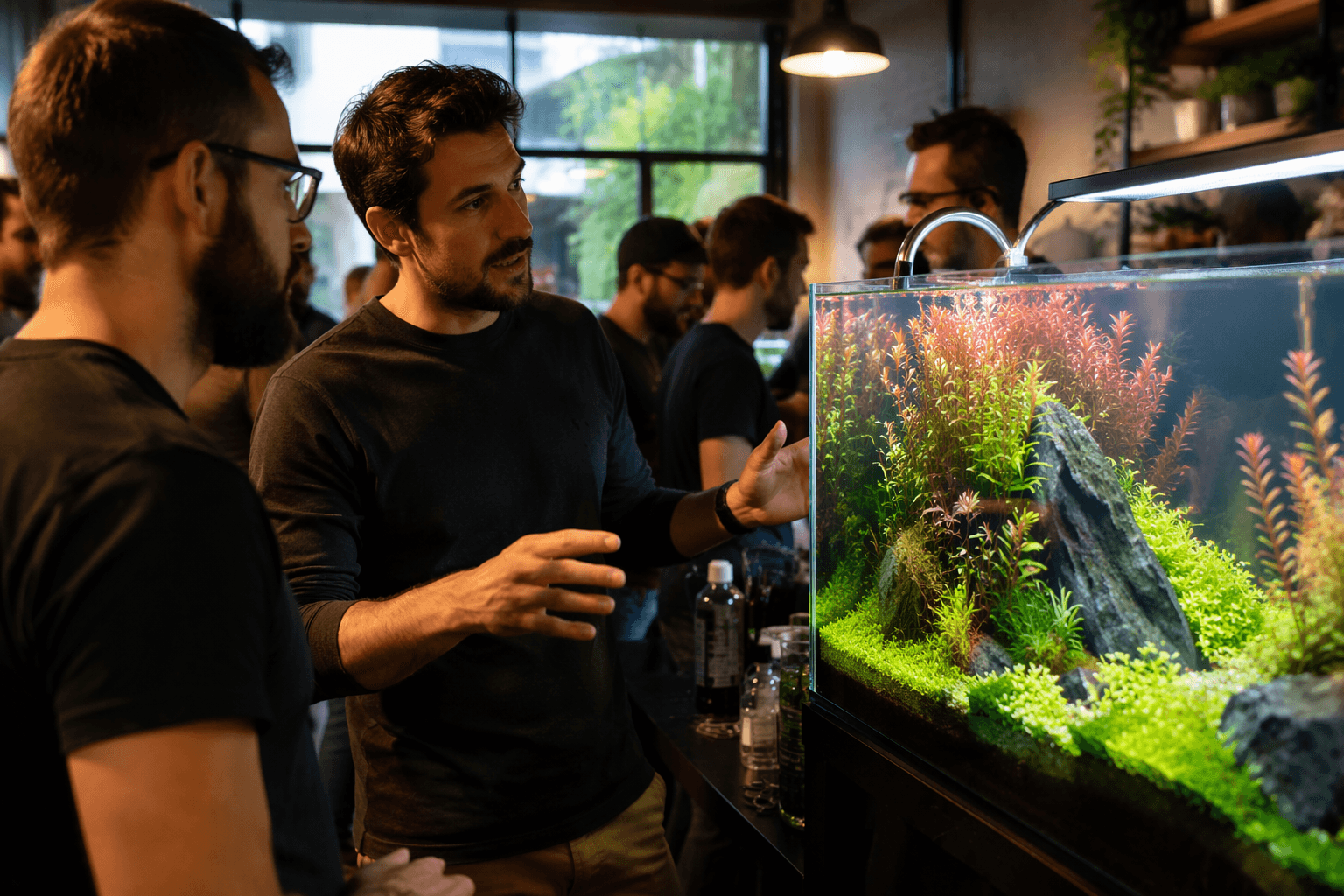
Takashi Amano stresses in an archived TFH Magazine article that lighting and CO2 need to stay in balance in the Nature Aquarium. ADA’s materials make the same point, and the lesson still applies in modern high-energy tanks: stability and consistency matter more than raw power. More light is not automatically better. More CO2 is not automatically better.
Growth is a response to the whole package
At advanced scale, plant growth reflects the entire system, not one upgrade. Strong light without matching CO2 can produce pressure and algae. CO2 without enough plant mass can leave the tank underused and harder to stabilize. Fast growth without disciplined maintenance turns into constant correction.
Nutrients are about consumption, not just dosing
Nutrients follow the same logic. Instead of thinking only about how often to dose, advanced growers have to think about what the plants actually consume and how fast they consume it. The real challenge is not adding fertilizer. It is matching supply to plant use.
That shift changes how a tank is maintained. Dosing schedules matter, but so do planting density, trimming cycles, water changes, and the way a layout distributes growth from front to back. A tank with strong light, CO2 injection, and rapid growth will punish vague habits.
Maintenance has to serve the design
In a system-minded aquascape, maintenance is not cleanup after the fact. It is part of the design itself. Trimming keeps plant mass where the layout needs it, cleaning preserves flow paths, and water changes reset the chemistry that supports stable growth.
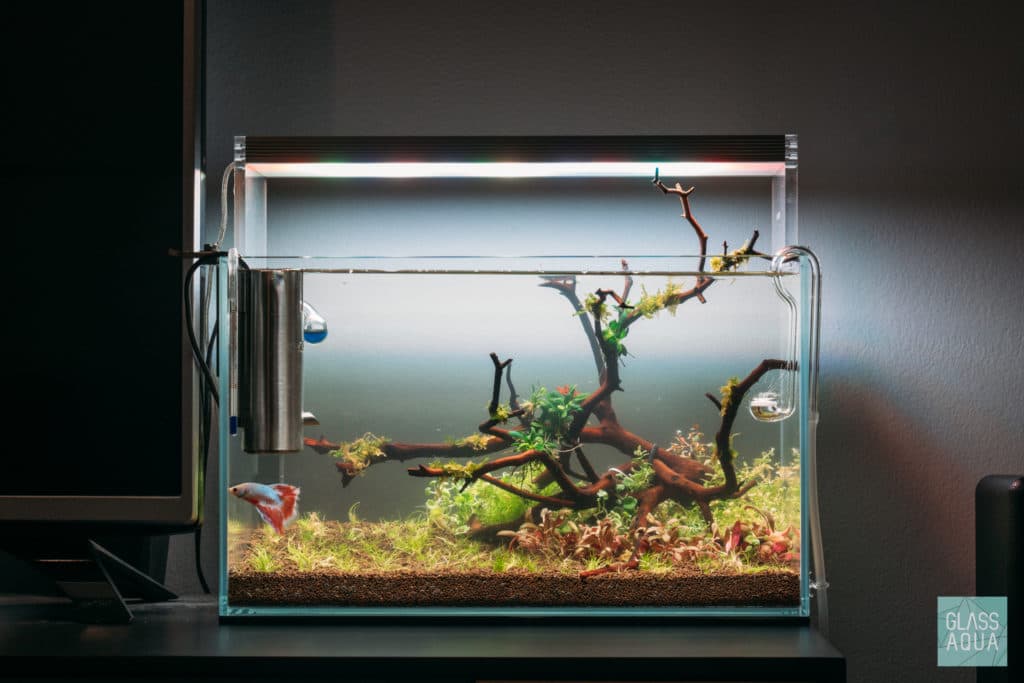
This is also where livestock decisions enter the picture. Fish behavior affects how a tank reads visually, how waste is distributed, and how much pressure the plants and filter have to absorb. A tank built around delicate carpeting plants, for example, cannot be managed the same way as one designed for more open swimming space and heavier movement. At the advanced level, livestock selection is part of the aquascape plan.
Amano’s legacy still defines the field
The International Aquatic Plants Layout Contest launched in 2001 and drew 557 entries from 19 countries in its first year, ADA says. The IAPLC describes itself as the world’s largest aquarium contest, focused on aquatic plant layouts judged on a global stage.
Historical accounts of Amano’s work also place Iwagumi within the Nature Aquarium lineage, with inspiration drawn from Japanese stone-garden aesthetics and natural rock formations.
Responsible aquascaping also means responsible sourcing
There is one more layer to the systems approach: the plants and organisms themselves do not exist in a vacuum. Aquatic invasive species are a significant threat to biodiversity and can create major economic burdens, the U.S. Environmental Protection Agency says. The U.S. Fish and Wildlife Service says they can damage infrastructure and harm native ecosystems.
That reality makes sourcing, containment, and disposal part of good practice, especially in a hobby that prizes rare plants and fast-moving trade.
This article was produced by Prism’s automated news system from verified source data, official records, and press releases, then run through automated quality and moderation checks before publishing. The system is built and supervised by the people who set the standards it runs under. Read our full AI policy.
Did this article answer your question?