Cabomba adds a delicate, forest-like backdrop to aquascapes
Cabomba gives a tank a soft, underwater-forest look, but its fragile stems and lighting needs make it a plant for stable, deliberate aquascapes.
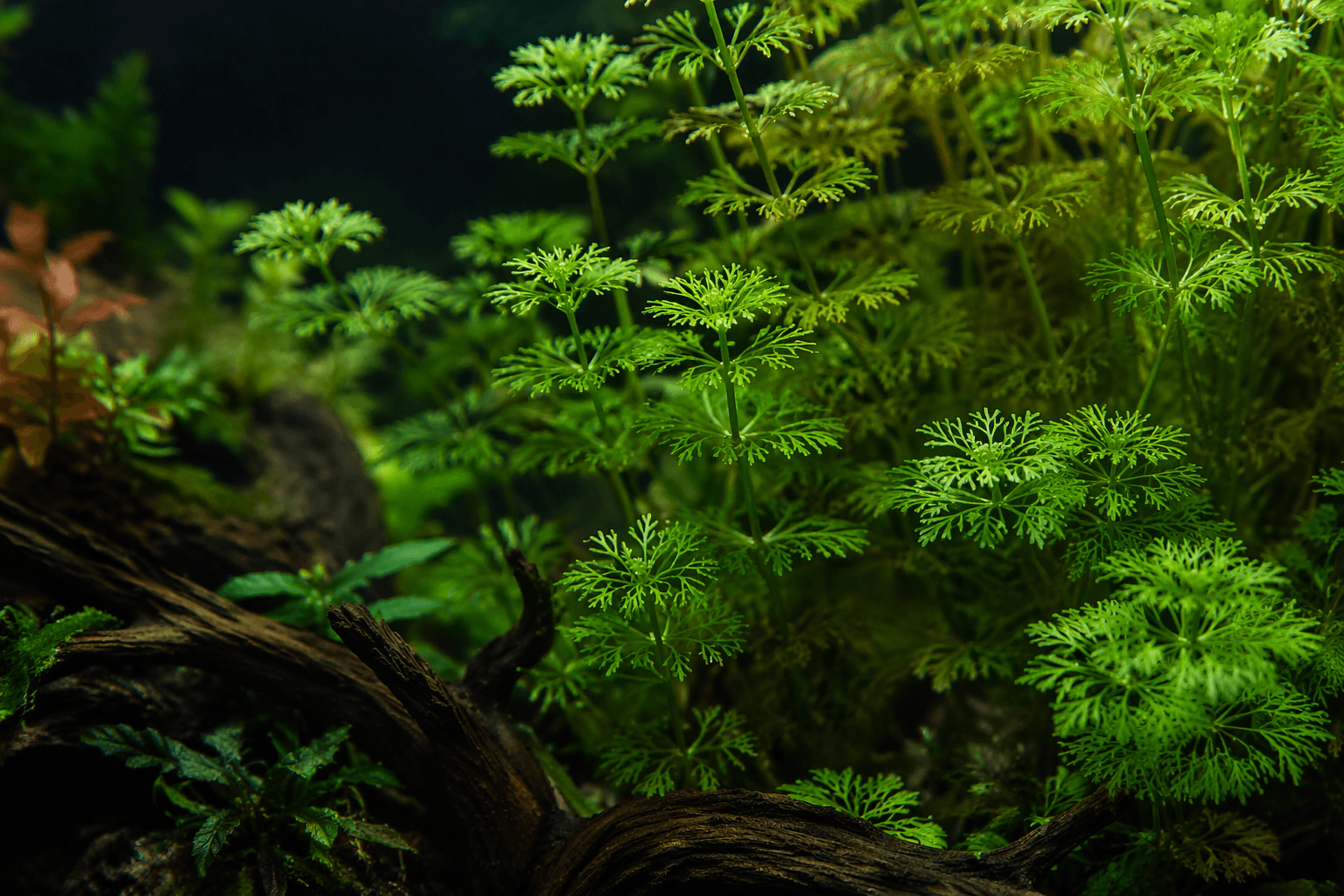
Cabomba is one of those plants that can make a tank look instantly richer, but it never lets you forget that beauty has a price. With its feathery, needle-like foliage and deep, layered growth, it builds the kind of background that feels like a submerged thicket rather than a planted box. The catch is the same thing that makes it special: Cabomba asks for steadier conditions, cleaner water, and more care than the usual hard-to-kill stem plant.
Why Cabomba stands out
Cabomba aquatica, also known as fanwort, comes from South America and naturally grows in fresh standing water, plus lakes and rivers with only slight currents. That matters in the aquarium because it explains the plant’s preference for calm, stable conditions over rough flow. Tropica describes it as the least demanding Cabomba species, but “least demanding” is relative here, not a free pass.
The plant earns its reputation from texture. Cabomba’s wispy leaves create a soft plume that can turn the back of a tank into a dense underwater curtain. In the right layout, it replaces the plastic-decor look with something closer to a real habitat, especially when you want the tank to feel wild, layered, and immersive.
How to use it in the layout
Cabomba is usually treated as a background plant, and that is where it looks its best. Tropica says it becomes most decorative when planted in groups, which makes sense once you see the growth habit: individual stems are fine, but a cluster gives you that forest effect aquascapers chase. A single stalk can look sparse; a tight group reads like a thicket.
It can also be grown floating, which gives you another option if you want the plant to sit higher in the aquascape or if you are using it to soften the surface zone. In most display tanks, though, it works hardest from the rear third of the layout, where its 30 to 80 cm height can frame hardscape, hide equipment, and build depth behind shorter plants.
Tropica says each stem can spread 5 to 8 cm wide, and that detail is useful when you are planning spacing. Cabomba does not behave like a bulky rosette plant that sits where you put it. It fills in with a delicate spread, so the visual payoff comes from repetition and density, not from one oversized specimen.
What the plant asks from you
Cabomba’s stems are sturdy enough to give the plant structure, but the branches are fragile. That is the central tradeoff. You get a lush, soft texture, but you also get a plant that does not appreciate rough handling, unstable flow, or sloppy placement. Trim it carefully, plant it gently, and expect it to look its best when the tank is already settled.
Lighting matters, too. Tropica is blunt about the fact that Cabomba can still struggle in poorly lit aquariums, even though it is the least demanding of the genus. If the light is weak, the plant loses the very fullness that makes it worth using in the first place. Sparse growth turns a dramatic background into a disappointing one fast.
That is why Cabomba belongs in aquascapes where you already have your basics in order. If your tank is still bouncing between unstable water, thin substrate, and inconsistent maintenance, this is not the stem to use as a shortcut. It rewards the aquarist who wants a precise, planted look and is prepared to keep the system steady.
Why fish and shrimp like it
Cabomba is not just ornamental. Its dense growth gives fish shelter and comfort, and shrimp use the fine foliage as a place to graze. In a tank with shy species or smaller livestock, that protective cover matters as much as the visual effect. The plant softens the space and gives animals somewhere to disappear into, which can make a display tank feel calmer and more natural.
It is also a useful plant if you want a gentler social layout. Species that prefer cover, or fish that get spooked easily, tend to use the stems as a buffer. The result is a tank that looks planted and feels functional at the same time, which is exactly where Cabomba earns its keep.
Water quality, oxygenation, and CO2
Cabomba can help with water conditions by using up waste products fish generate, and it also contributes to oxygenation in the tank. That makes it more than just a backdrop plant. In a well-run aquarium, it is part of the biological balance, helping the system feel cleaner and more complete.
CO2 is where the discussion gets real. Tropica says most aquarium plants do not thrive without CO2 fertilization, while algae can take over if extra CO2 is missing. Cabomba fits that pattern. If you are trying to push strong growth, keep the leaves full, and prevent the tank from sliding into algae and fatigue, CO2 becomes part of the equation rather than an optional luxury.
That does not mean every Cabomba tank needs the same setup, but it does mean you should think of this plant as part of a high-functioning planted system, not as a low-effort filler. Strong light, steady conditions, and decent nutrient management all support the look Cabomba is known for.
The responsibility side of Cabomba
Cabomba’s appeal comes with a reminder that some aquarium plants have a life outside the glass. The genus Cabomba is native to tropical and subtropical America, and Cabomba caroliniana, or Carolina fanwort, has been exported around the world through the aquarium trade. It has become invasive in Europe and Australia, and the USDA includes it in its invasive and noxious plant resources.
That is worth keeping in mind whenever you trim, discard, or swap out stems. Responsible disposal is part of the deal with any Cabomba species that could escape cultivation. A plant that looks like a soft underwater forest in your tank can become a serious weed if it ends up where it does not belong.
Where Cabomba fits best
Cabomba is for the aquascape that wants drama without looking rigid. It works when you want a tank to read as lush, layered, and a little wild, not just tidy. It suits the aquarist who likes a planted layout with depth, movement, and a softer outline behind rock, wood, or open swimming space.
If you want the easy route, there are tougher plants. If you want the underwater forest effect, Cabomba earns that role by being exactly what it looks like: delicate, feathery, and a little demanding. That is the trade, and in the right tank, it is the one that turns a background into the part you notice first.
This article was produced by Prism’s automated news system from verified source data, official records, and press releases, then run through automated quality and moderation checks before publishing. The system is built and supervised by the people who set the standards it runs under. Read our full AI policy.
Did this article answer your question?