Hydrogen peroxide dip helps aquascapers sterilize new plants safely
A peroxide dip can cut the hitchhiker risk on new plants, but quarantine is still the step that keeps day one from turning into a snail outbreak.
In March 2021, the U.S. Fish and Wildlife Service confirmed invasive zebra mussels in Marimo moss balls sold through aquarium and pet supply stores, garden centers, florist shops, and online retailers. A hydrogen peroxide dip gives you a quick sanitizing step for incoming plants, but the real safeguard is the whole chain: inspect, rinse, dip, and quarantine.
Why peroxide belongs in plant prep
Hitchhiking organisms on aquarium plants are a significant but poorly understood invasion risk, and aquatic hitchhikers can survive in aquaria and later be released into the wild, USGS researchers warned. That discovery triggered a coordinated response, and the U.S. Geological Survey’s nationwide alerts helped turn up contaminated product in pet stores across at least 21 states. A second hit came on August 5, 2024, when zebra mussel-infested Marimo moss balls were detected again at an aquarium wholesaler in Washington state.
Minnesota DNR warns that aquarium owners can unintentionally introduce aquatic invasive species because unwanted seeds, eggs, larvae, small animals, and plant fragments can hide inside purchases. California’s invasive-species guidance identifies releases from pet and aquarium owners as one way non-native species get loose. Many invasive aquatic plants treated by California State Parks’ Division of Boating and Waterways originated in the aquarium trade.
What hydrogen peroxide actually does
Hydrogen peroxide works because it is an oxidizer that breaks down into water and oxygen. The U.S. Environmental Protection Agency lists it as a control for microbial pests, bacteria, and fungi, and aquatic-management research has also used it to suppress unwanted algae and cyanobacteria in ponds, reservoirs, and drinking-water systems. In aquascaping terms, that makes it a useful cleanup step for surface algae, spores, and some of the microscopic hitchhikers that cling to newly shipped plants.
A safe home-tank protocol
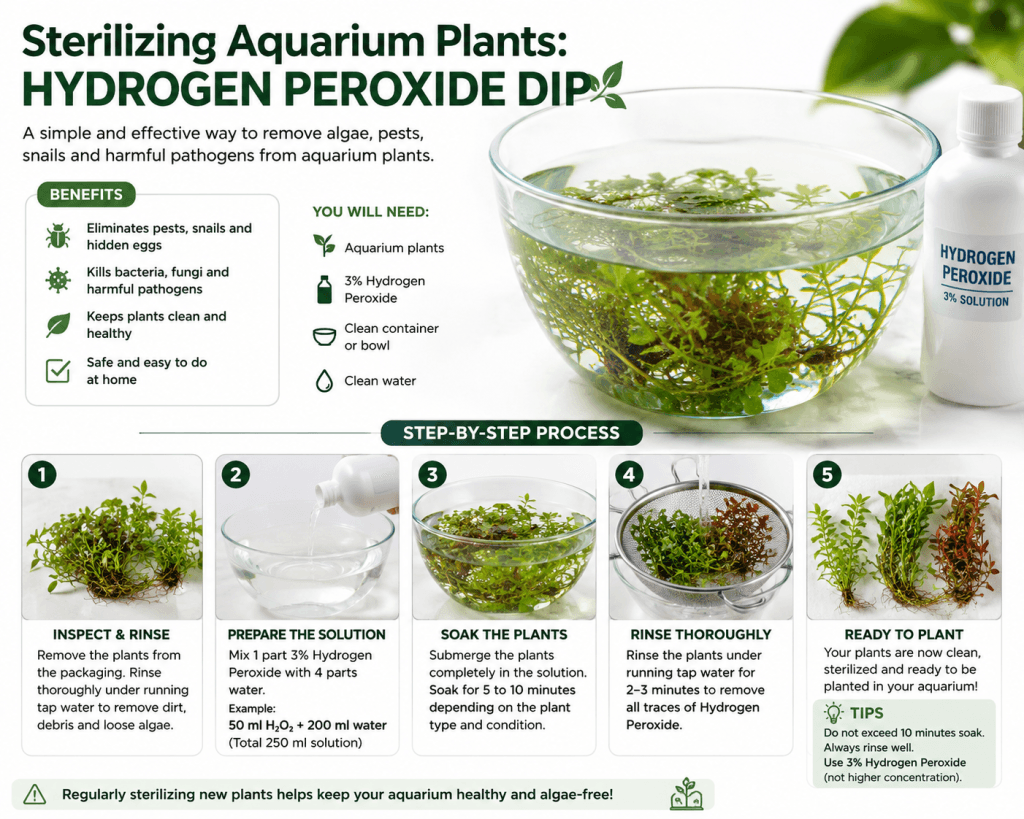
1. Inspect first. Remove visible debris, dead leaves, and anything that looks like snail egg masses before you ever mix a solution.
A peroxide dip works best on clean plant tissue, not on a clump of shipping gunk.
2. Start with the mild end of the range. A common home-aquarium starting point is 1 part 3% hydrogen peroxide to 19 parts water, with a short exposure of about 1 to 2 minutes.
That keeps you in the zone that aquarium guidance usually treats as the safer default, rather than jumping straight to a harsher bath.
3. Do not overstay the clock. A 2021 HortTechnology study found that a single 3% hydrogen peroxide root dip did not cause severe symptoms in hybrid phalaenopsis orchids, but higher concentrations reduced fresh weight and led to visible wilt later on.
That is the kind of warning aquascapers need to respect: the solution can help, but longer and stronger is not automatically better.
4. Rinse and move to quarantine. Once the dip is done, rinse the plant in clean water and isolate it before planting.
Quarantine remains the better long-term defense because a dip can reduce risk without guaranteeing that every egg, spore, or stubborn hitchhiker is gone.
Treat delicate plants lightly
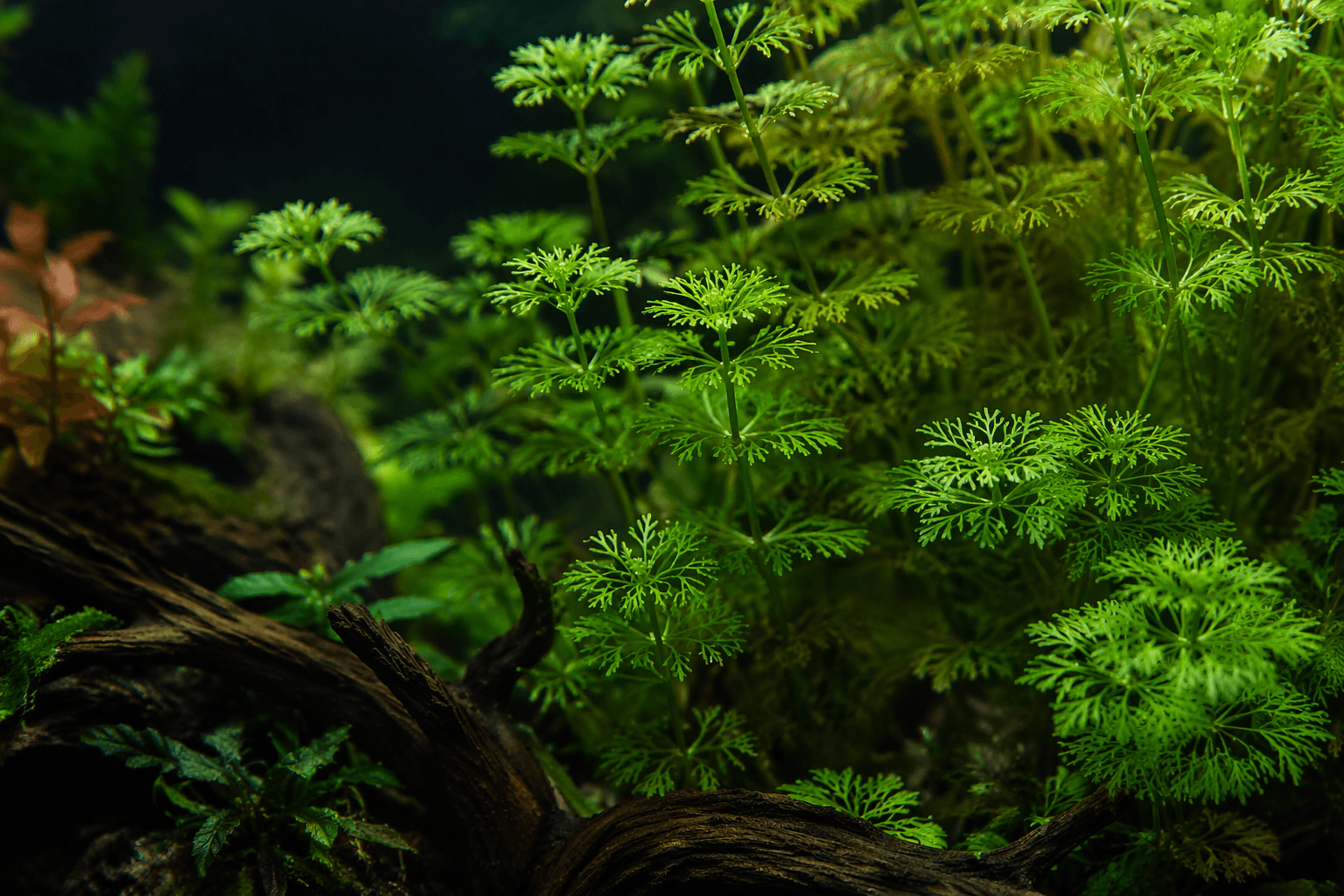
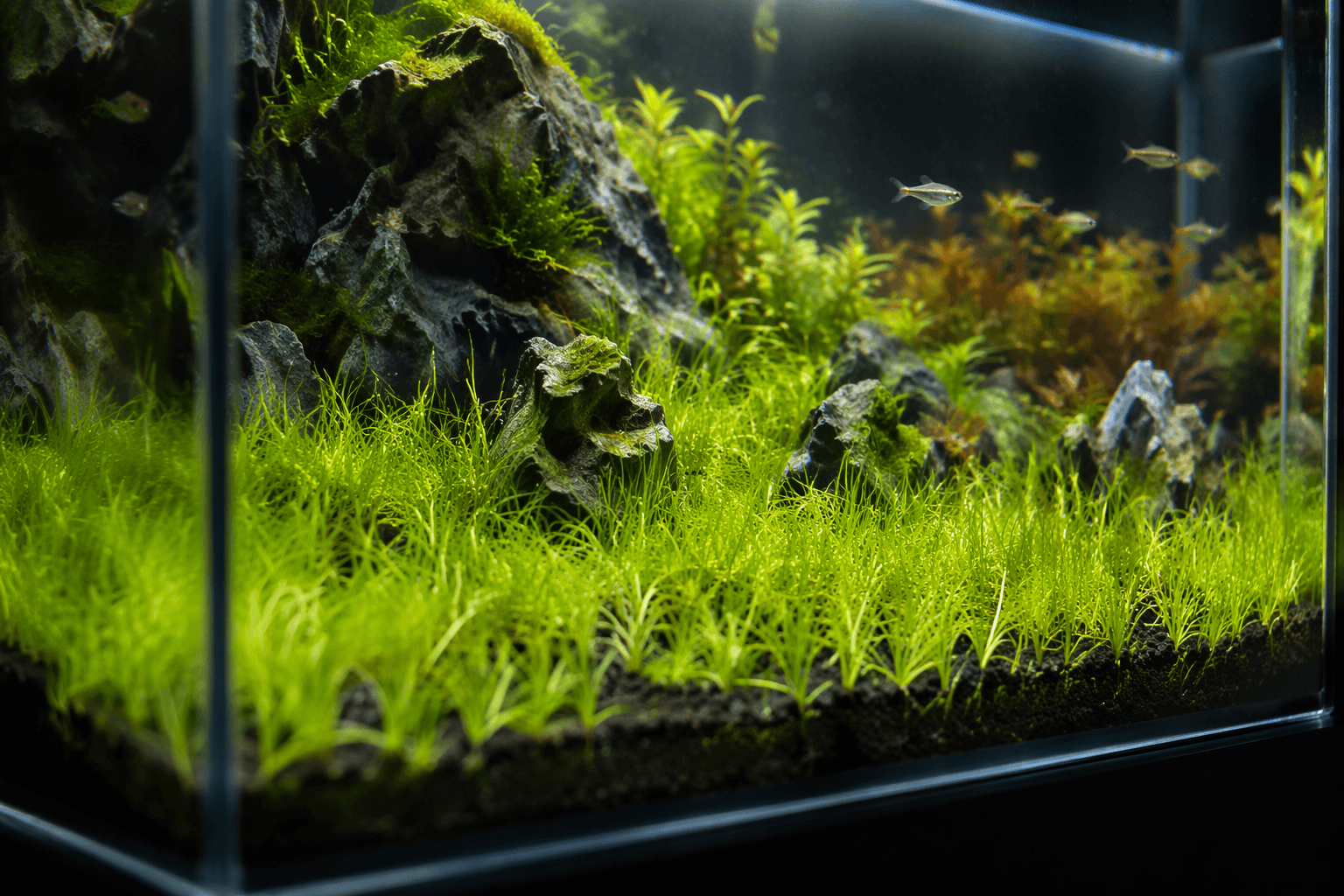
Mosses and other fine-textured plants deserve the most caution. IERE lists Vallisneria and Java moss as particularly sensitive to hydrogen peroxide, and 2Hr Aquarist recommends gentler algae treatment for mosses, liverworts such as Riccardia and Riccia, Vallisneria, and other delicate plants. If a plant looks like a carpet, a tangle, or lacework, keep the exposure brief and mild, or leave peroxide out of the equation entirely.
The tank-safe order is simple: inspect, rinse, dip only when needed, and quarantine before the plant joins the layout.
This article was produced by Prism’s automated news system from verified source data, official records, and press releases, then run through automated quality and moderation checks before publishing. The system is built and supervised by the people who set the standards it runs under. Read our full AI policy.
Did this article answer your question?