Why aquarium plant soil is the foundation of a thriving aquascape
The wrong base layer can stall an aquascape no matter how strong the lights are. Match soil to the plants and the layout you actually want.
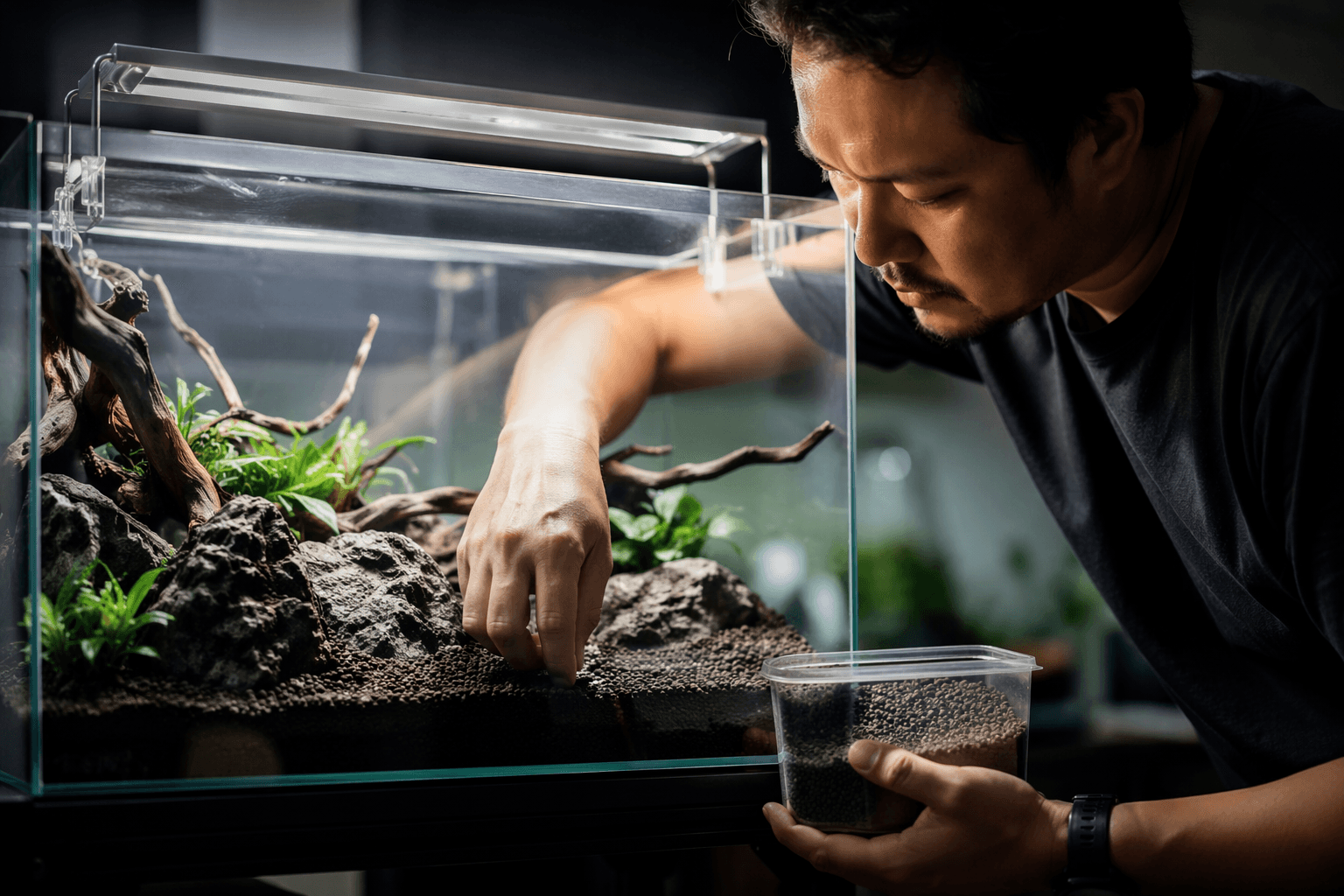
Anubias and java fern can survive without substrate, but sword plants and cryptocoryne plants want nutrients where their roots can reach them. If the substrate is wrong, strong lighting, fertilizers, and even carbon dioxide can still leave you with a layout that struggles from the start. In a healthy aquascape, the base layer anchors roots, stores nutrients, and gives beneficial bacteria the place they need to help stabilize the system.
Why substrate is the foundation, not the finish
Plants do not all feed the same way. Some species pull nutrients from the water column, while others depend heavily on their roots.
Sand and gravel are inert substrates, while aquasoil is active substrate. Inert substrates mainly give plants a place to hold on, while active substrates bring nutrients into the root zone and can also influence pH and hardness. The substrate starts shaping the tank’s biology before you decide on a hardscape or plant list.
A study published in MDPI’s Animals found that, in home aquaria, gravel and sand additions were associated with increased pH, ammonia, nitrate, and greater bacterial presence. Substrate affects water chemistry and microbial life, not just looks. The choice has to be made before the tank is running, not after problems start.
Match the substrate to the aquascape you actually want
A high-tech carpet tank asks the most from its base layer. Buce Plant recommends at least 3 cm of substrate depth for carpet plants so roots can establish properly and the carpet does not float loose. Many professional-looking layouts also use a shallower layer in front and a deeper slope in back, which creates depth in the scene and helps reduce anoxic areas near the front glass.
For that kind of layout, active substrate is usually the easiest path because it feeds demanding root systems while the tank is still young. Aquasoil can also buffer water slightly acidic, a condition many aquatic plants prefer. In the first months, rooting and nutrient access affect whether a dense, low-growing carpet fills in or stalls.
A low-tech beginner tank can lean the other way. Inert sand or gravel gives you a simpler starting point and a cleaner reset if you are still learning how plants respond. If the substrate is inert, or if aquarium soil has already given up much of its nutrient load, Aquarium Co-Op recommends root tabs as a practical way to feed heavy root feeders without tearing the tank apart. Inert substrate is less a compromise than a different maintenance strategy.
A hardscape-heavy tank built around epiphytes sits in a third category. If the layout is dominated by anubias, java fern, or similar plants that attach to wood and stone, the substrate can stay more minimal because the plants are not asking it to do the main feeding work. In that case, the substrate choice becomes more about visual balance, maintenance, and the way the base supports the rock and wood structure.
What active substrates do that inert ones do not
The practical difference between inert and active substrate shows up in the root zone. Cation exchange capacity, or CEC, describes how well a substrate can hold onto nutrients and make them available to plant roots over time. Active substrates can keep feeding plants after the first fill, while inert gravel and sand mostly stay in place and wait for supplements.
Some dirt-style substrates remain popular with planted-tank builders because they can drive strong plant growth and can last for years. They are also less forgiving. If they are disturbed or mismanaged, they can create cloudy water, and in some setups they may trigger ammonia spikes or algae issues.
The decision is not just active versus inert. It is active versus inert in the tank you actually plan to maintain. A rich soil bed can be ideal for a demanding stem garden or a packed carpet, while a simpler sand bed with root tabs may fit a calmer, lower-input aquascape better.
Build the bed with the layout in mind
Substrate behaves like a structural material as much as a nutrient source. Buce Plant recommends barriers when different substrate types are combined to keep them from mixing over time. Barriers help if you want a sand foreground with planted soil behind it, or any layout where visual separation is part of the design.
The same principle applies to setup habits. Slow filling protects the bed from being blasted apart, and careful preparation keeps buried nutrients from becoming a mess. Once the tank is running, disturbing the base layer too often works against the whole system.
Common mistakes are usually the predictable ones: substrate that is too thin, ignoring the plants that feed through their roots, and treating fertilization as a substitute for the wrong base layer. Each of those errors turns the substrate into a problem you have to manage later, when the tank already has plants, hardscape, and a routine built around it.
The Nature Aquarium lesson still shapes the hobby
Aqua Design Amano was established in April 1992, and the company describes Takashi Amano’s Nature Aquarium proposal as an epoch-making event in the aquatic plant industry.
This article was produced by Prism’s automated news system from verified source data, official records, and press releases, then run through automated quality and moderation checks before publishing. The system is built and supervised by the people who set the standards it runs under. Read our full AI policy.
Did this article answer your question?