Why planted betta tanks create healthier, more natural aquariums
A planted betta tank is more than a prettier scape: live plants can calm fish, support water quality, and turn a jar-sized display into real habitat.
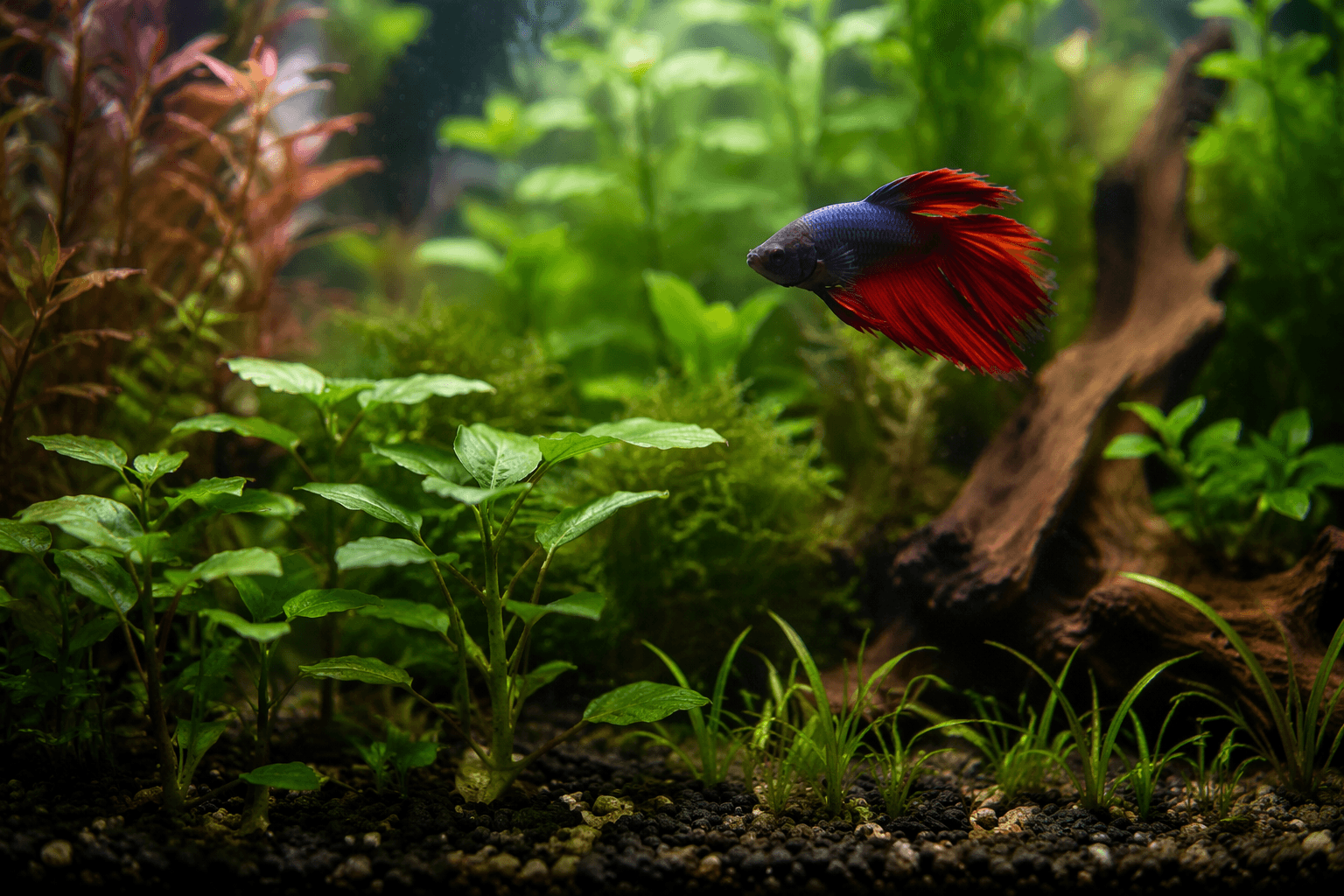
A 2025 peer-reviewed study in *Animals* found that aquatic plants improved water quality and welfare in newly established betta tanks. The strongest cases for live plants are practical: they give *Betta splendens* cover, help steady water conditions, and support the kind of low-stress behavior the species is built for.
Welfare first, not ornament first
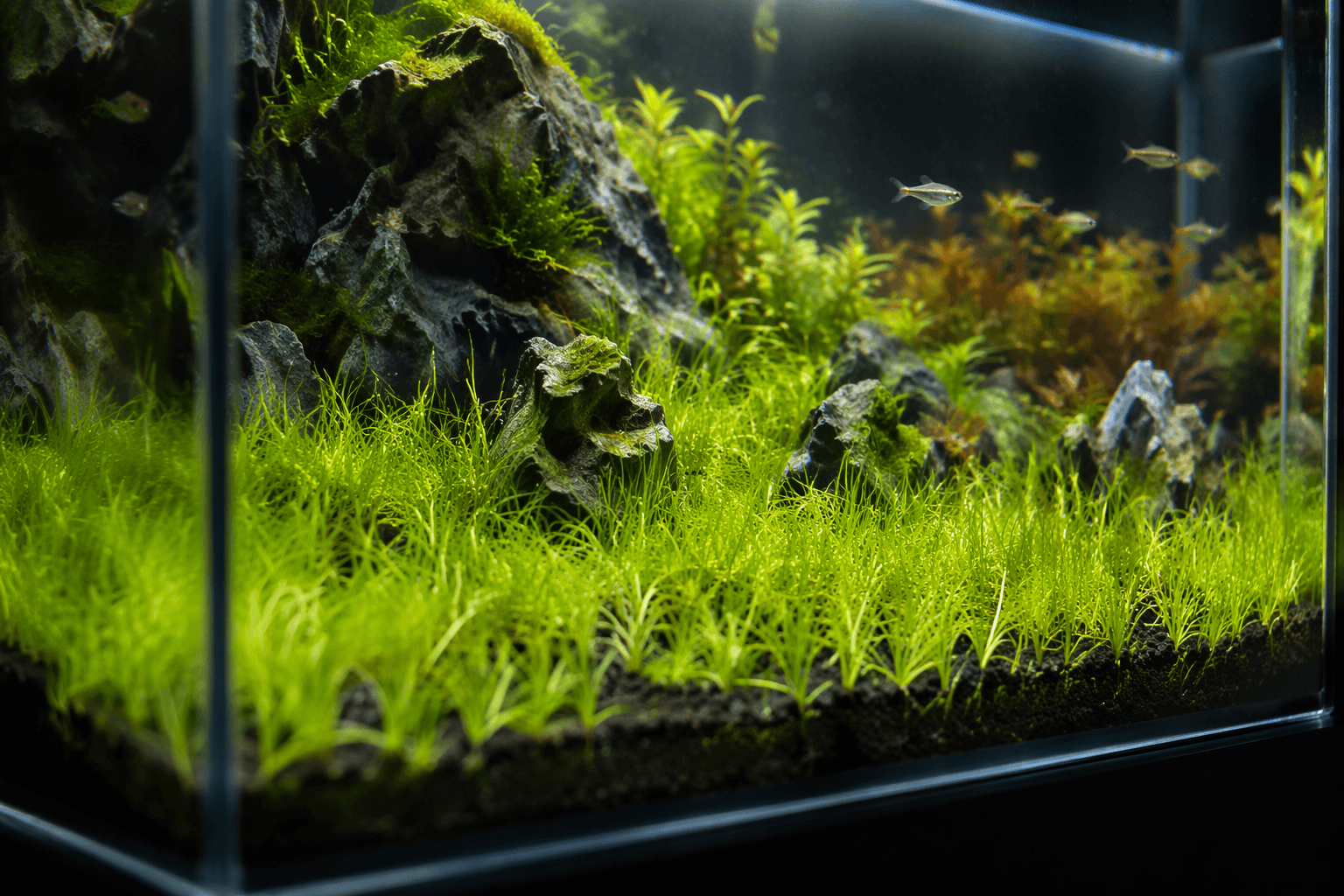
In that same study, planted setups with *Sagittaria subulata* were linked with longer active swimming time and fewer negative behaviors.
Live vegetation gives the fish space to move, pause, and reset, functioning as environmental enrichment rather than decoration alone. A good betta aquascape should feel soft, sheltered, and navigable, not crowded or harsh.
Build from the fish’s actual habitat
*Betta splendens* lives in thickly overgrown ponds and very slowly flowing or stagnant waters, including shallow rice paddies, floodplains, polluted streams, and other low-oxygen environments across the Mekong River basin and the Chao Phraya river basin. That native context explains why dense planting, calm surface access, and visual shelter all matter.
In practice, that means looking to Southeast Asia’s rice paddies, slow streams, and vegetation-rich margins for design cues. The best planted tanks borrow the feel of those places with soft light, tangled growth, and open lanes near the surface. Bettas breathe atmospheric air, so a beautiful layout still fails if it boxes off the top of the tank or forces the fish to fight its way up for air.
Choose plants that fit the fish, not just the palette
Hardy, low-light classics such as Anubias barteri and Java Fern, along with Cryptocoryne and various mosses, suit the species’ softer, more sheltered environment. These plants create resting spots, shade, and visual breaks.
- broad leaves the fish can rest on
- dense but gentle cover that creates refuges
- slow-growing, low-light plants that do not demand intense maintenance
- open access to the surface for breathing
A betta-friendly layout tends to favor:
It also means avoiding sharp, rough, or snag-prone decor and plants that can tear delicate fins. A tank can be lush and still be wrong for the fish if the hardscape abrades the fins or the plants form a maze of rough edges.
Why plants improve more than the look of the tank
Live vegetation changes the aquarium chemically and biologically. In the *Animals* study, the plants reduced ammonia nitrogen in the system. This is especially useful in small aquaria, where stable conditions are harder to maintain and every extra buffer helps.
The same study also found that planted tanks supported a more diverse water microbial community. In a new setup, a healthier microbial balance helps the tank develop into a steadier system instead of a sterile container.
What a natural betta tank should feel like
A successful planted betta tank should make three things easy: shelter, breathing, and movement. Dense vegetation and tangled roots help the fish feel secure and reduce stress, while broad-leaf resting spots give it places to pause without sinking into exposed open water. Keeping the surface accessible preserves the fish’s natural air-breathing behavior and keeps the tank usable as well as beautiful.
A polished layout with hard edges, little cover, and strong flow may photograph well, but it does not match the fish’s biology. A gentler design with soft light, live plants, and space at the surface better matches the species’ needs.
The broader welfare shift in betta keeping
The newer research places planted tanks inside a larger change in the hobby: away from container-style betta keeping and toward tanks that offer furnishings, refuges, and room to behave naturally. One peer-reviewed study on betta housing examined the impact of tank size and furnishings such as live plants and refuges, reflecting the growing concern that small, bare setups do not meet the fish’s needs. That same welfare logic aligns with Association of Zoos and Aquariums Animal Care Manuals.
This article was produced by Prism’s automated news system from verified source data, official records, and press releases, then run through automated quality and moderation checks before publishing. The system is built and supervised by the people who set the standards it runs under. Read our full AI policy.
Did this article answer your question?