Aleix Roig captures zodiacal light and the Southern Milky Way in Namibia
Aleix Roig packed zodiacal light, green airglow and the Southern Milky Way into one Namibian panorama, with Venus and Regulus anchoring the glow.

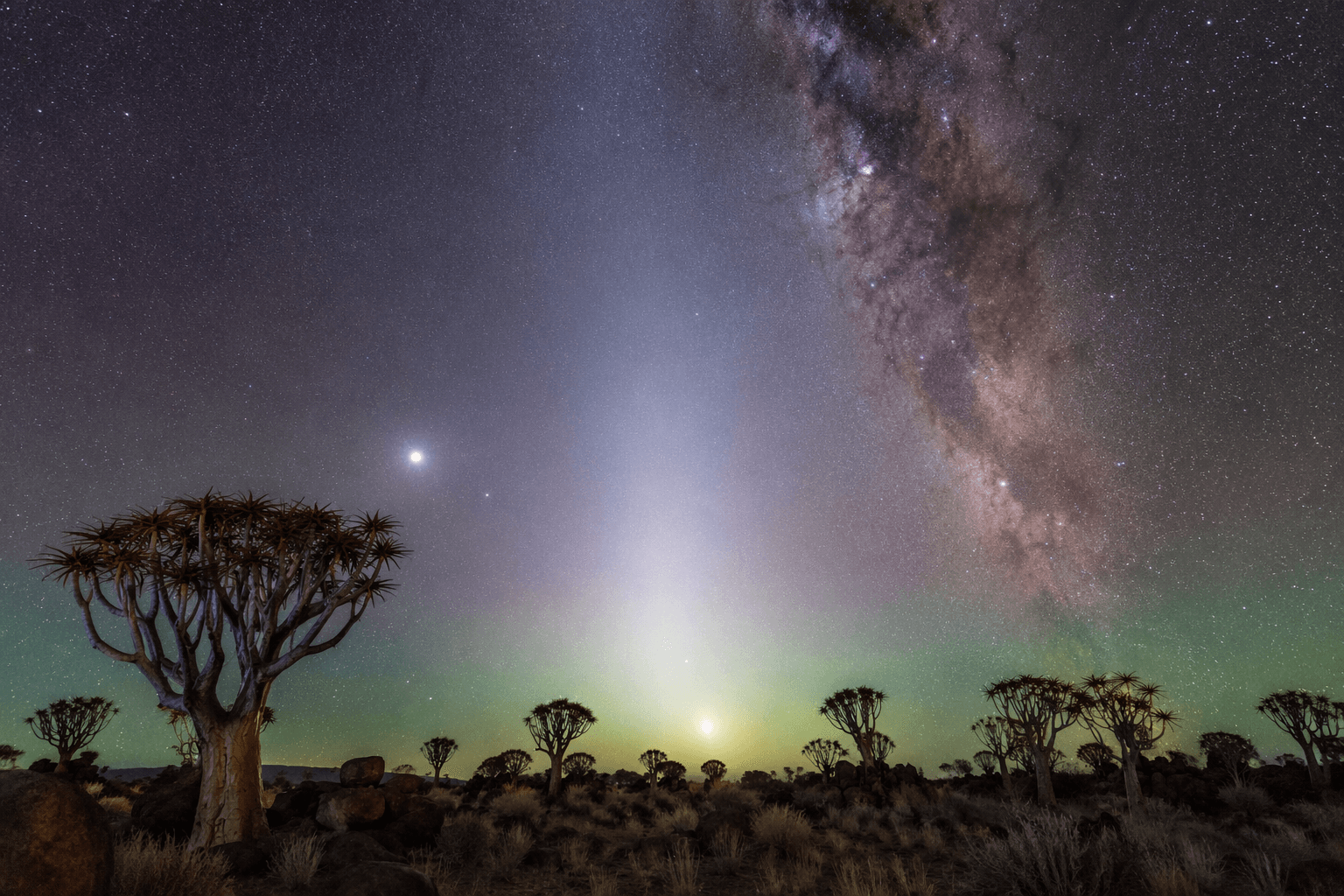
Aleix Roig’s July 9 panorama from Tivoli Astrofarm turned a rare sky combination into a single frame: zodiacal light, green airglow and the Southern Milky Way all shared the same view above Namibia. Roig said the image came on night four of his PHOTOTRIP Namibia run at Tivoli Astrofarm, while he was guiding a group from Parc Astronòmic Muntanyes de Prades.
What makes the frame unusual is not just the camera work. Roig described the scene as three natural light sources in one sky, with an exceptionally bright zodiacal light stretching up from the horizon, Venus sitting close to its center and Regulus nearby. That stack of features only falls into place when the sky is dark enough to let faint glow structures survive, and when the observer is working from the right hemisphere at the right season with the right plan.
Namibia gives that setup a real chance. Tivoli Southern Sky Guest Farm, also known as Tivoli Astrofarm, says it has been Namibia’s astrofarm since 1986 and markets the site around classic southern targets such as the Southern Cross, the Magellanic Clouds, the Jewel Box Cluster, Omega Centauri, 47 Tucanae and Eta Carinae. Roig has repeatedly described Namibia as one of his favorite astronomy destinations, and he previously photographed the Southern Milky Way from the same Tivoli site after spending several days and weeks in the country.
The broader dark-sky context is just as important. DarkSky International designated NamibRand Nature Reserve as a Dark Sky Reserve in 2012 and describes it as one of Africa’s largest private nature reserves and one of the naturally darkest accessible places on Earth. That kind of darkness is what lets zodiacal light stand out instead of melting into skyglow, and it is what makes airglow and the Milky Way worth chasing in the same composition. DarkSky says it has certified more than 200 International Dark Sky Places in 22 countries on 6 continents, a reminder of how unusual truly protected night skies have become.
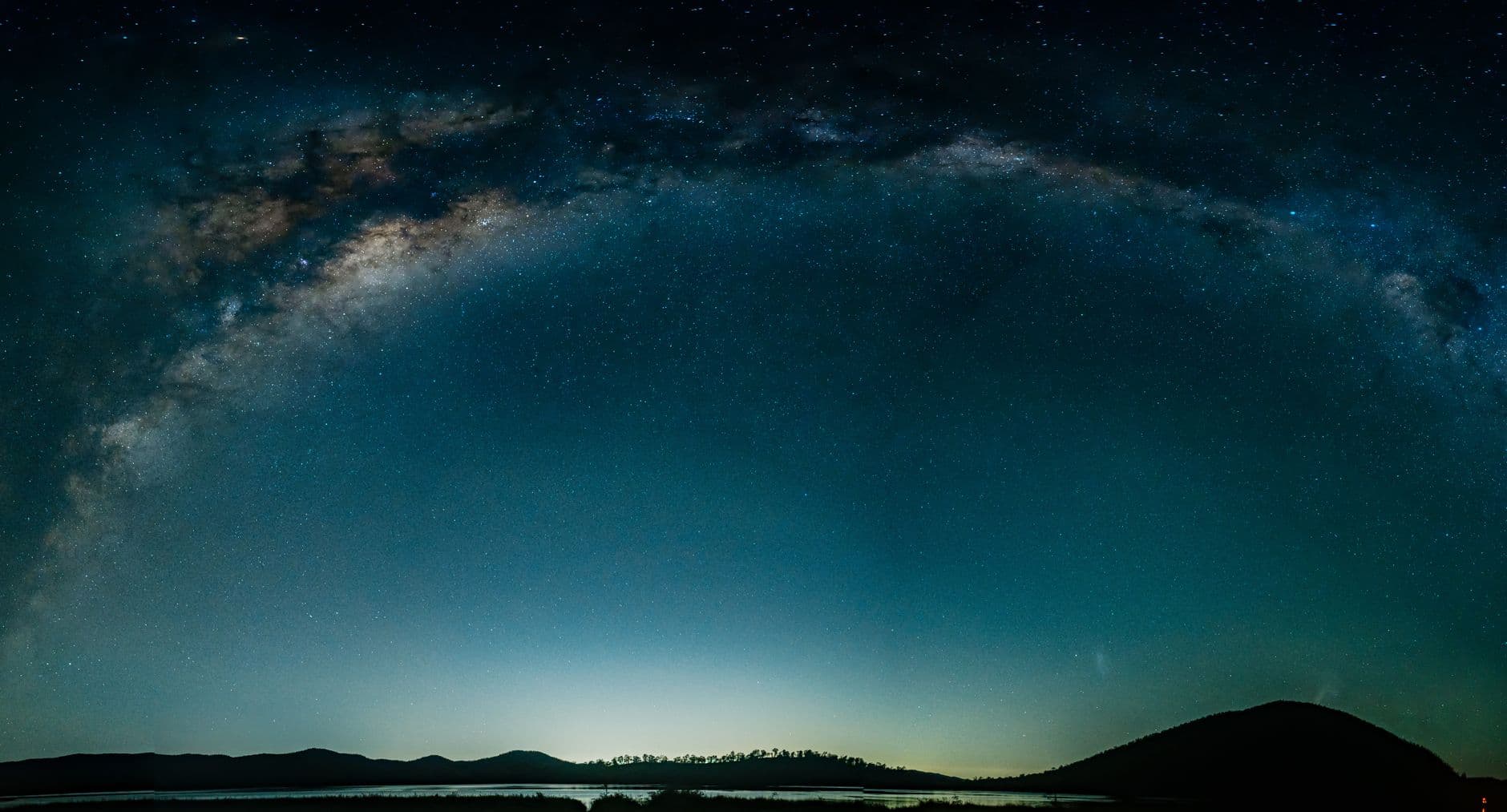
Namibia’s tourism board adds another piece to the story: the country is promoted as a place of endless horizons, and more than half of visitors return again and again. For astrophotographers, that repeat-visit appeal makes sense. Roig’s panorama is not an editing trick or a lucky one-off, but the result of a site with the darkness, latitude and planning needed to hold three separate natural light sources in one frame.
This article was produced by Prism’s automated news system from verified source data, official records, and press releases, then run through automated quality and moderation checks before publishing. The system is built and supervised by the people who set the standards it runs under. Read our full AI policy.
Did this article answer your question?