Guide scope surprises with clean wide-field deep-sky test
A rough backyard test turned a 52 mm guidescope into a real wide-field imager. It still delivered 41 clean 30-second subs and no purple fringing.

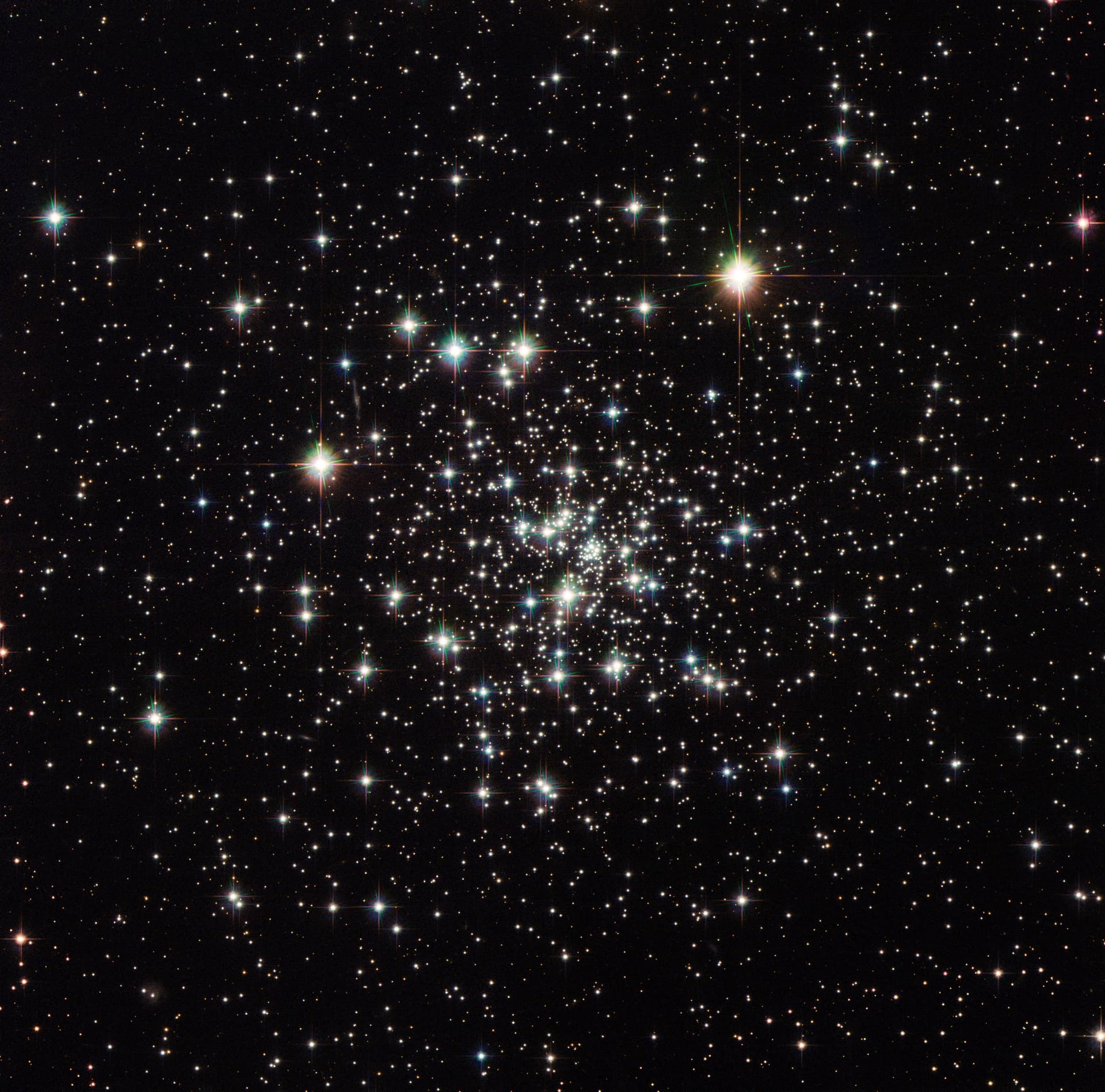
Brain&Force took what was supposed to be a simple super-finder and pointed it at deep sky instead. With an Askar 52 mm Super ED guide scope, a Canon EOS R6 Mark II, and an old fork mount from a Celestron C5+, the session was casual in the best possible way, and far from ideal in the technical sense. Polar alignment was weak, centering was sloppy, the frames were hand-dithered, and there was no flattener in the optical train, yet the rig still produced 41 quality 30-second subs.
What the little scope actually is
The Askar is not pretending to be a big imaging refractor. Retail listings put it at 52 mm aperture, f/4.8, and 249 mm focal length, with a doublet objective that uses one piece of SD glass. The same listings put its weight at about 740 g and its focuser travel at 25 mm, which explains why it keeps showing up as a grab-and-go accessory rather than a main event telescope.
That said, the field has started treating it like more than a guide tube. Several sellers describe it as suitable not only for guiding, but also for visual observation and astrophotography. High Point Scientific goes a step further and describes it as a compact doublet that can serve as a standalone lens or work with a 1.25-inch diagonal for visual use, while Agena Astro lists a limiting magnitude of 10.4. In other words, this is a small optic with enough flexibility that it keeps escaping its assigned role.
Why the test matters more than the setup did
The most interesting part of the Brain&Force session is not that it was perfect. It was anything but. The point is that the file still came together after Siril handling that stopped at background extraction, denoising, and stretching. That is the kind of bare-bones workflow most imagers reserve for a quick proof of concept, not a serious result, and yet the data held up.
The catch was also obvious. Field curvature showed up in the image, which is exactly what you would expect when you skip a flattener and ask a 52 mm finder-class optic to cover a camera sensor. But the surprise was what did not show up: no purple fringing. For a lot of us, that is the detail that changes the conversation, because a cheap, tiny doublet usually earns suspicion before it earns respect.
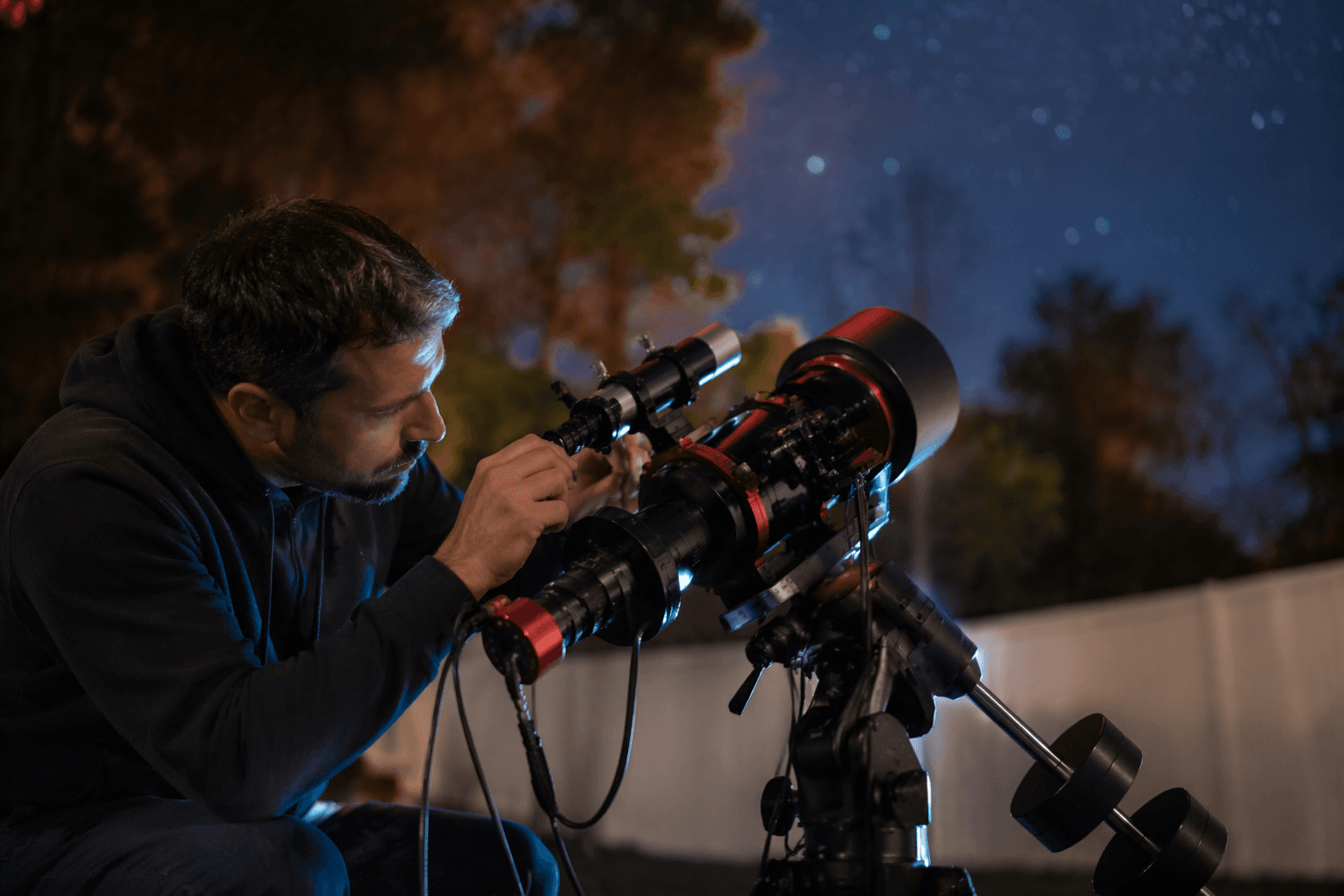
A useful way to read this test is as a stress check for assumptions. A guide scope like this is not meant to replace a purpose-built imaging refractor, and it is certainly not the tool for fussy edge correction. But if you already own one, and you have a camera body ready to go, it can get you to a usable wide-field deep-sky frame with far less resistance than most people assume.
The flattener question is the real upgrade path
This is where the EvoFF discussion matters. Starizona says it has tested its EvoFF field flattener on the Askar 52 mm Super ED guide scope and that it works great. The same company says the EvoFF turns the Sky-Watcher Evoguide 50ED into a sharp, portable, wide-field imaging scope, which is the exact kind of framing that makes compact optics suddenly look serious.
Cloudy Nights users have pushed that idea further, noting that both the Sky-Watcher Evoguide 50 and the Askar 52 mm Super ED can support the EvoFF for serious imaging around 250 mm focal length. That matters because it shifts the Askar from “finder that can sort of image” to “small imaging platform with a clean upgrade path.” One Cloudy Nights user also reported guiding at below 0.36 arcseconds RMS after switching to the Askar 52 mm ED guide scope, which suggests that the scope’s tighter, more rigid threaded attachment and small form factor can help in the guiding role too.
- If you want the quickest improvement, add a flattener before you chase more aperture.
- If you want portability, the 740 g weight keeps the whole idea compact.
- If you want guiding first and imaging second, the 25 mm focuser travel and small footprint still make sense.
- If you want edge-to-edge perfection on a large sensor, this is where you stop asking the guide scope to do a refractor’s job.
Where this setup is genuinely compelling
This kind of rig makes the most sense when the goal is wide-field deep sky, not trophy optics. Around 249 mm focal length, you are in a sweet spot for large nebula fields, rich star clouds, and any target where the composition matters more than razor-flat corners. The Askar’s appeal is that it lowers the cost and friction of getting there, especially if the scope is already sitting in the kit bag as a finder.
That is why the story lands for both beginners and experienced imagers. For a newcomer, it means the barrier to entry is not a big triplet and a heavy mount. For someone with a larger system already built, it is a reminder that compact optics can still produce real data, and sometimes surprisingly clean data, when you stop expecting them to behave like a premium imaging refractor.
The practical takeaway
Brain&Force did not accidentally prove that a guide scope is better than a proper imaging scope. What the session proved is more interesting: the Askar 52 mm Super ED has enough optical discipline to make a credible wide-field image even when the setup is rough, and enough ecosystem support that a flattener can push it farther. The field curvature was real, the conditions were sloppy, and the result still held together.
That is the kind of small-gear, big-result outcome that changes how people look at a finder. Once you see 41 usable 30-second subs come out of a setup like that, it gets harder to dismiss the little guide scope as just an accessory.
This article was produced by Prism’s automated news system from verified source data, official records, and press releases, then run through automated quality and moderation checks before publishing. The system is built and supervised by the people who set the standards it runs under. Read our full AI policy.
Did this article answer your question?