APOD spotlights Messier 24 as a wide-field Milky Way target
M24 shines when you frame the whole Sagittarius star cloud, not a single object. Its dark lanes, dust, and thousands of stars reward wide-field restraint.
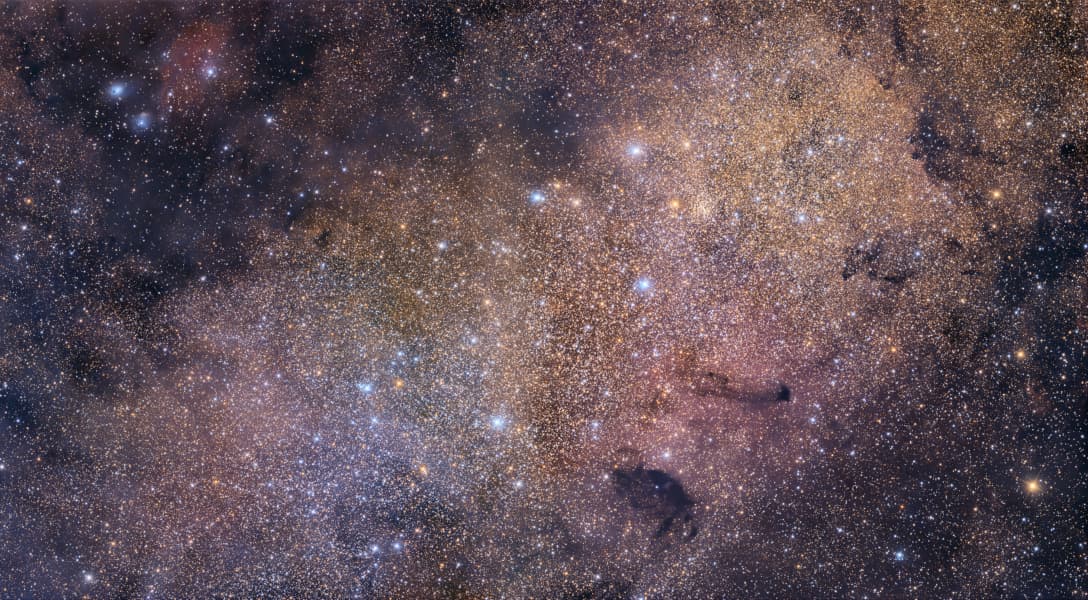
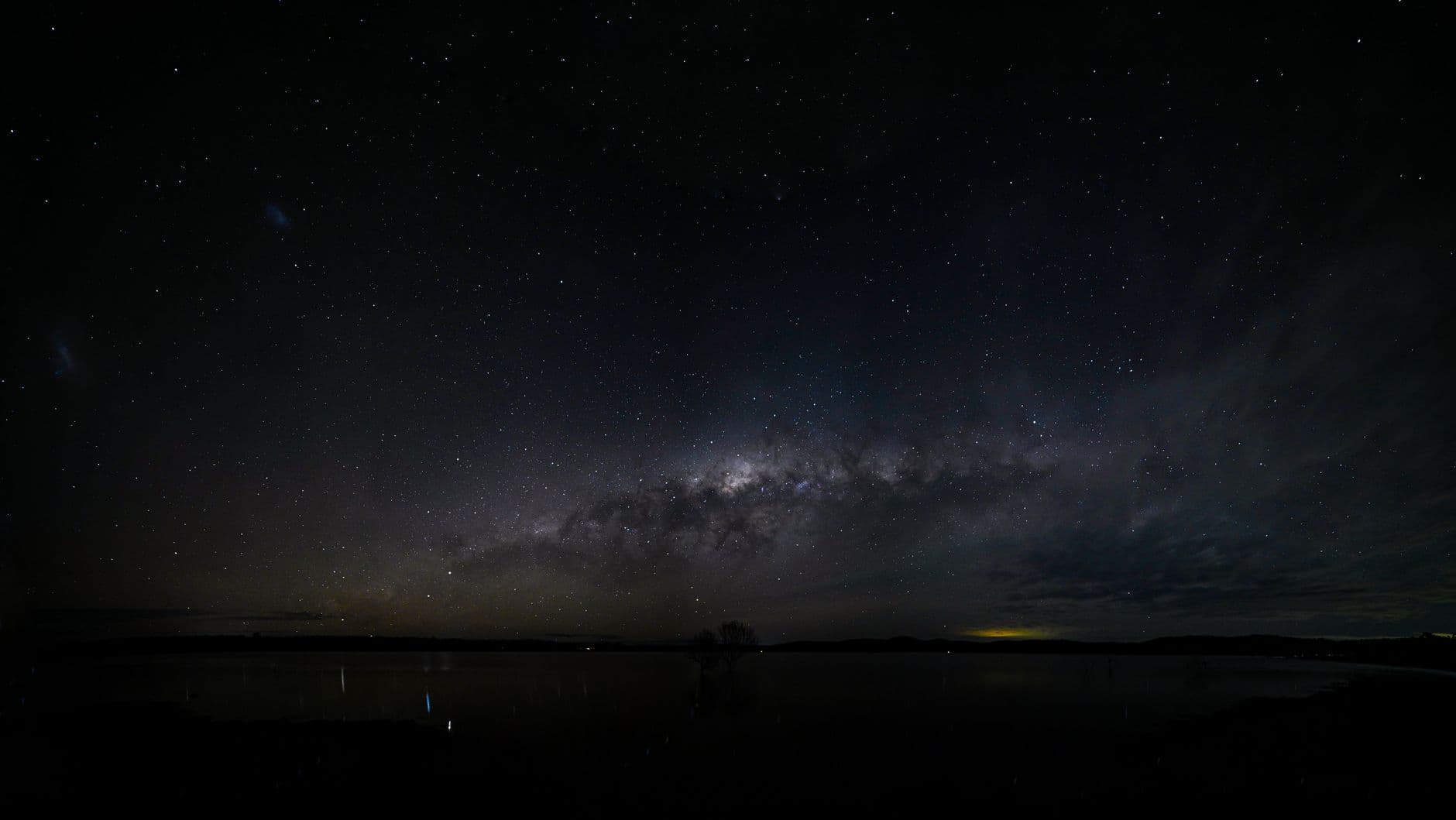
The APOD image of Messier 24 stretches more than four full moons across. This is not a lone showpiece nebula, but a dense patch of Sagittarius sky where dust, star clouds, and glowing emission sit on top of one another.
A window through the Milky Way
Charles Messier recorded M24 on June 20, 1764, calling it “a large nebulosity in which there are many stars of different magnitudes.” That description still fits the way the field behaves in the eyepiece and on the sensor. M24 is a window through nearby obscuring dust, a tunnel-like view into the Milky Way that opens onto stars roughly 10,000 to 16,000 light-years away.
That window is about 600 light-years wide, which is why the object feels more like a scene than a single target. Later work clarified that the attraction is not a compact cluster at all, but a sightline into the Sagittarius spiral arm. The field sits in the Sagittarius section of the Great Rift, the dusty band that hides much of the Galactic Center and gives the image its layered depth.
Why the wide frame wins
M24 is built for wide-field composition because the surroundings are not background; they are the subject. Messier described the span as about 1 1/2 degrees across. A short focal length, a small refractor, or binocular-style imaging lets the star cloud breathe, which matters when the frame itself is part of the appeal.
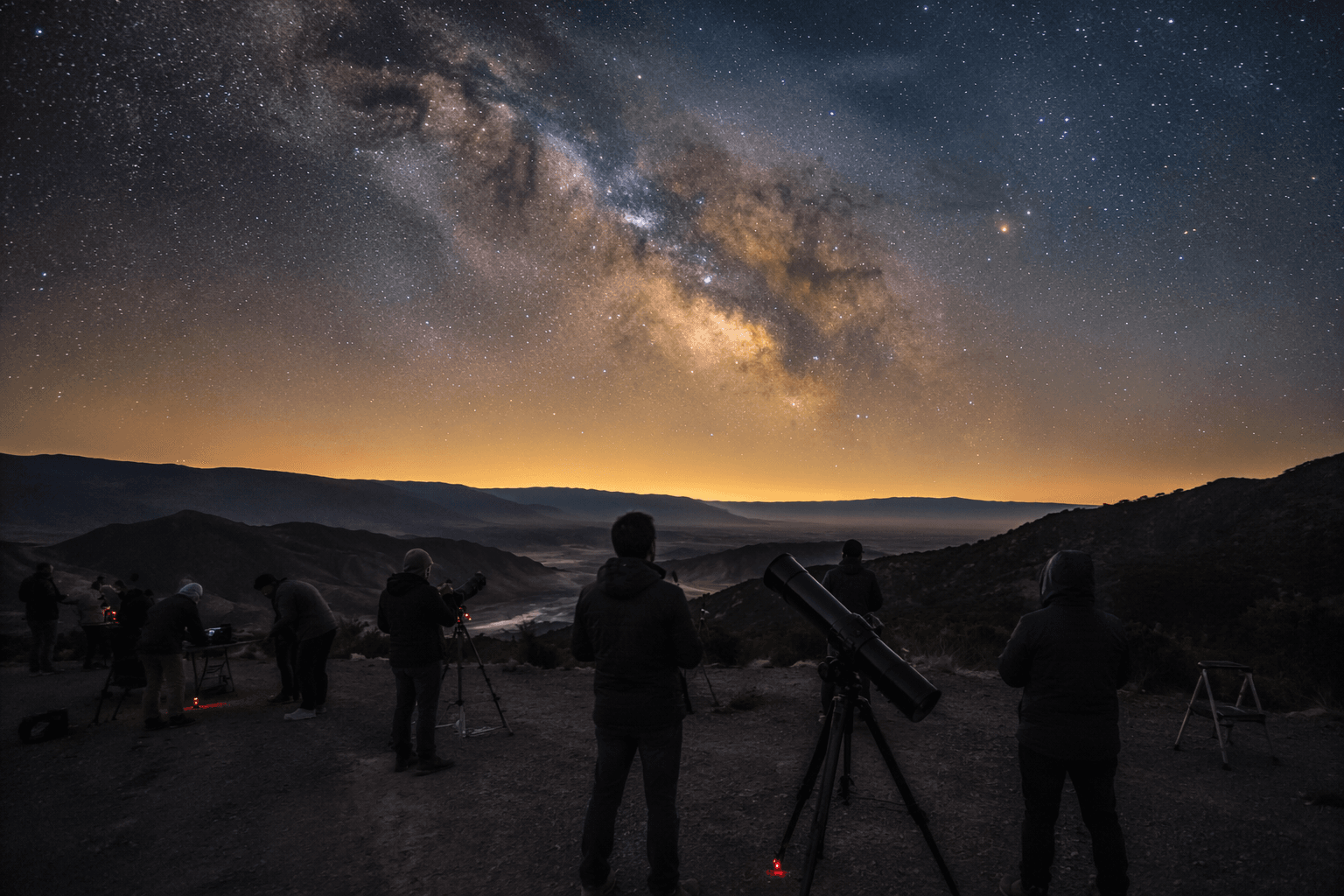
That is also why M24 is so good for learning restraint. If you crop too tight, you lose the sense that the bright central patch is only one part of a larger structure. The better composition keeps the surrounding star fields in play, because the eye reads the image through contrast: dense stars against dust, soft glow against dark rifts, and bright clusters against the more muted background of the Milky Way.
A strong M24 frame usually benefits from one of three approaches:
- A wide lens that shows the full sweep of the Sagittarius star cloud
- A small refractor that preserves the scale of the dust lanes and embedded nebulosity
- A mosaic, if you want to include more of the surrounding Milky Way without compressing the field
The dark lanes are the anchor
Edward Emerson Barnard’s 1913 work on dark regions in the sky is crucial to understanding why this target photographs so well. He argued that the dark markings in the Milky Way are caused by obscuring matter, not literal empty holes. M24 puts that idea on display in a way that is almost tailor-made for imaging.
The northern part of the field includes Barnard 92 and Barnard 93. Barnard 92 is the larger dark cloud, and Barnard 93 lies about 20 minutes east of it as a nearby dark lane. Those marks are not distractions from the star cloud; they are the composition. Their shapes carve structure into the field and give the surrounding stars something to press against.
A single binocular field of view can hold around 1,000 stars. The density makes the image feel alive even before the processing begins. Every small adjustment in framing changes which dark lanes cut across the star field and which clusters of light settle into the gaps.
Processing for texture, not spectacle
M24 rewards color-rich broadband processing, but it punishes overcooking. The goal is not to turn the field into a neon poster, but to preserve the layered look that makes the target compelling in the first place. The dust has to stay readable, the star cloud has to stay granular, and the faint nebular glow toward the center of the Milky Way needs enough room to emerge naturally.
That means keeping an eye on three things while you stretch the image:
- Hold back the background so the dark lanes remain dark, not gray mush
- Preserve star color and avoid bloating the dense field into a flat carpet
- Let the faint dust and glow build gradually, so the Sagittarius structure stays believable
A summer target with range
In the Northern Hemisphere, M24 becomes a high-priority Milky Way core target in summer, especially during moonless windows. It is easy to find, visually rewarding, and deep enough to keep revealing more with every longer exposure. It supports both beginner-friendly framing and advanced mosaic work.
This article was produced by Prism’s automated news system from verified source data, official records, and press releases, then run through automated quality and moderation checks before publishing. The system is built and supervised by the people who set the standards it runs under. Read our full AI policy.
Did this article answer your question?