APOD spotlights the Cosmic Bat Nebula’s red hydrogen glow
The Cosmic Bat Nebula is a narrowband showcase: its red hydrogen glow, 12-light-year span, and hidden star formation reward careful H-alpha capture and restrained processing.
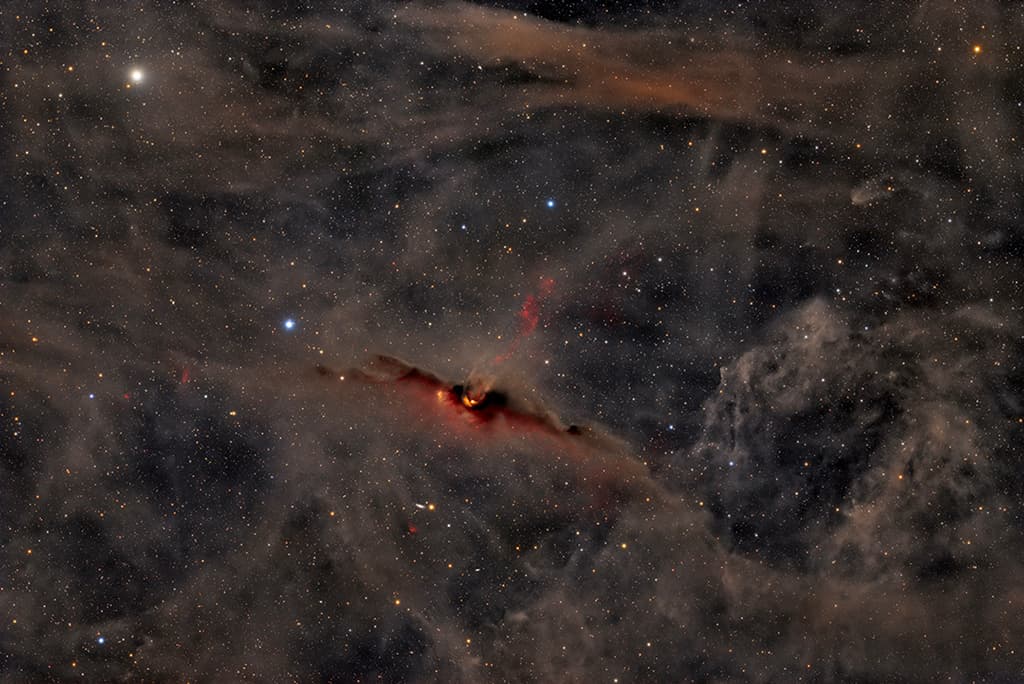
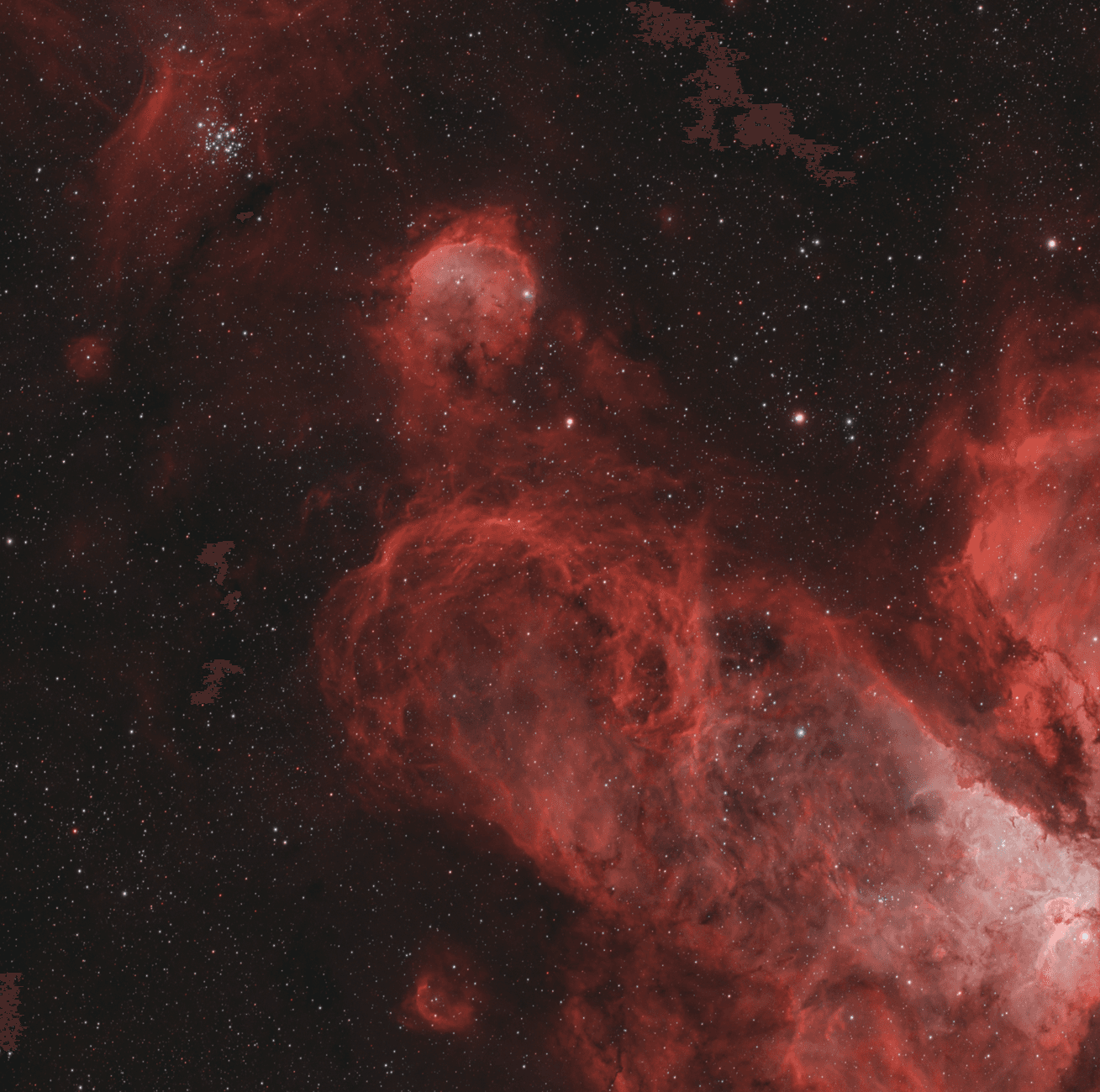
APOD’s July 9 entry spotlights the Cosmic Bat Nebula, where young stars inside the cloud energize red hydrogen gas and a jet emerging from the bat’s head points to star formation still buried in the dust.
Why the Bat Nebula responds so well to narrowband
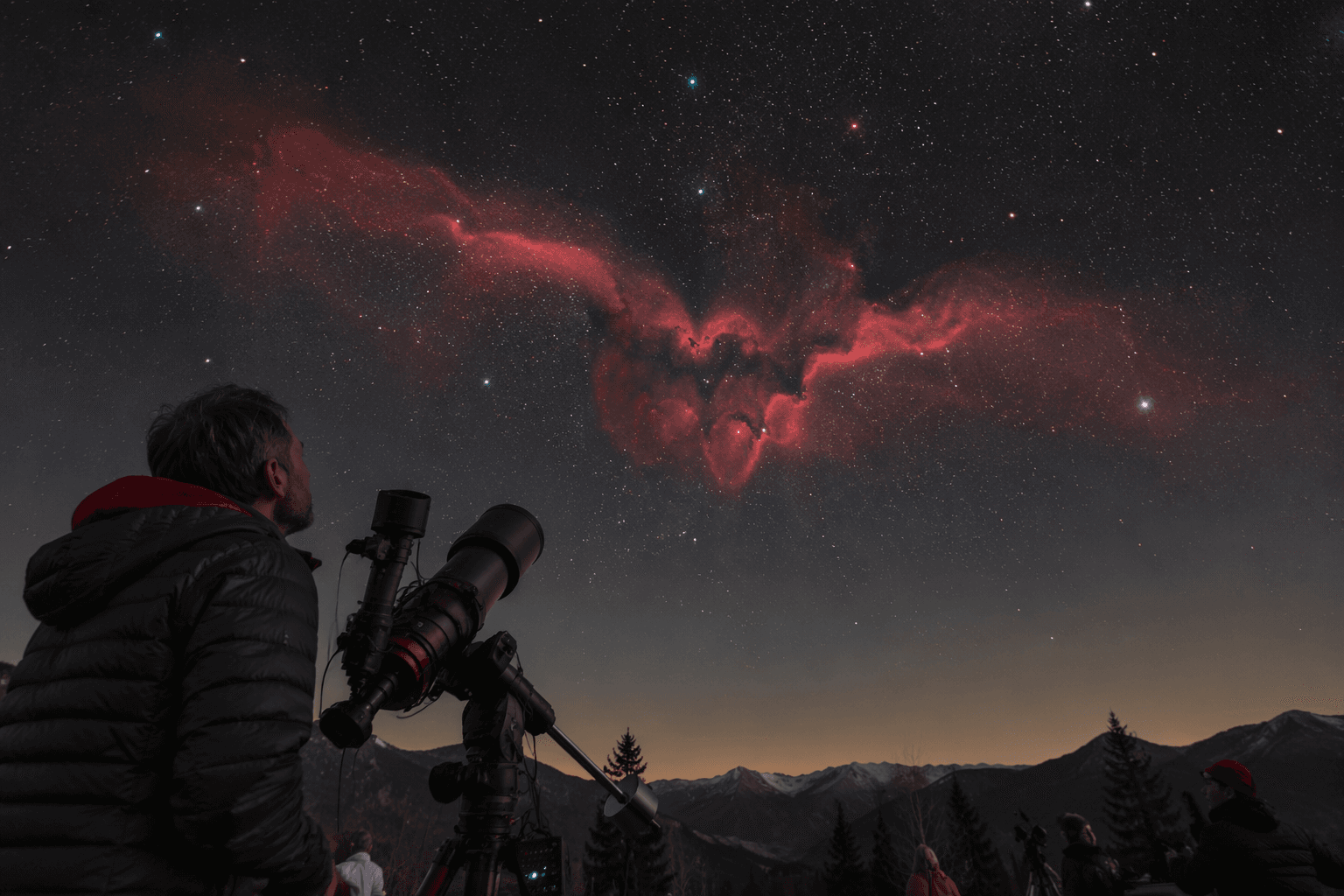
The Cosmic Bat’s wingspan is about 12 light-years, which puts it in that sweet spot where the target is large enough to frame cleanly, but compact enough to preserve shape and detail. That scale makes it a strong match for H-alpha or dual-band imaging, because the dominant signal is the hydrogen emission itself rather than broadband reflection from stars or dust. In practical terms, the red channel is carrying the story here, and the image improves when that signal is isolated instead of buried under background glow.
The physical setup matters as much as the look. Ultraviolet light from young stars energizes the nebula’s hydrogen gas, causing the region to glow red, so the color is the result of ionized gas responding to stellar radiation, not a cosmetic effect. That makes the Bat a useful target for anyone learning how narrowband filters pull out emission while rejecting skyglow and gradients, especially in a field where the contrast between dark dust and red gas does most of the work.
What the structure teaches about framing and filter choice
The Bat Nebula’s silhouette is memorable because the shape is doing part of the imaging for you. The dark lanes outline the wings, while the hydrogen emission gives the body and surrounding cloud structure a layered look that benefits from careful framing and a filter set tuned to red emission. A monochrome camera with H-alpha, or a dual-band setup that isolates hydrogen and oxygen-like bandpasses, can help hold that red glow without washing out the finer dust structure.
This is also a good target for learning restraint. The brightest emission is easy to overcook, but the image becomes more useful when the dark dust lanes, the red core, and the faint surrounding nebulosity all stay visible together. Longer integration helps the weaker outer structure rise out of the noise, and careful processing keeps the background from swallowing the very detail that makes the object interesting in the first place.
Its size is modest enough that many common focal lengths can frame it well, yet it still contains enough structure to reward clean calibration, good background rejection, and attention to contrast.
The hidden star formation inside the cloud
A jet of glowing hydrogen emerging from the bat’s head points to star formation hidden inside the cloud, which is exactly the sort of substructure narrowband imaging can tease out when the data are deep enough. When that jet appears against the larger body of the nebula, it gives the frame a physical center and a reason to keep pushing on integration time instead of stopping at the first pleasing result.
That hidden activity also changes how you process the image. The goal is not to make every faint wisp equally bright, but to preserve the hierarchy of the scene so the bat shape stays obvious while the subtle internal features remain readable. If the red channel is clipped or stretched too aggressively, the image may look dramatic and still lose the sense of depth that reveals what is happening inside the cloud.
LDN 43 and the broader bat-nebula tradition
The Cosmic Bat is also known as LDN 43 and lies about 1,400 light-years away in Ophiuchus. It is a molecular cloud that functions as a stellar nursery lit from within by young stars.
The bat has become a recurring motif in astronomy outreach, and LDN 43 refers to item 43 in Beverly Lynds’s 1962 Catalog of Dark Nebulae. The July 9 image appears in the archive between the July 8 and July 10 entries.
This article was produced by Prism’s automated news system from verified source data, official records, and press releases, then run through automated quality and moderation checks before publishing. The system is built and supervised by the people who set the standards it runs under. Read our full AI policy.
Did this article answer your question?