AstroBin asks astrophotographers to share their most game-changing tip
Davide Fontana’s AstroBin thread drew 17 replies and 420 views fast, and it will feed the site’s bimonthly newsletter.
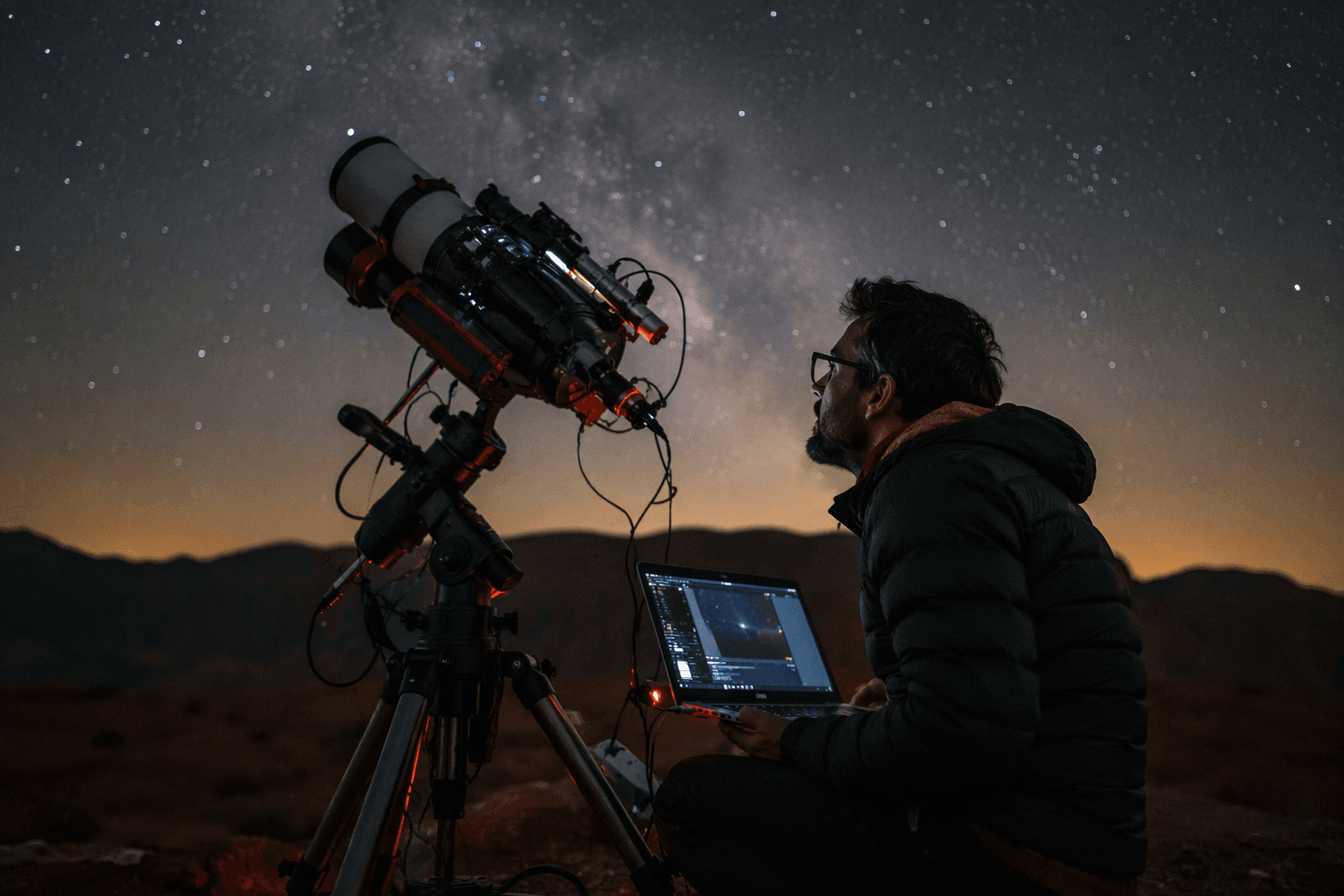
AstroBin staff member Davide Fontana opened a forum thread on July 9 asking members for the single astrophotography tip that most changed their results, and the post had already drawn 17 replies and 420 views. AstroBin said it would feature the discussion in its upcoming bimonthly newsletter, giving the exchange a reach beyond the forum itself.
Fontana did not frame it as a vague advice swap. He asked for examples, comparisons and real AstroBin images, and he pushed members to name the tip they learned too late, the lesson they picked up by studying other imagers’ work, or the change that altered target choice, focal length, exposure time, integration length, filters or processing workflow. The thread was built to surface the sort of advice that improves a session, a frame or a stack quickly, then makes that improvement easy to find again.
That approach fits the way AstroBin works. The site describes itself as the home of astrophotography, built to share full-resolution images, preserve acquisition details, discover equipment, discuss techniques and learn from the community. Its image interface is designed to collect technical metadata and autocomplete telescopes, CCDs, filters and astronomical objects, and founder Salvatore Iovene has said he has worked on the platform since 2010. In that setting, a tip thread is not just a conversation starter. It becomes a way to tie advice to actual data and actual images.
The categories Fontana named also track with the way imagers usually see improvement land fastest: in acquisition, processing or planning. NASA Night Sky Network training material says stacking many short exposures can be preferable to one long exposure for some targets, while also making clear there is no single formula for exposure strategy. Celestron’s astrophotography guidance likewise says multiple light frames, along with darks, flats and bias frames, can cut noise and optical imperfections. Those are the kinds of changes that tend to move the needle without a new camera body or a bigger mount.
Fontana’s thread was designed to pull those hard-won lessons into one searchable place, where a beginner can compare notes with an experienced imager and see how a single habit changes a result. With replies already piling up and the newsletter slot waiting, AstroBin turned a simple prompt into the sort of community archive that keeps paying off the next time the rig is under a dark sky.
This article was produced by Prism’s automated news system from verified source data, official records, and press releases, then run through automated quality and moderation checks before publishing. The system is built and supervised by the people who set the standards it runs under. Read our full AI policy.
Did this article answer your question?