Cygnus’ M29 offers an easy summer target for astrophotographers
M29 is a sparse Cygnus cluster that rewards disciplined framing and color work. It’s a clean summer test for short integrations in a crowded Milky Way field.

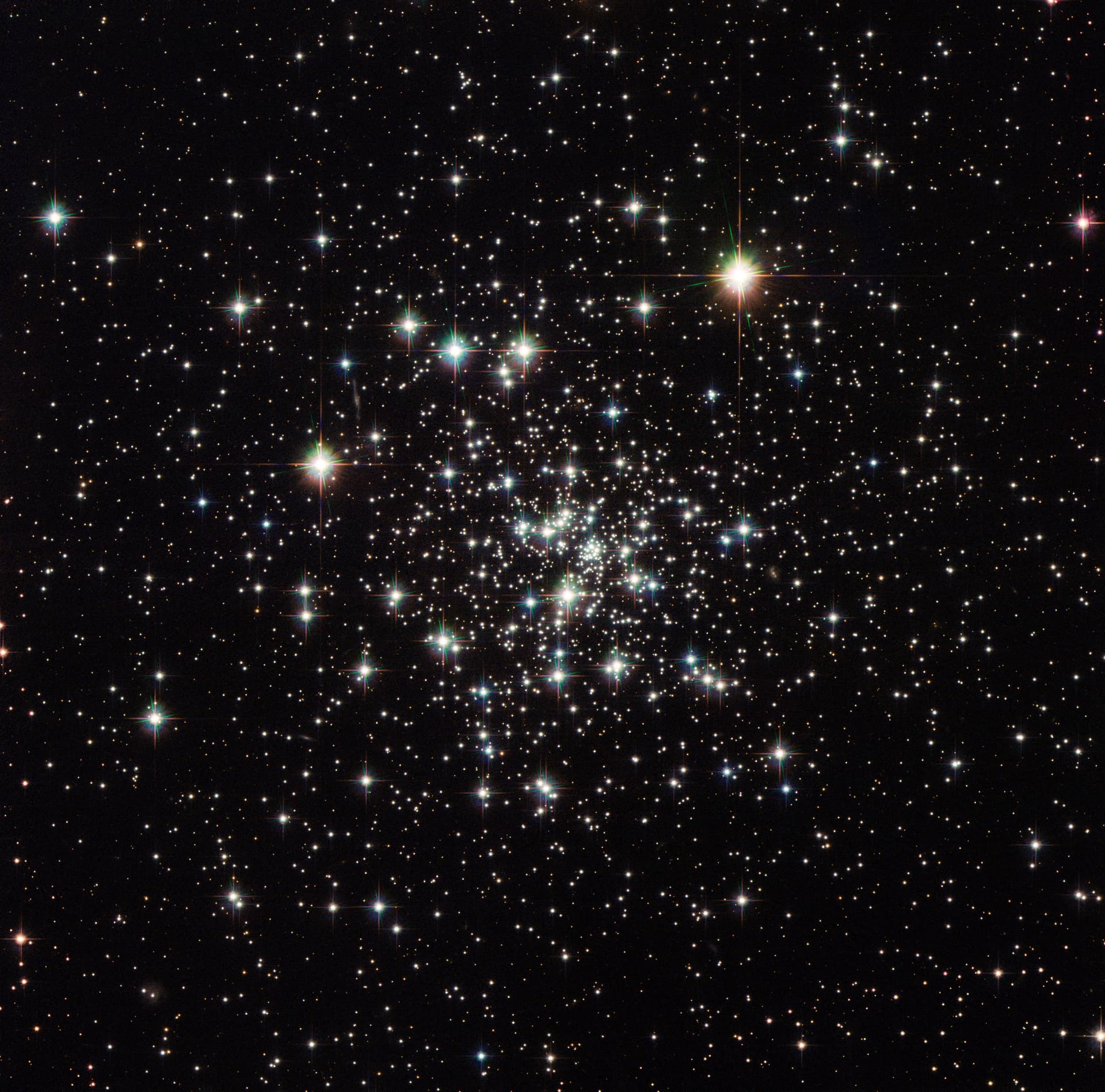
M29, also cataloged as NGC 6913, is a compact open cluster in Cygnus: a bright but sparse knot in a rich summer star field. That is exactly why it works so well from the imaging side. For astrophotographers, it is the kind of target that turns a summer session into a practical exercise in focus, framing, and color control instead of a battle for faint dust and extreme exposure time.
Why M29 belongs on a summer imaging list
It sits in Cygnus near the center of the constellation’s cross-shaped pattern and lands in a part of the sky that is especially useful for wide-field work. Its apparent magnitude is commonly given as 7.1, which puts it within reach of modest gear even though the cluster looks loose rather than crowded. That looseness is part of the appeal: the stars have room to breathe, and the cluster can be set against the richer Milky Way backdrop that runs through Cygnus.
NASA places M29 roughly 3,700 light-years away, while other references put it closer to 5,240 light-years. It is a very young open cluster, with age estimates ranging from about 10 million years to 13.2 million years. That youth explains the hot blue stars that give M29 its character and its connection to the Cygnus OB1 Association.
How to find it in Cygnus
The easiest way into M29 is to work from Cygnus itself, which climbs into a strong summer position and gives you a familiar northern sky anchor. The cluster sits near Gamma Cygni, and the area around the constellation’s bright cross is rich enough that you can use the surrounding pattern as a map. Once you are oriented on the cross-shaped figure, M29 sits in a part of the sky that is straightforward to frame with binoculars, a small telescope, or a camera lens on a tracking mount.
Messier objects were assembled to help comet hunters avoid confusing fuzzy deep-sky objects with comets, and they remain good targets for backyard astronomers using binoculars or a small telescope. The Astronomical League offers Messier Club recognition for observers who complete the list.
What the cluster looks like through a camera
M29 rewards restraint. It is not a dense globular-style target, so the frame benefits from leaving room around the cluster instead of cropping it tight. In a wide-field shot, the sparse member stars become a feature rather than a limitation, especially when the surrounding Cygnus star field is allowed to remain visible and the cluster can sit naturally inside the Milky Way background.
SEDS lists M29 with about 50 member stars, which is enough structure to give the cluster shape without turning it into a packed ball of light. That count is useful for planning because it tells you what kind of image to expect: a modest concentration, a few brighter blue-white stars, and enough surrounding field stars to make the composition feel alive. If you chase it with too much magnification, you can lose the surrounding field.
A useful target for focus, framing, and color
M29 is a clean practice object because it exposes the basics. Focus needs to be crisp enough to keep the brighter cluster stars tight, framing needs to respect the cluster’s sparse geometry, and color balance needs to preserve the blue-white character of the hot stars without washing the field into a flat glow. If you are working with a small telescope, a smartphone on a tripod, or a tracker, this is the kind of target that reveals whether your setup is dialed in.
Short integrations can work especially well here. You do not need a heroic exposure campaign to get a pleasing result, and that makes M29 a strong rehearsal target for nights when you want to test calibration frames, stacking, and star-color rendering. Because the cluster is bright enough to register clearly, you can compare frames over time and see whether your focus, tracking, and processing are improving from session to session.
- Use a wider frame than you might for a denser cluster, so the Cygnus field stays part of the picture.
- Keep an eye on star color, since the hot members of M29 can lose their identity if the stretch goes too far.
- Treat the sparse layout as a composition exercise, not a problem to solve.
- Try short subexposures first, then build the image with stacking rather than chasing one long frame.
Why the background matters
Cygnus gives M29 a lot of its photographic value. The constellation includes the Cygnus Rift, a dust lane that darkens the Milky Way behind it and adds contrast to the region. For astrophotography, that darker lane can make a modest cluster read more clearly because the star field around it does not disappear into a flat wash of light.
That contrast turns M29 from a simple binocular object into a practical imaging subject. The cluster is embedded in a textured summer sky where dark lanes, scattered stars, and the broader Milky Way all work together.
This article was produced by Prism’s automated news system from verified source data, official records, and press releases, then run through automated quality and moderation checks before publishing. The system is built and supervised by the people who set the standards it runs under. Read our full AI policy.
Did this article answer your question?