Dawn alignment pairs crescent Moon, Mars, Aldebaran, and star clusters
A slim crescent Moon, Mars, Aldebaran and the Pleiades make a fast-moving pre-dawn frame, best caught with a clear east horizon and careful exposure balance.
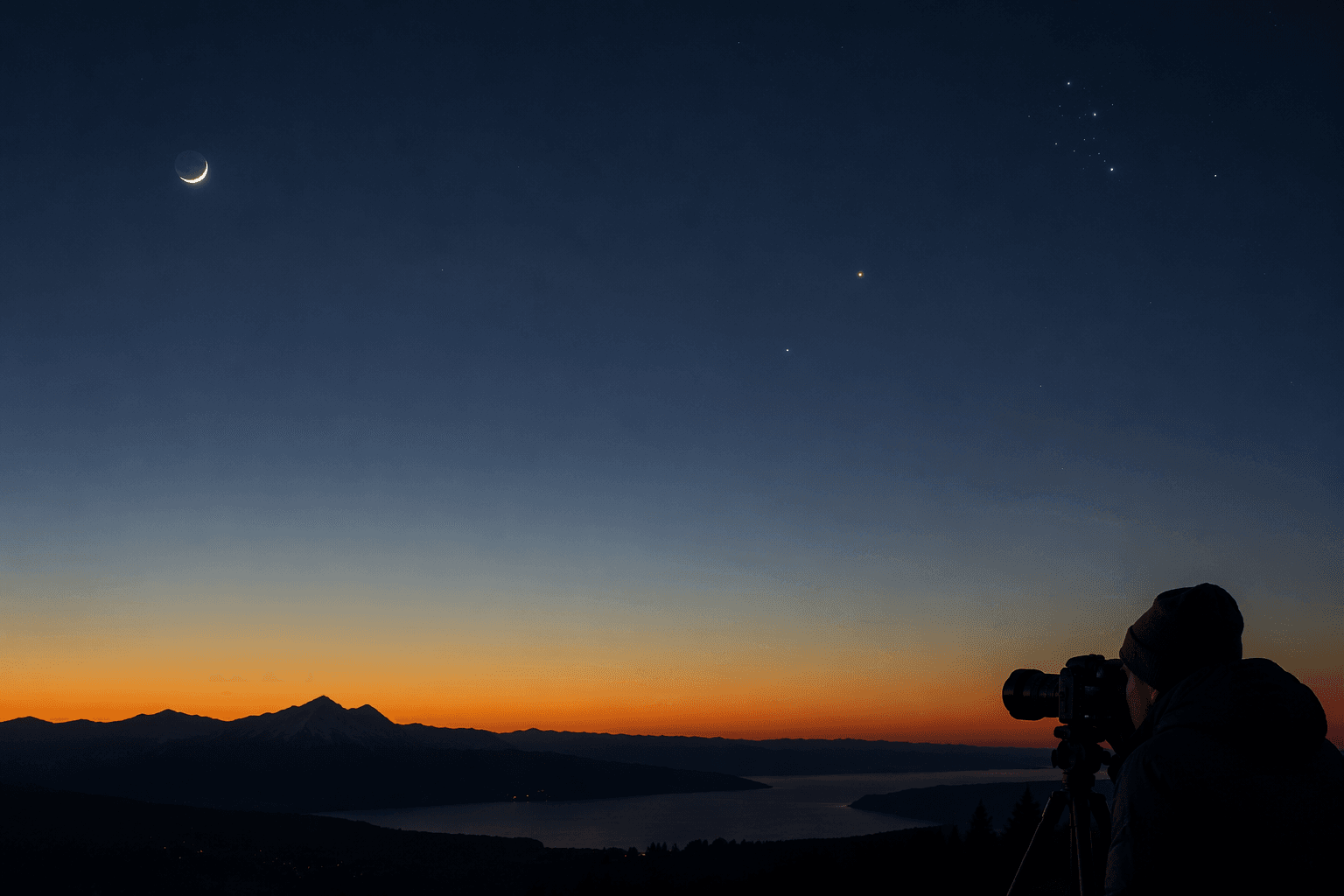
A slim crescent Moon, Mars, Aldebaran and the Pleiades give wide-field shooters a built-in predawn composition that already feels arranged in layers. The Moon is the easy anchor, Mars adds a red point of contrast, Aldebaran gives the frame a bright Taurus reference, and the star cluster higher up supplies texture before daylight starts to erase the scene.
The timing is the whole game. Before sunrise on July 11 and 12, the lineup sits low in the eastern sky, which means the usable window is short and the sky brightens fast. On July 11, the Moon sits just under 5 degrees north of Mars, and this same Moon-Mars-Aldebaran arrangement will not come around in quite the same way until 2034.
Where to look, and why the horizon matters
The best setups start with the horizon, not the camera. Because the objects are low in the east and east-northeast before dawn, any trees, hills, buildings, or haze can make or break the frame, so a clean horizon is more valuable than a dramatic foreground that blocks the alignment. NASA’s July 2026 skywatching guidance puts Saturn in the same general part of the sky, with Uranus nearby but too faint to see without optical aid, which makes the field even richer if you want to widen the composition.
This is not a single-object shot. In one direction you have the Moon and Mars, in another Aldebaran, and higher up the subtle Pleiades, so a landscape tableau can tell the whole story in one exposure.
Two ways to frame the morning
The first approach is the broad, story-forward frame: a tripod-mounted landscape image that places the crescent Moon, Mars, Aldebaran and the Pleiades in the same composition. That works best when you can keep the horizon low and let the sky take over, because the visual hierarchy is already there. The Moon draws the eye immediately, Mars gives the shot a color note, and the Pleiades keep the upper part of the frame from feeling empty.
The second approach is a tighter conjunction image that leans into the Moon-Mars pair and lets Aldebaran sit close enough to read the Taurus connection. In that version, the Pleiades may slip to the edge of the frame or out entirely, which is fine if your goal is to isolate the alignment and emphasize how close the objects appear in the dawn sky. Mars is a small reddish point of light and the Moon is the easiest locator, so this tighter view can be the cleanest way to show the geometry.
Some photographers will want both. A wide frame can establish the context, then a longer lens can compress the Moon, Mars, and Aldebaran into a denser visual knot. If you work quickly, you can move from one look to the other before twilight washes out the contrast.
Exposure balance is the real challenge
The scene is beautiful because the brightness levels are all over the map. The Moon is bright, Mars is bright enough to read as a red point, Aldebaran is luminous but not overpowering, and the Pleiades want more careful treatment because they are subtler against the brightening sky. That spread means a single exposure is always a compromise, so the safest plan is to decide early whether you want the Moon preserved, the clusters lifted, or the whole scene balanced for mood.
For a cleaner wide-field result, bracket your exposures and watch the histogram rather than trusting the back screen. The Moon will clip easily if you push too far for the cluster detail, while the Pleiades can disappear if you expose only for the lunar crescent. A tracker can help if you want more depth in the star field, but even a fixed tripod can work if you keep the shutter speed disciplined and shoot enough frames to catch one with the best balance.
Why the Pleiades matter in the frame
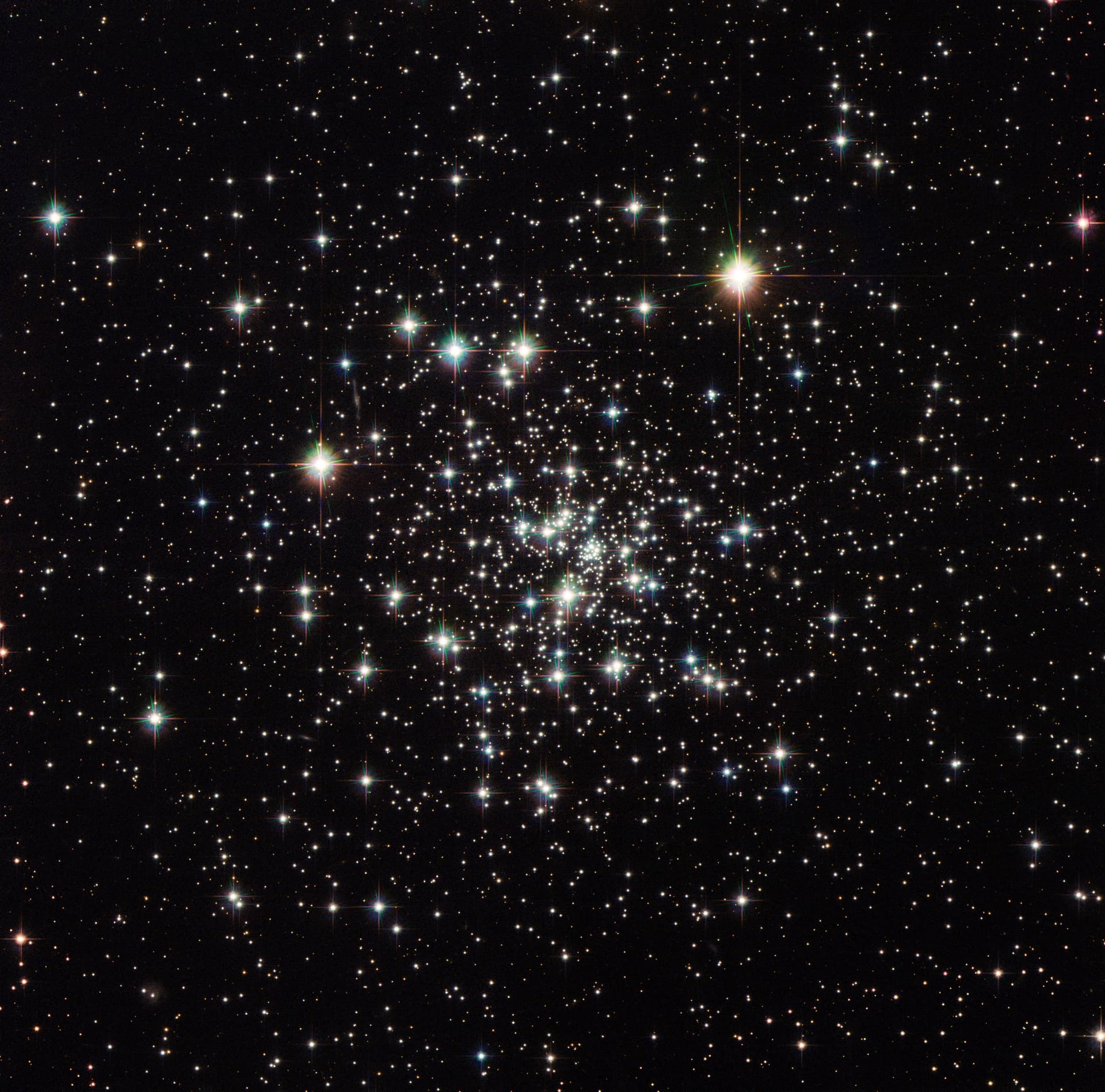
Messier 45 is an open star cluster with over a thousand stars loosely bound by gravity. Britannica places it about 440 light-years from the solar system, and six or seven stars are visible to the unaided eye. That makes the cluster unusually photogenic: it is compact enough to recognize immediately, but rich enough to reward longer exposure and careful placement in the composition.
NASA’s TESS work identifies a much broader stellar stream of more than 3,000 stars stretching across 1,900 light-years.
A short seasonal window worth using
The Moon becomes a locator, Mars gives you a bright planetary target, Aldebaran ties the frame to Taurus, and the Pleiades fill the upper sky with a cluster that reads instantly in a wide-field image.
NASA’s broader skywatching notes include Saturn and Uranus in the same pre-sunrise part of the sky, even if Uranus is too faint to see without optics. The result is a morning that can be photographed as a single panorama or broken into tighter studies, depending on your gear and how much twilight you have left.
This article was produced by Prism’s automated news system from verified source data, official records, and press releases, then run through automated quality and moderation checks before publishing. The system is built and supervised by the people who set the standards it runs under. Read our full AI policy.
Did this article answer your question?