Moon and Venus lead a week of easy astrophotography targets
A crescent Moon, Venus, and Regulus give you the week’s easiest twilight frame, with Saturn’s moons and Mars in Taurus waiting for the pre-dawn crowd.
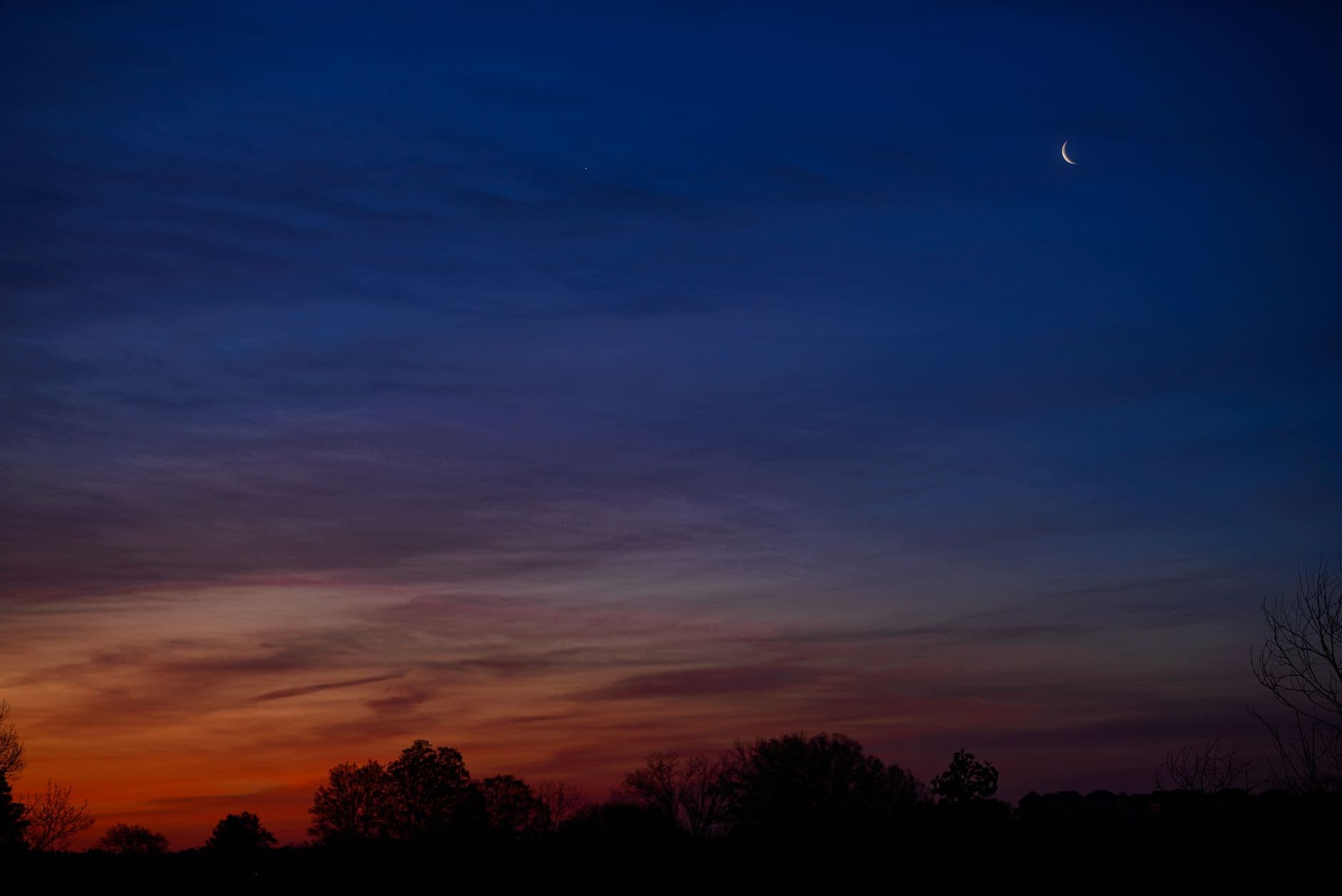
Shortly after sunset, the Moon and Venus sit together in Leo near Regulus, the Lion’s brightest star. The bright twilight pairing works with ordinary gear and rewards a fast setup more than a perfect forecast.
The quickest win: Moon, Venus, and Regulus
Venus has been one of the easiest planets to catch all year, setting around 10 p.m. in July, and its path through the constellation has kept it close to Regulus for days, including a pass just 1.1° north of the star on July 9. The result is a compact, high-contrast composition with a bright planet, a slim lunar crescent, and a familiar star backdrop that reads immediately in a wide frame.
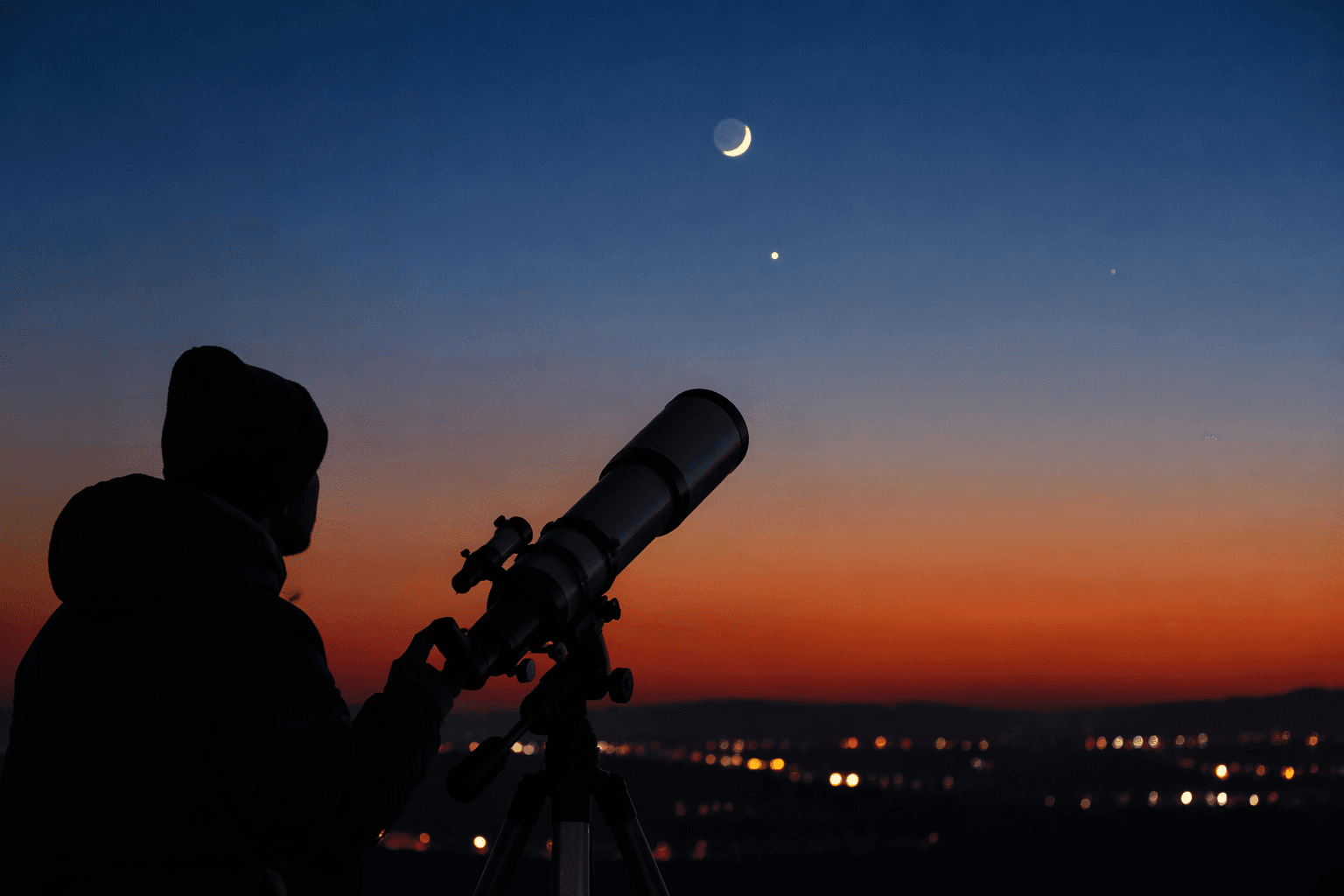
For a smartphone, this is the week’s most forgiving target. Use the widest camera you have, keep the western horizon open, and let the sky stay a little blue so the Moon and Venus don’t wash out the frame. A tripod-only setup gives you more control over composition, especially if you want rooftops, trees, or a skyline in the foreground. If you are working with a tracker, you can stretch into longer exposures and separate the planet and the moon from the background glow, but the scene is already strong without heavy equipment.
The timing gets even better around July 16 and 17. A nearly three-day-old Moon greets Regulus on July 16, with Venus about 8° east of the Moon, and the following evening the Moon stands 6.2° southeast of Venus. That gives you two more chances to build a clean wide-field frame, and the spacing is close enough to make the scene feel intentional without forcing a tight telephoto crop.
How to frame the Venus and Moon shot fast
A quick-win shot list keeps the first decision simple: go wide, go early, and let the twilight color do part of the work. The Moon-Venus pairing can be captured from a city rooftop, a park, or a rural horizon with a standard lens, and the bright star Regulus gives the image a clear anchor even when the sky is still bright.
- Smartphone: best for the full scene, especially if the horizon is interesting and you want the color of twilight.
- Tripod-only: best if you want a steadier frame and a little more control over exposure while keeping the composition loose.
- Tracked setup: best if you want a cleaner sky background or plan to blend the Moon and Venus into a more polished wide-field image.
Because Venus is so bright this month, it stands out even before the sky fully darkens. That makes this pairing useful when your window is short and the light is changing fast, since you do not need to wait for astronomical darkness to get a usable image.
Saturn’s moons for the pre-dawn crowd
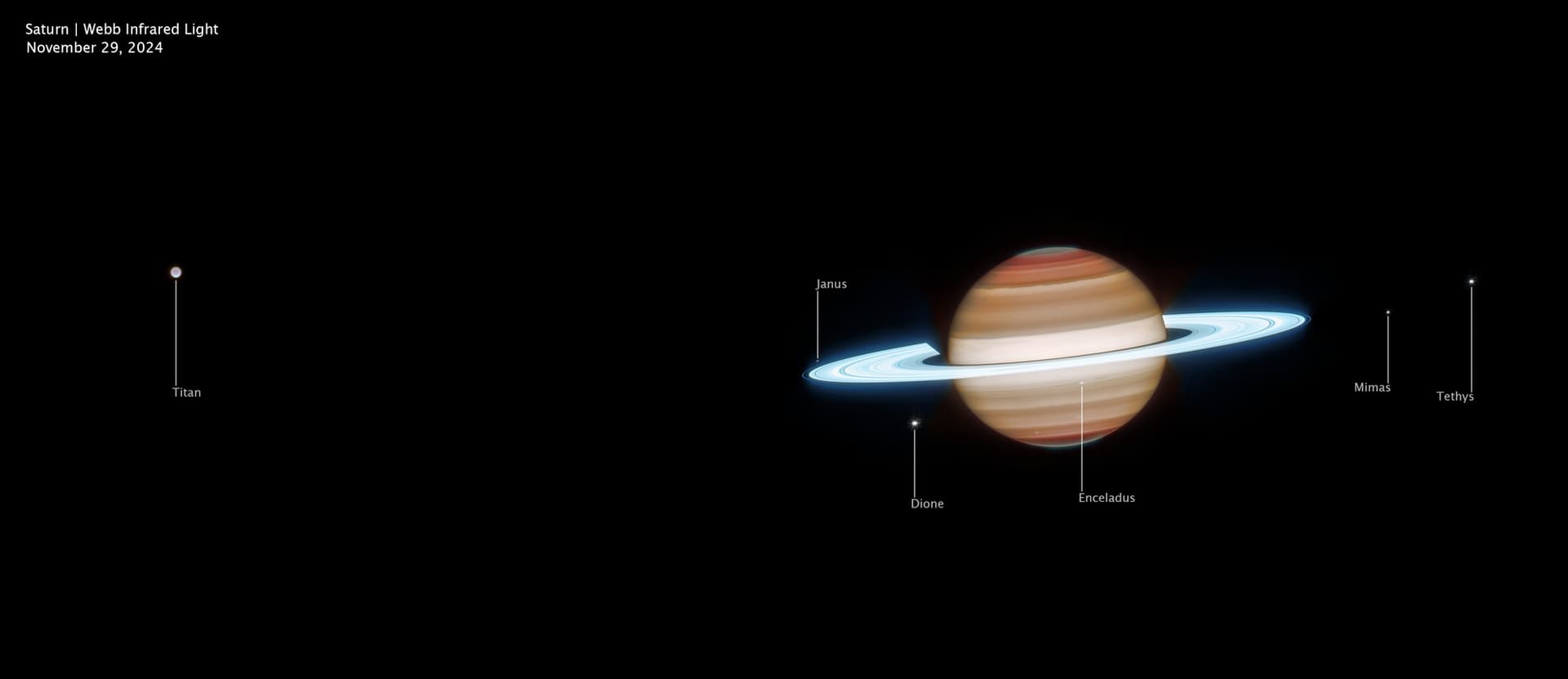
If you work late or get up early, Saturn gives you a different kind of reward. Saturn rises around midnight in July, and its rings are more open than in any other month of 2026, which makes the planet unusually attractive in a telescope. The real bonus for imagers is that Titan sits close to Saturn, and several of Saturn’s other moons are visible between about 3 a.m. local daylight time and sunrise.
This is the part of the week that favors a telescope over a phone. A small scope can show Titan as a distinct companion to the planet, while a steadier mount and a tracked platform help you hold the image long enough to tease out the fainter moons. If you only have a tripod and no optical aid, Saturn is still worth scouting as a target, but the Moon-Venus scene will give you more return for less setup.
Mars crosses Taurus with Aldebaran as the marker
Mars is the other planet worth building a plan around, especially if the Moon-Venus scene is blocked by weather or local light pollution. The Red Planet continues east across Taurus and passes 5° north of Aldebaran on July 14, which gives you a second evening or early-morning target depending on your horizon and schedule.
For a wide-field shooter, Mars and Aldebaran make a tidy color study, with the planet and Taurus’s eye star giving the frame a clear celestial structure. For a longer lens, the 5° separation is wide enough that you can place both objects with some breathing room instead of cramming them into the same tight crop. This is the kind of shot that works well from a tripod with a modest telephoto, while a tracked setup helps if you want to push closer to the planet itself.
A week built for flexible gear choices
Venus and Regulus are already close, the Moon moves back through Leo later in the week, Mars keeps sliding through Taurus, and Saturn is rising in a season when its ring angle is especially good. That gives you a practical menu: a phone for the twilight conjunction, a tripod for a clean wide-field composition, and a tracked telescope setup for Saturn’s moons or tighter planetary work.
This article was produced by Prism’s automated news system from verified source data, official records, and press releases, then run through automated quality and moderation checks before publishing. The system is built and supervised by the people who set the standards it runs under. Read our full AI policy.
Did this article answer your question?