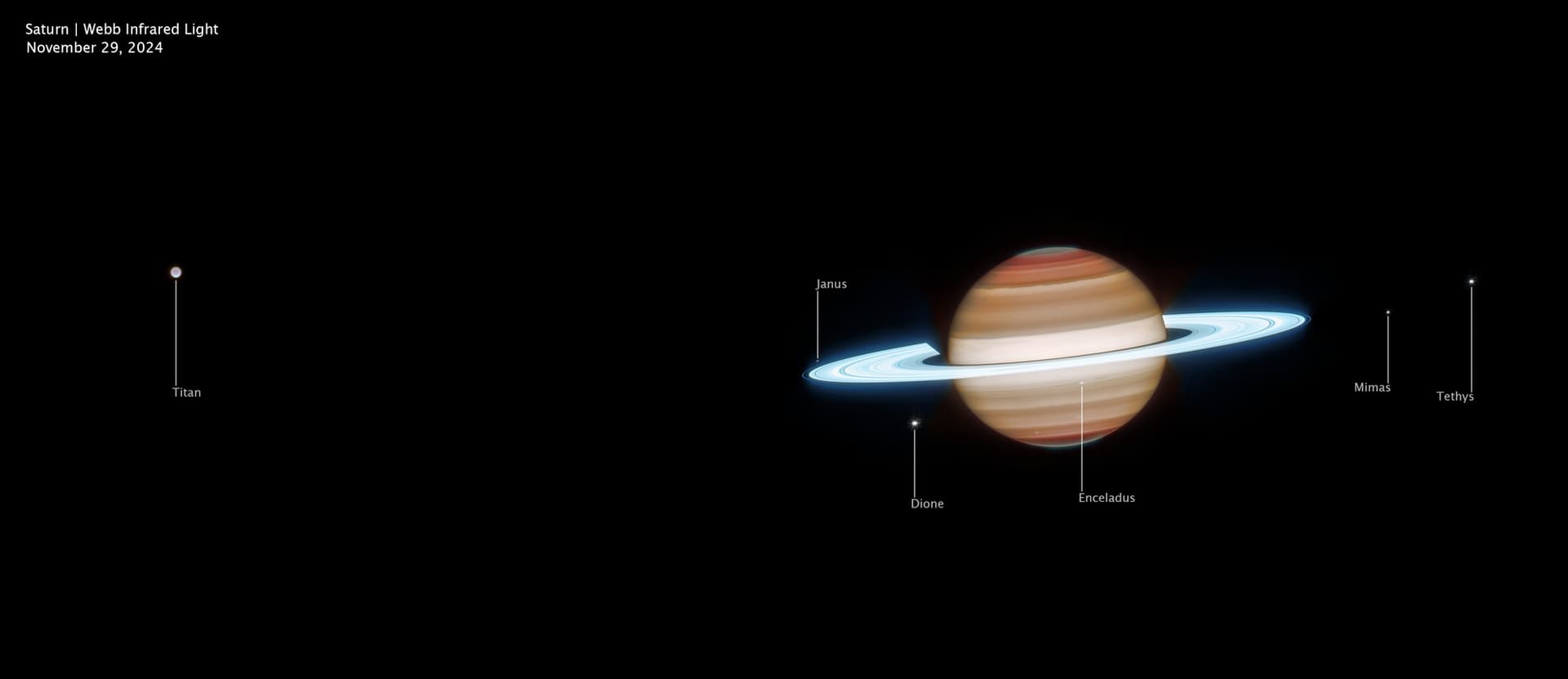
ZWO ASIAIR V3.0 beta adds remote telescope control and safer imaging
ASIAIR V3.0 beta lets imagers monitor a rig remotely and adds safeguards against cable-wrap mistakes, while ZWO fixes guiding and drive-detection bugs.
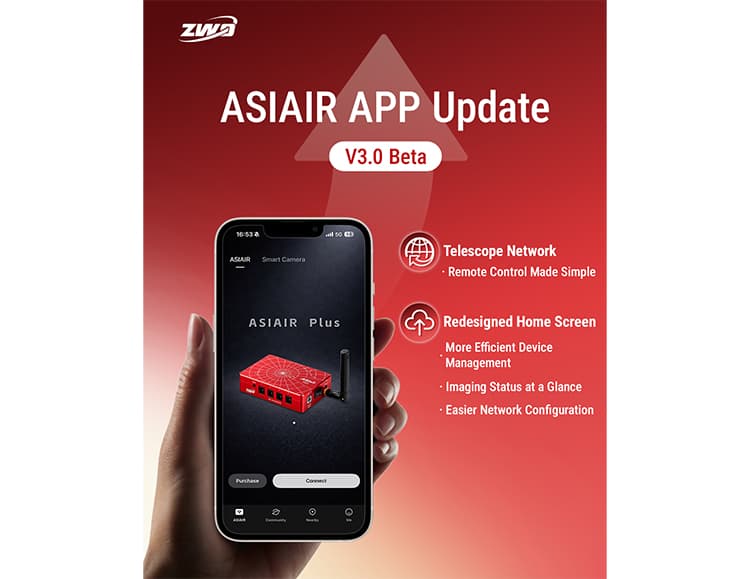
Remote telescope control moved to the front of ZWO’s ASIAIR V3.0 public beta, giving imagers a way to monitor imaging progress, guiding status and device health from farther away as long as the connected device stays online. For backyard observatories, mini-observatories and winter sessions where the mount sits far from a warm desk, that is the kind of change that trims real friction at the rig, not just menu clutter.
ZWO also reshaped the interface around faster access. Device connection and switching now sit on the home screen, an Imaging Status Card gives a quicker read on what the system is doing, and network settings are easier to reach. Hidden Wi-Fi support in Station Mode widens the use case further for homes and observatories where the network is not broadcast openly, which matters when the goal is to move less, tap less and spend more time on acquisition.
The beta’s safety work is just as practical. ZWO said it optimized the star-detection algorithm for more consistent behavior across platforms and added current-position verification when switching CAA to Rotation Mode, a step meant to prevent cable-wrap problems during a run. The July 14 update to the beta also fixed an Android guide-star curve display issue, an unresponsive Guiding page and external hard-drive detection problems on both iOS and Android, all of them the sort of bugs that can burn a clear night if they surface after dark.
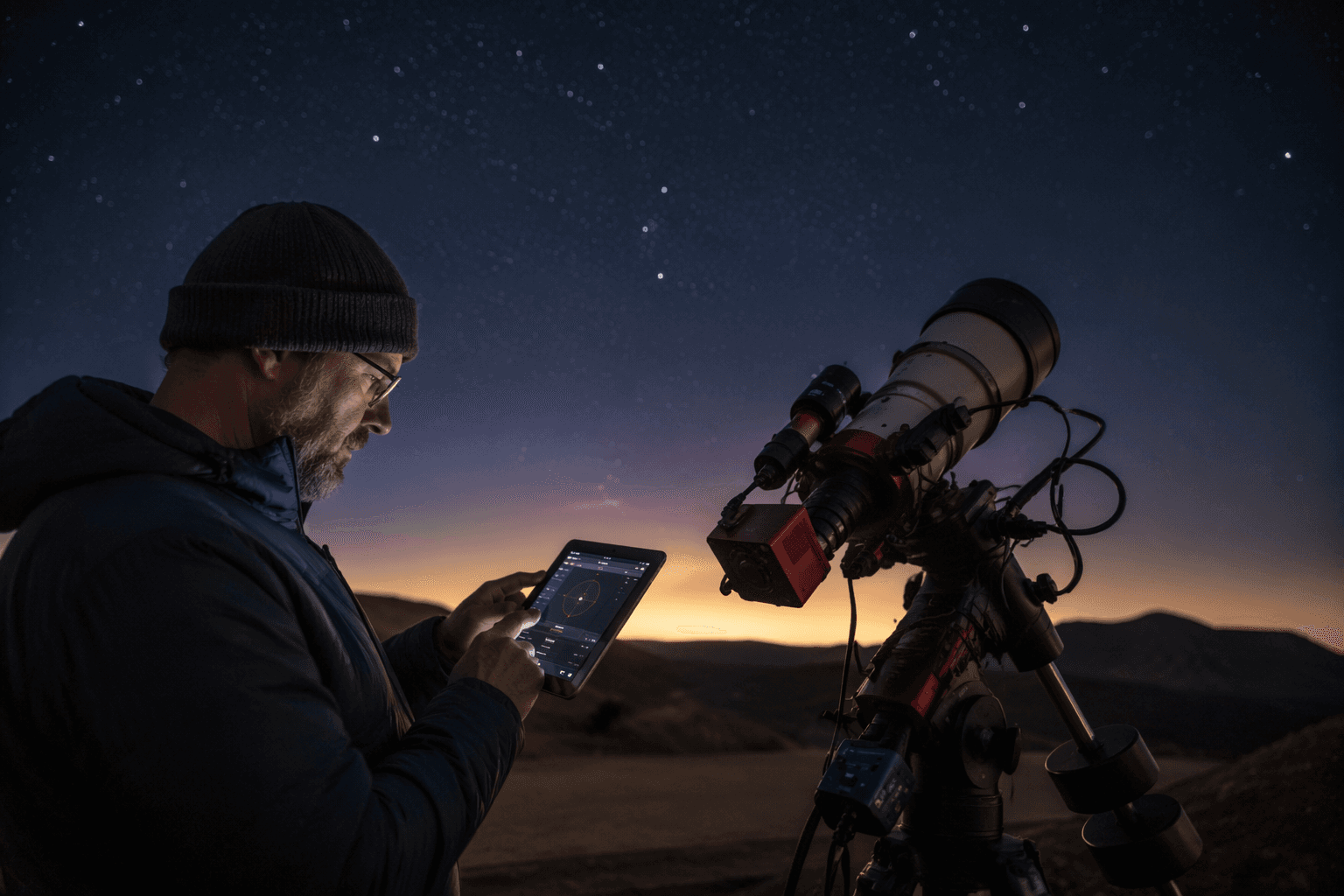
ASIAIR already sits at the center of a lot of mobile-first imaging setups. ZWO’s manual describes it as a lightweight wireless astrophotography control unit for wireless control, equatorial control, focus, capture and preview, automatic guiding, plate solving and sequencing, and ZWO’s software page still listed ASIAIR v2.5.2 as the latest official release on June 2 and June 3 before this leap to V3.0. That makes the beta feel less like a routine patch and more like a meaningful step in how the system handles a full session.
The rollout also drew immediate scrutiny because the remote-control feature is marked as a “Free Trial.” Early forum feedback said the new remote option looked promising, but one indoor test found that it was not yet streaming images properly. That is the split-screen reality of this beta: much better remote reach and safer imaging on paper, with enough rough edges that a serious run still demands caution before it earns trust under the stars.
This article was produced by Prism’s automated news system from verified source data, official records, and press releases, then run through automated quality and moderation checks before publishing. The system is built and supervised by the people who set the standards it runs under. Read our full AI policy.
Did this article answer your question?