April Wilkerson shows a simple, predator-safe backyard chicken run
April Wilkerson’s run keeps the build simple, but the real lesson is sharper: focus on the weak points that let predators in after dark.
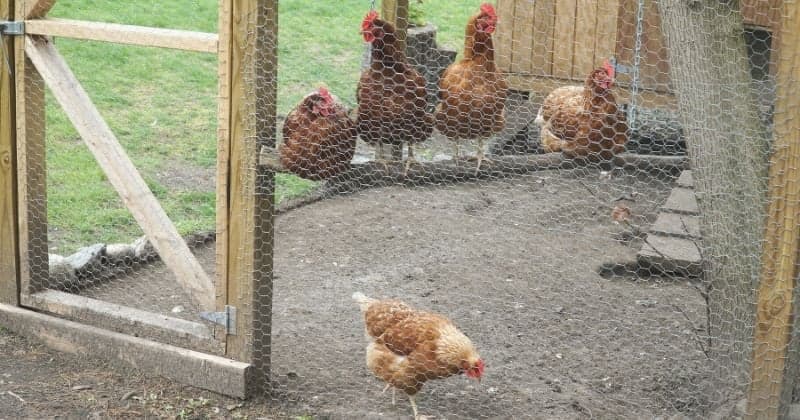
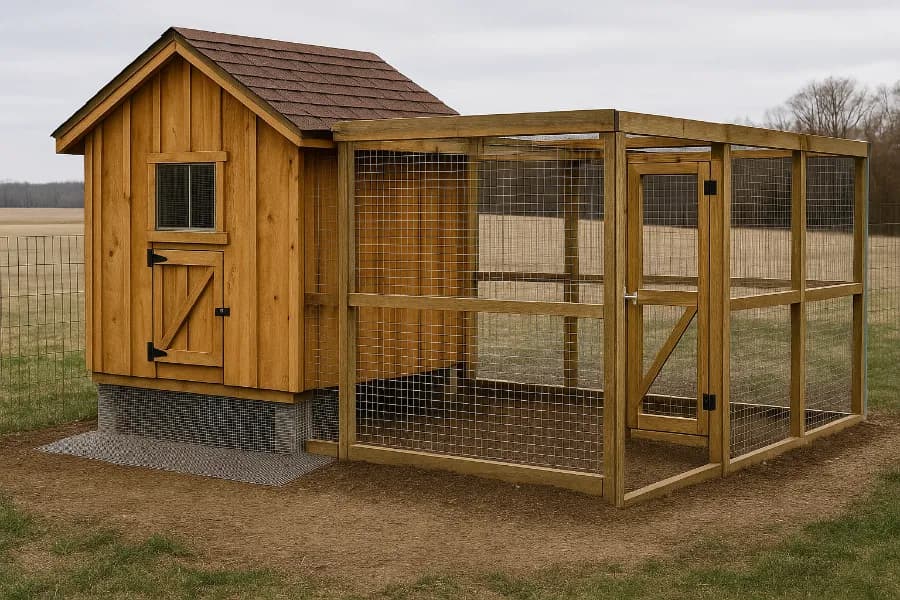
A backyard chicken run has to keep hens contained, give them room to move and scratch, and shut down the easy entries that raccoons, foxes, dogs, hawks, and other predators look for the moment the coop goes quiet. April Wilkerson’s take is appealing because it does not ask you to become a master carpenter before you can protect a flock.
What the run has to do
A good chicken run is doing several jobs at once, and the simplest builds usually fail when they try to do only one of them. It has to hold birds safely in place, but it also has to answer threats from above and from the ground. That means the run cannot just be a rectangle of wire and lumber; it has to resist climbing, digging, squeezing, and pecking at weak corners.
A run that is easy to complete and easy to maintain is far more likely to stay secure over time than a fancy project that looks polished but develops gaps, loose doors, or soft spots after a few storms and a few weeks of daily use.
Start with the failure points
If you are auditing an existing run, do not start with cosmetics. Start with the places predators exploit first: the base, the latch, the wire, and every gap around the frame. Those are the high-impact upgrades because they decide whether a run stops a nighttime attack or invites one.
The first thing to check is the ground line. Dig barriers matter because many backyard predators do not need much time to test the bottom edge of a run. If the base can be pushed up, tunneled under, or lifted by hand, the enclosure is already giving away its weakest point.
Next comes the latch. A latch that seems sturdy in daylight may be easy for a raccoon to work loose once it starts pawing at a door. The safest choice is one that closes cleanly, sits tight against the frame, and does not depend on a simple hook that can be jostled open. If a door rattles or shifts when you pull it, that is not a minor annoyance. It is a warning sign.
Wire type is the next major decision. Thin, flimsy wire may keep chickens from wandering, but it does not automatically keep predators out. The run needs wire that can stand up to chewing, climbing, and reaching paws, especially around doors and corners where pressure concentrates. If the mesh openings are too wide, smaller predators can probe them. If the material flexes too much, larger animals can keep working on it.
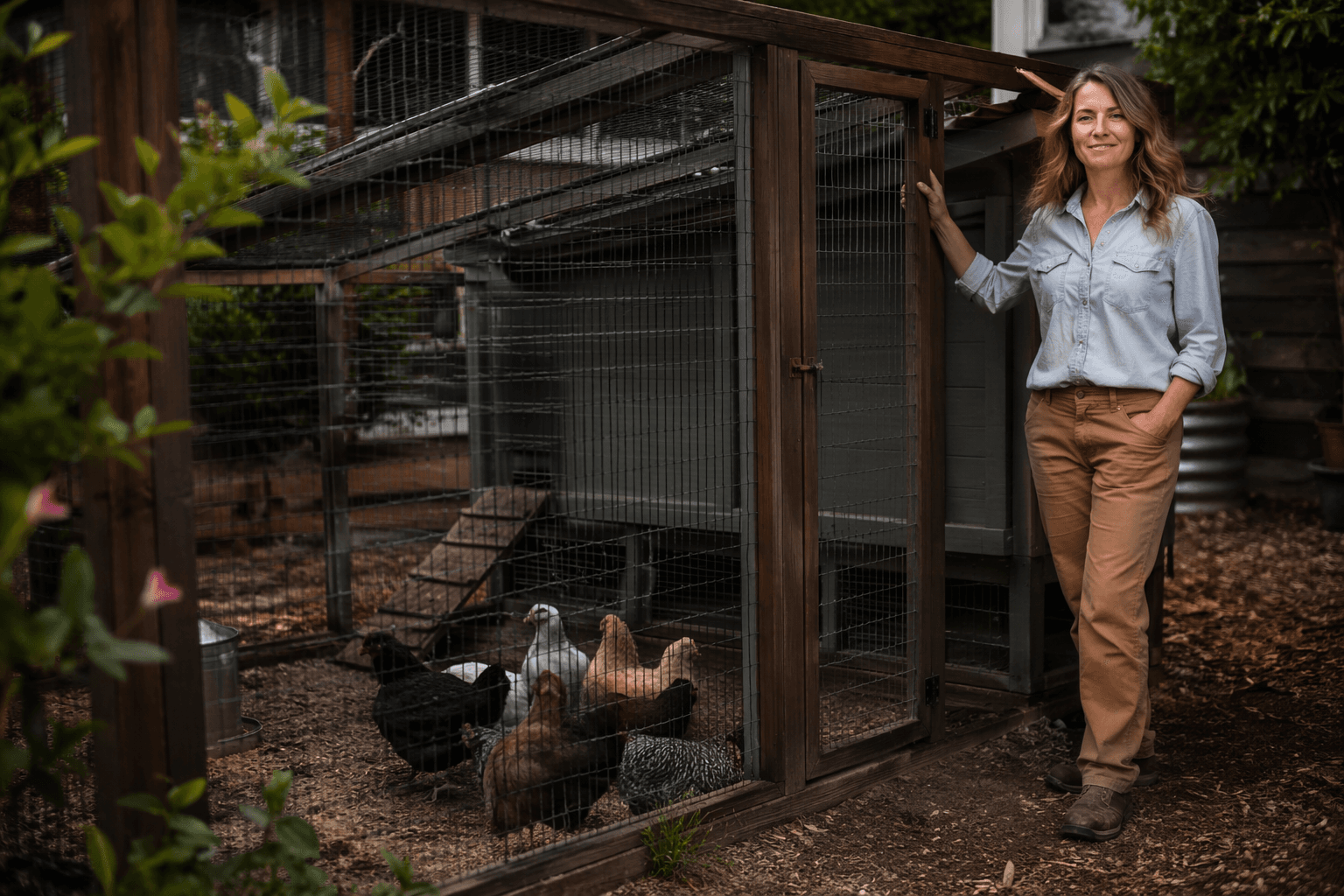
Then there is gap control. Every seam matters, especially where panels meet, where the roof line meets the wall, and where hardware mounts to the frame. A run can look solid from across the yard and still fail at a corner that leaves just enough space for a nose, paw, or beak to find leverage.
A quick predator-safe audit
Before you call a run finished, walk it like a predator would.
- Check the bottom edge for digging access, loose soil, or lifted wire.
- Pull on each door and latch to see whether it shifts, wiggles, or leaves daylight at the edge.
- Look for wire that bows outward when pressed.
- Inspect every corner, joint, and panel seam for openings.
- Make sure there are no gaps large enough for a paw, snout, or head to reach through.
- Stand back at night and think about aerial threats, then make sure the run still offers meaningful overhead protection.
Why simple often wins
Wilkerson’s approach is practical. New keepers often imagine predator protection as a complicated construction problem, but the real challenge is usually consistency. A simple build is easier to inspect, easier to repair, and less likely to develop the small failures that turn into major losses.
A run that is straightforward to build and maintain lets you spend your time on the flock instead of worrying about whether one bent latch or one soft corner has undone the whole setup.
This article was produced by Prism’s automated news system from verified source data, official records, and press releases, then run through automated quality and moderation checks before publishing. The system is built and supervised by the people who set the standards it runs under. Read our full AI policy.
Did this article answer your question?