Why your hens stopped laying, 7 common causes to check
A laying pause is often normal, but the fix depends on the cause. Start with daylight, then work down to molt, age, stress, feed, broodiness, and illness.
When the egg basket goes quiet, don’t treat it like one big mystery. In most backyard flocks, the reason is usually sitting in plain sight, and the right fix starts with the easiest thing to check today: how much light the hens are getting, whether they are molting, how old they really are, and whether anything has changed in their routine.
Season and daylight
If your hens slowed down as the days shortened, daylight is the first place I would look. Oregon State University Extension says hens need more than 12 hours of day length to keep laying, with 14 to 16 hours being typical, and in Oregon the natural day can fall from nearly 16 hours at the start of summer to just over 8 hours at the start of winter. That drop alone is enough to explain a winter slump, and if you use a light program, keep it steady, because even a one-day lapse can cut production.
The practical check is simple: look at the coop timer and the actual daylight in the run before you blame the bird. Penn State Extension says mature laying hens should get about 16 hours of light per day, but not more, because too much photoperiod stresses chickens, so the fix is consistency, not blasting the coop with extra light. If you decide to supplement, a timer is the cleanest tool in the box.
Molt
A hen in molt is putting her energy into feathers instead of eggs, so the basket can go empty fast. Oregon State notes that stress can trigger molting at almost any time, not just in the fall, which is why a bird can look healthy one week and scruffy the next while output drops off. The easy signs are obvious when you know to look for them: loose feathers in the coop, patchy plumage, and a hen that suddenly looks ragged around the neck, back, or tail.
This is one of the most normal pauses on the list, and it usually needs patience more than intervention. If the feathers are coming in and the bird is otherwise acting normal, I would not panic over the missing eggs yet. Molt tells you the hen has shifted into maintenance mode, not that the flock has failed.
Age
Age sets the ceiling on production, and a lot of “my hens stopped laying” complaints are really just “my hens got older.” University of Minnesota Extension says hens can keep laying for 5 to 10 years, but peak production happens in the first two years, while Wisconsin Extension says many backyard keepers plan to replace older hens and add pullets every 2 to 3 years to keep the eggs coming. Oregon State puts egg production on a familiar curve, with pullets usually starting around 18 to 22 weeks, peak output arriving roughly 6 to 8 weeks later at about 90 percent, and production sliding to about 65 percent after 12 months of lay.
The sign to check today is whether this is a sudden drop or a slow fade. A hen that is past her first couple of years, especially in a mixed-age flock, may still be perfectly healthy and simply past her best laying window. Breed matters too: Utah State University Extension notes that specialized egg breeds can produce more than 300 eggs a year, while Oregon State says the average commercial Single Comb White Leghorn hen lays about 265 eggs annually and backyard breeds generally lay less.
Stress
Stress is the quiet egg thief, especially when it shows up as a change in routine. Oregon State lists stress as one of the major production suppressors, and Penn State warns that overly long light exposure can stress chickens, which means the coop can be under pressure even when nothing looks dramatic from the outside. The first thing to check is whether something changed recently, like the light schedule, a move to a new pen, a new flock mate, or a run that suddenly feels different to the hens.
Stress also matters because it can kick off molt, which blurs the line between a normal pause and a management problem. If the hens are eating, drinking, and moving normally but the eggs fell off right after a change in the coop, that is the clue I would follow first. When the cause is stress, fixing the trigger often matters more than chasing the egg count itself.
Nutrition
Poor nutrition is one of the easiest causes to miss because the birds may still look busy and active. Oregon State flags nutrition as a major production issue, so the check here is straightforward: make sure the hens are getting a proper laying ration, not just scratch, kitchen scraps, or a feed pan that runs low before everyone gets a fair shot. If the feeder looks picked over but not empty, that can still mean the flock is underfed for production, especially in a larger group.
This is the correction worth trying early because it is cheap and immediate. A hen cannot make eggs out of whatever she happens to find in the yard, and output usually suffers before the bird looks obviously thin. When laying drops and the feed routine is sloppy, tighten that up before you assume something more complicated is going on.
Broodiness
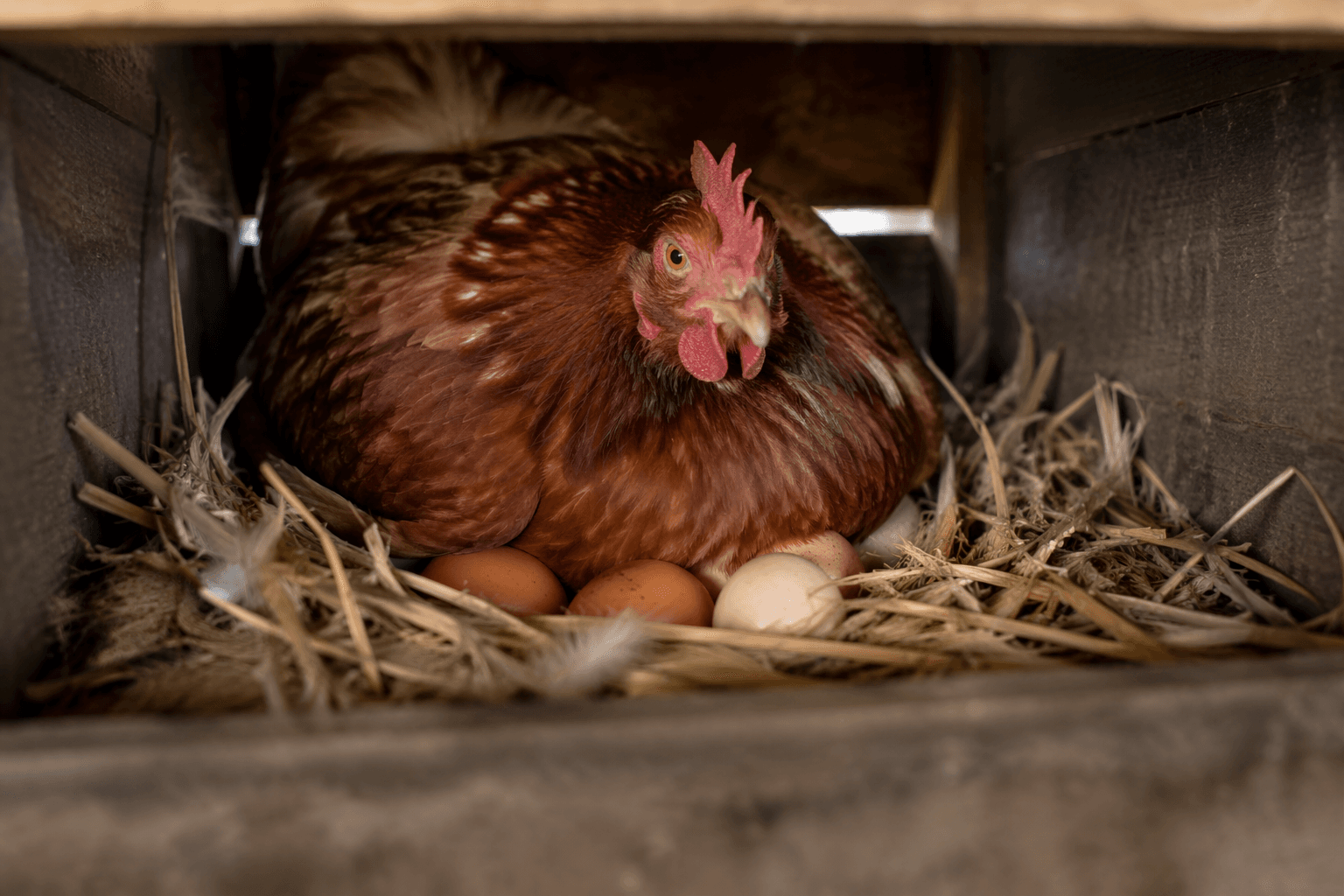
Broody hens stop laying for one very simple reason: they think they are hatching chicks. Arizona Extension says broody birds usually sit in the nest most of the day, may defend the nest aggressively, and can stay broody for 3 to 6 weeks, so this cause is easy to spot if you actually watch the nest box instead of just collecting eggs. A hen that will not get off the nest, even for feed and water, is not being lazy, she is committed.
If you do not want chicks, the usual fix is to break the cycle by removing the nest opportunity for a short stretch. Arizona Extension recommends a wire-bottom crate or “broody jail” for about 3 to 7 days with food and water but no nesting spot, which is a lot less messy than waiting for the bird to decide on her own. The key sign to check today is that nest-box obsession, because broodiness looks dramatic long before it becomes a true laying issue.
Parasites and illness
Once daylight, molt, age, stress, feed, and broodiness are off the table, reduced laying starts to look like a flock-health warning. Oregon State lists disease as a major production suppressor, and that is the point where you stop calling it a production problem and start treating it like a health problem. If the pause comes with a bird that looks off, moves differently, or is not acting like her normal self, it is time to get serious.
That health lens matters beyond eggs, because backyard poultry can carry Salmonella even when they look healthy and clean. The CDC says to wash your hands for 20 seconds after touching birds, their supplies, or collecting eggs, and the USDA Food Safety and Inspection Service says shell eggs can contain Salmonella Enteritidis even when they are unbroken and clean, so they should be refrigerated promptly and cooked thoroughly. The reason this belongs in the same conversation is simple: a laying slump that does not fit the normal pattern is often the first warning that the flock needs attention, and the best backyard keepers know when to treat quiet nests as routine and when to treat them as a health flag.
This article was produced by Prism’s automated news system from verified source data, official records, and press releases, then run through automated quality and moderation checks before publishing. The system is built and supervised by the people who set the standards it runs under. Read our full AI policy.
Did this article answer your question?