Biosecurity basics help backyard chicken keepers protect small flocks
Biosecurity starts with simple habits, not expensive gear. Fence the flock, quarantine newcomers, and control shoes, visitors, and tools before disease slips in.
Backyard chicken keepers do not usually lose a flock to some dramatic mystery. Trouble more often slips in through the ordinary stuff of coop life: a new bird that looks fine, a neighbor’s boots, a shared feeder, a gate left open, or a wild bird landing where it should not. That is why biosecurity matters so much, because the whole system is built around one practical goal, keeping disease out and stopping it from spreading once it appears.
The first five moves to make this week
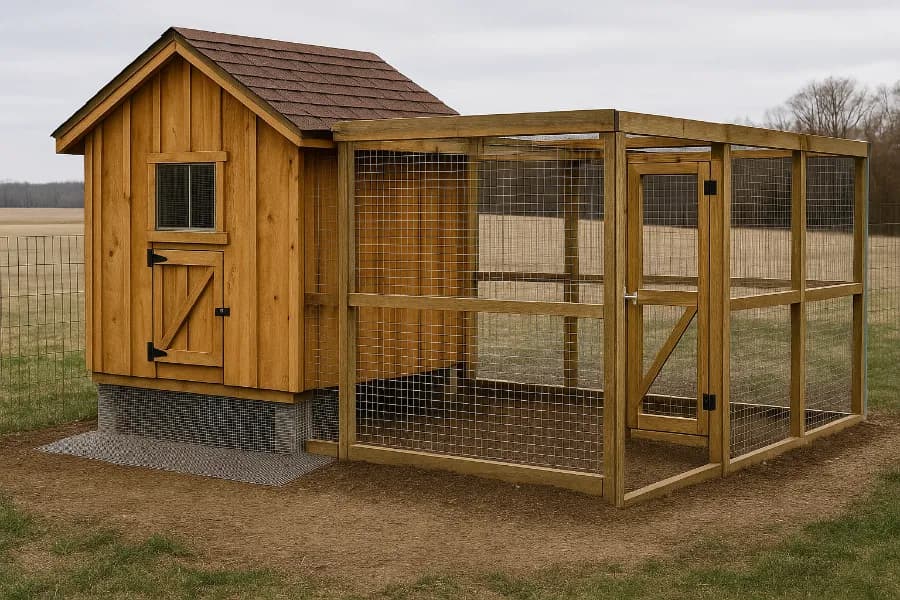
1. Fence the flock in completely. Put birds behind a perimeter fence that fully surrounds them, and keep gates closed unless you are actively using them. If nearby properties also keep birds, create a buffer zone so flocks do not mingle.
2. Quarantine every newcomer. Isolate new birds for at least two weeks before they join the rest of your flock, even if they look healthy.
3. Set a visitor rule. Anyone who has been around other birds should stay away from your flock for at least 24 hours.
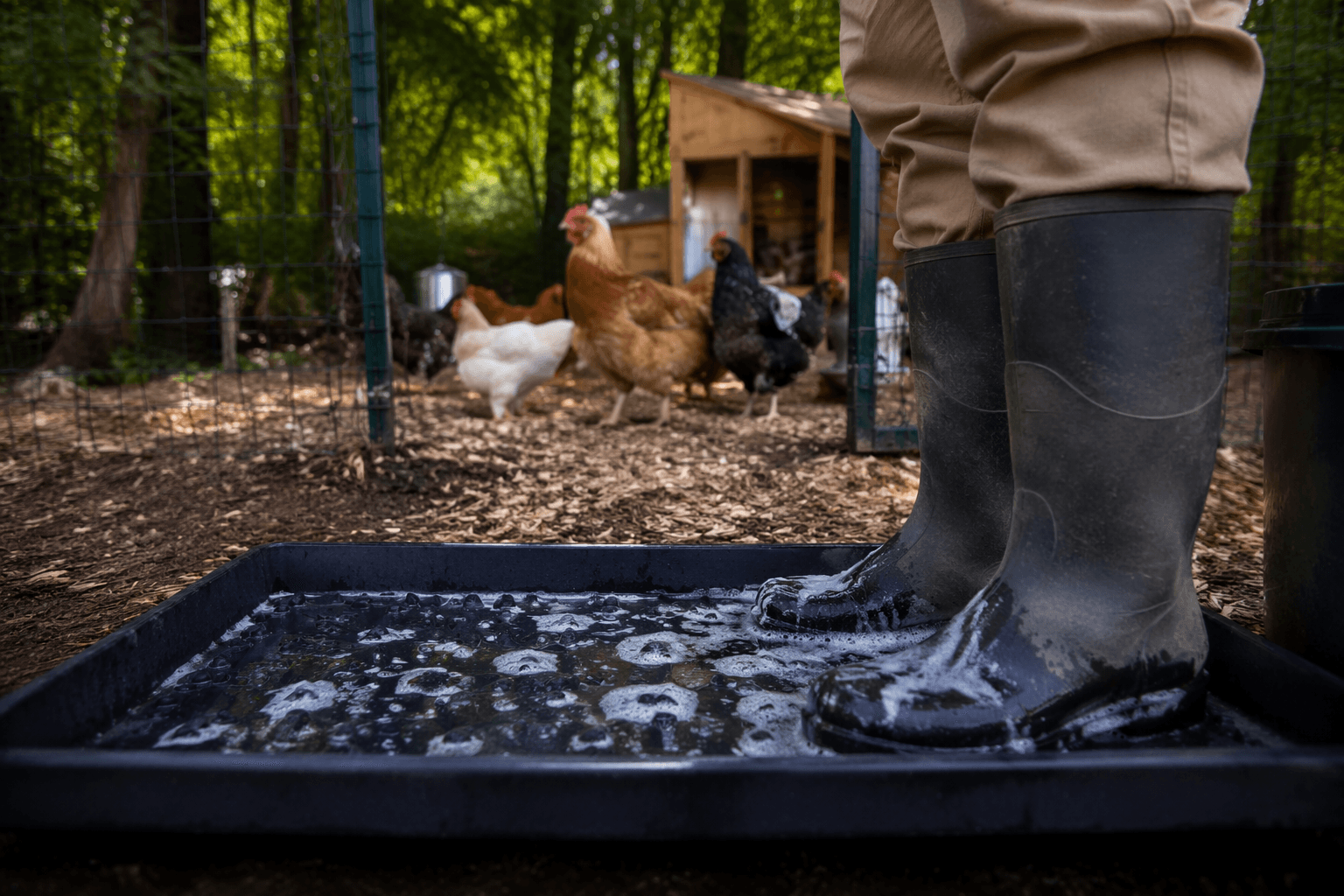
4. Separate shoes and chores. Use dedicated shoes for poultry work, and wash your hands after handling birds or their equipment.
5. Treat sick birds like a warning light. Move a sick bird to examination at a poultry diagnostic facility and cut down movement between flocks until you know what you are dealing with.
Start with isolation, not luck
The simplest biosecurity move is also the one that shapes everything else: keep your birds separate. Poultry Extension defines biosecurity as the measures taken to prevent the introduction and spread of disease in a flock, and that definition gets real fast in a backyard setting. CDC guidance says backyard flocks can be exposed to wild birds carrying bird flu and infected as a result, so screens on windows and ventilation openings are not just a nice finishing touch, they are part of the flock’s first line of defense.
That same isolation mindset applies to the run, the yard, and the boundary around your birds. A fence that fully encloses the flock, plus gates that stay closed when they are not in use, reduces casual contact with other birds, pets, and people moving through the space. If a neighbor also keeps chickens or ducks, the safest setup is one that keeps the two flocks from ever sharing ground, feed, or water.
Quarantine is where a lot of outbreaks begin or end
New birds are one of the most common ways disease enters a small flock, because healthy-looking birds can still carry trouble. That is why the standard advice is to keep newcomers apart for at least two weeks before introducing them to the group. Two weeks is long enough to catch obvious signs of illness before a bird has a chance to pass something along to your established flock.
If one bird does get sick, do not wait and hope it clears up on its own. Move it to a poultry diagnostic facility for examination and cut back movement between flocks until you know the diagnosis. In a small backyard setup, that may mean pausing swaps between pens, limiting handling, and keeping the sick bird’s space as separate as possible from the rest of the operation.
People bring more than good intentions
Disease does not need a dramatic carrier to move around. CDC says poultry diseases such as avian influenza and Newcastle disease can spread by people, animals, equipment, or vehicles. That means the everyday traffic in and out of your yard matters as much as the birds themselves.
- Keep a pair of dedicated shoes for poultry chores.
- Wash your hands after handling birds or their equipment.
- Do not go from other birds to your flock without changing clothes and showering first.
- If a visitor has been around poultry, wait at least 24 hours before letting them near your birds.
A simple routine goes a long way:
That last point is one of the easiest habits to overlook, especially when friends, neighbors, or family members want to help. But if they have been in another coop, hatchery, fair, swap meet, or anywhere birds are kept, they should not walk straight into yours.
Wild birds are part of the risk picture
Backyard flocks do not live in a sealed world. Wild birds pass overhead, land nearby, share water sources, and leave contamination where backyard birds can reach it. APHIS says its wild bird surveillance program is an early warning system for avian influenza viruses in the United States, and CDC says H5 bird flu is causing outbreaks in wild birds and poultry, other animals, and sporadic human cases. That is a reminder that biosecurity is not only about the coop door, it is about the environment around it.
Extension materials also explain why sanitation matters so much. They note that avian influenza virus can survive up to one month inside a poultry house at 40 degrees Fahrenheit, and that it has been found to survive in lakes for more than 30 days at freezing temperatures. In other words, cold does not automatically erase risk. Dirty boots, shared equipment, and damp surfaces can keep a problem in play much longer than a keeper expects.
Use the tools that already exist
USDA APHIS says biosecurity is the key to keeping the nation’s poultry healthy and reducing the risk of avian influenza and other infectious diseases. Its Defend the Flock Resource Center pulls together checklists, resource guides, videos, and other free materials from USDA and outside experts, which makes it a practical place to build a basic flock routine without starting from scratch.
There is also a paperwork side to all this. Some extension materials say many states require backyard flock registration to help control diseases such as avian influenza. If your state asks for it, registration is part of the same bigger picture as fencing, quarantine, and cleaning: it helps animal health officials respond faster if something shows up nearby.
A small flock does not need fancy infrastructure to stay safer. It needs a few habits done consistently, the way a good coop needs the right space, airflow, and protection to work as intended. Fence the birds, separate the newcomers, control the shoes and visitors, and keep wild birds and shared gear out of the loop. That is how biosecurity turns from a vague warning into a routine that keeps a backyard flock healthy enough to keep laying, scratching, and filling the yard with the kind of quiet life people built the coop for in the first place.
This article was produced by Prism’s automated news system from verified source data, official records, and press releases, then run through automated quality and moderation checks before publishing. The system is built and supervised by the people who set the standards it runs under. Read our full AI policy.
Did this article answer your question?