Extension guide helps backyard chicken keepers design safer coops
The smartest coop is not the fanciest one. It is the one that makes chores easier, blocks predators, and keeps birds and neighbors out of trouble.

A coop that is easy to work in and hard to break into will age far better than one that simply looks finished. Backyard chicken housing works best when it solves the problems that show up every day: cleaning, egg gathering, predator pressure, and the social reality of living near other people. Accessibility, safety, exterior appearance, and fit for the flock belong at the center of the decision.
Start with the non-negotiables
The first test is whether you can reach the parts of the setup you touch all the time. Nests, perches, feeders, and waterers should be easy to access so cleaning and maintenance do not turn into a twice-weekly wrestling match. That same design principle cuts down on mess, because a coop that is simple to service is much more likely to stay sanitary.
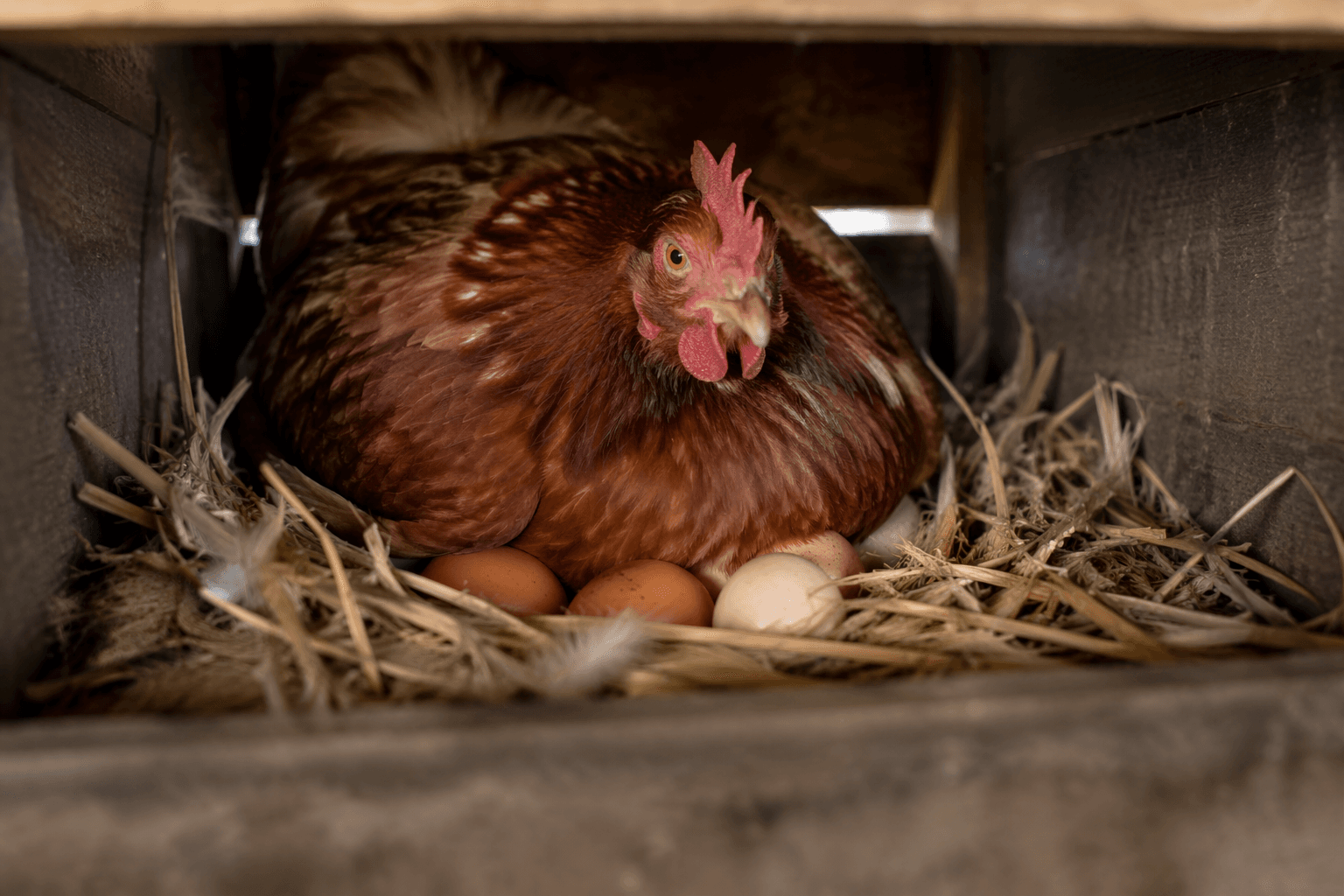
Safety comes next, and this is where a lot of backyard builds fail in small ways that matter. Loose wire, stray nails, and other sharp edges should come out before birds move in. The same goes for unintended perches, because chickens will happily choose nest box tops, windowsills, cords, or any other odd ledge if you give them the chance. If the bird can land there, assume it will.
There is no perfect housing design for urban poultry. The right coop fits your yard, your climate, your flock size, and your local rules, not the one with the prettiest siding or the cheapest parts list.
Match the footprint to the flock
Backyard chicken keeping is largely a small-flock world. In a 2014 survey of 1,487 U.S. backyard chicken owners, 71 percent kept fewer than 10 chickens, and 70 percent had been keeping chickens for less than five years. Most owners kept small flocks, which rewards compact, practical housing over oversized projects that are expensive to build and annoying to clean.
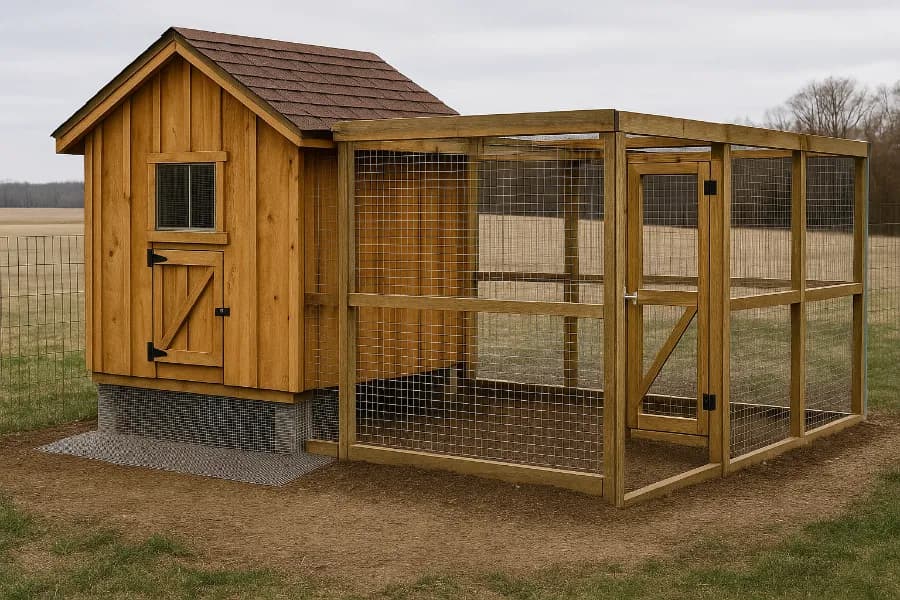
A small pasture poultry ark can make sense when you want a compact footprint and a setup that moves or shifts with the yard. A hoop pen built from cattle panels offers another flexible path when you need something bigger but still simple. At the other end, a 10-by-12 poultry house or a family-size laying house makes sense when you need a more permanent structure and have enough space to support it.
The decision is less about style than about chores and constraints. If your flock is small and your yard is tight, a smaller coop with a secure run is usually easier to live with than a grand house that eats up the whole back corner. If your birds are multiplying, or you want room for feed, tools, and easier cleaning, the larger fixed options become more appealing.
Make the coop work in the neighborhood
Backyard chicken keeping is increasingly popular in the United States and other parts of North America, but the rules are still local. State, county, and city ordinances all shape whether a family can keep poultry in the backyard, and many cities limit chickens to the owner’s property. Roosters and home slaughter are also banned in many places, which means the legal side of coop design matters just as much as the carpentry.
Appearance matters too, especially when the coop is visible from the street or a neighboring yard. Painting and maintaining the exterior, cleaning weeds and trash around the structure, and using landscaping to screen the house can reduce noise, soften the visual impact, and head off complaints before they start.
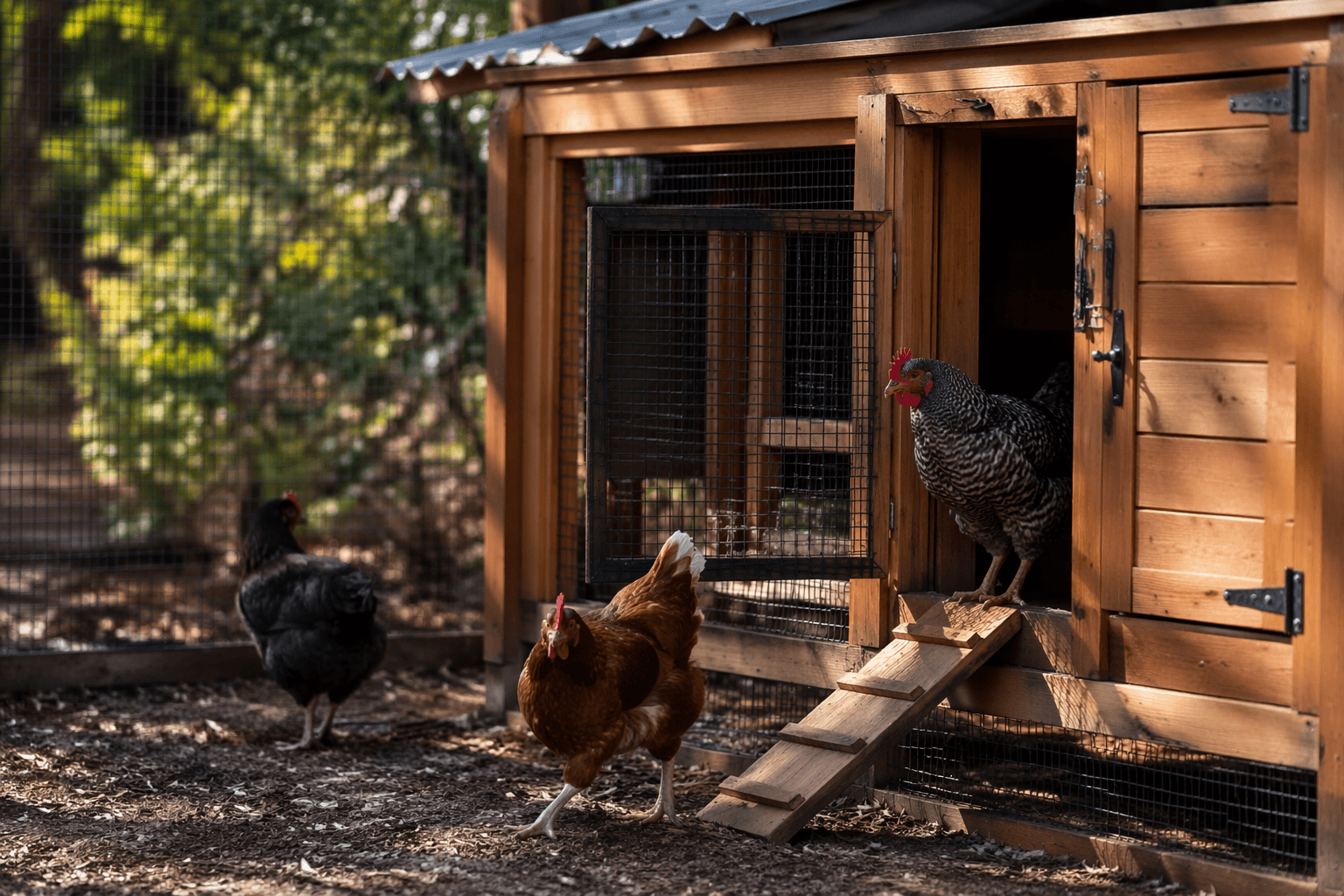
Many owners are trying to make the birds pull double duty. In the 2014 survey, the top reasons for keeping chickens were home food use at 95 percent, gardening partners at 63 percent, and pets at 57 percent. A coop that looks neglected can undermine all three of those goals by making the setup feel temporary, messy, or unwelcome.
Build around disease control and predator pressure
Biosecurity is not an add-on in poultry keeping. USDA’s Defend the Flock program calls biosecurity the key to keeping the nation’s poultry healthy, and it defines structural biosecurity as the physical construction and maintenance of coops, pens, poultry houses, and similar facilities. In plain terms, the building itself is part of the health plan.
A perimeter fence, closed gates, screened windows and ventilation holes, and a buffer zone between neighboring flocks help reduce contact with wild birds and other poultry, and they belong in the first draft of the design, not the afterthought phase. The same logic helps with predation, which 49 percent of owners in the 2014 survey named as a leading challenge.
Do not treat salmonella as a background risk
In May 2024, the Centers for Disease Control and Prevention identified 109 people in 29 states who got sick from Salmonella after touching or caring for backyard poultry, and 33 were hospitalized. In May 2026, the agency identified three multistate outbreaks linked to backyard poultry that had sickened 184 people total, including 53 hospitalizations and one death, and more than a quarter of those sickened were children under 5 years old.
That is why housing and handling habits have to work together. The CDC advises washing hands after handling birds, their eggs, or anything in the area where they live and roam. Dedicated shoes or boots for the coop help keep germs from traveling back into the house, and young children should be kept away from birds and their living areas. The American Veterinary Medical Association also points to zoonotic-disease prevention guidance for backyard poultry and other nontraditional pets.
A coop should solve the problems keepers actually have
The 2014 survey ranked the leading challenges clearly. Predation led the list of challenges at 49 percent, followed by low-cost feed at 28 percent, soil management at 25 percent, and zoning regulations at 23 percent. Those numbers explain why the best coop design is rarely the fanciest one. It is the one that helps you keep the birds contained, the run clean, the paperwork legal, and the work manageable.
The USDA Animal and Plant Health Inspection Service has also tried to measure how much backyard keeping has changed, launching its first Backyard Animal Keeping Study in 2024 to produce national estimates on adults who kept poultry, pigs, goats, or rabbits. That study also compared opinions about chicken ownership between 2012 and 2024 in Denver and Miami.
This article was produced by Prism’s automated news system from verified source data, official records, and press releases, then run through automated quality and moderation checks before publishing. The system is built and supervised by the people who set the standards it runs under. Read our full AI policy.
Did this article answer your question?